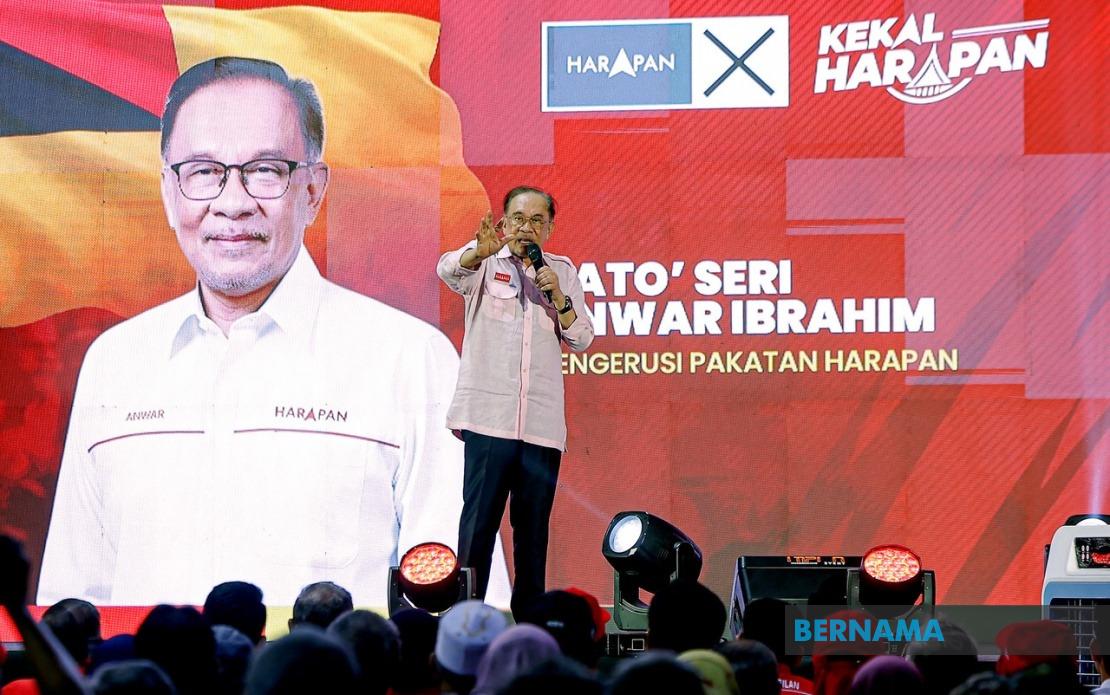
Prime Minister Datuk Seri Anwar Ibrahim has sought to reassure the nation that the federal Unity Government maintains its stability and strength, dismissing concerns about potential fractures within the coalition structure. Speaking in Seremban, the premier underscored that the administration's cohesion at the national level remains intact and uncompromised, positioning the government as a reliable guardian of economic progress and a welcoming environment for foreign investment.
The Prime Minister drew a deliberate distinction between the operational dynamics at the federal tier and those playing out across Malaysia's various state governments. He acknowledged that electoral competition and policy differences between coalition partners do emerge at the state level, yet stressed that such tensions have not penetrated the federal structure. This separation of concerns, according to Anwar, is essential to the government's functioning and demonstrates a maturity in how political rivals can compartmentalise their interests.
Recent Cabinet proceedings illustrated this federal-level cohesion, Anwar suggested, highlighting sessions he had chaired alongside Minister of Agriculture and Food Security Datuk Seri Mohamad Sabu, Transport Minister Anthony Loke, and Deputy Prime Minister Datuk Seri Dr Ahmad Zahid Hamidi. The consistency with which these meetings convene and their apparent smooth conduct reflect, in the Prime Minister's assessment, a genuine commitment among coalition members to putting aside partisan considerations when governing the nation.
The emphasis on economic continuity signals Anwar's primary concern: that political turbulence could undermine investor confidence and throttle the economic growth trajectory that Malaysia requires. Foreign and domestic investors monitoring political stability make decisions partly on the basis of perceived governmental resilience and policy coherence. The Prime Minister's public reaffirmation of federal unity appears designed to preempt any market jitters stemming from headline squabbles between coalition partners.
This messaging comes at a sensitive juncture for Malaysian politics. Although specific elections were not detailed in his remarks, the reference to a post-election period suggests heightened scrutiny of the coalition's durability. State-level electoral contests have historically tested coalition bonds, with shifts in local political dynamics occasionally rippling upward to disturb federal arrangements. Anwar's proactive commentary seems aimed at managing expectations and forestalling speculation about potential reconfiguration of the federal coalition.
The Unity Government itself represents a historic shift in Malaysian politics, bringing together parties that competed fiercely in prior elections. The Pakatan Harapan alliance joined forces with Barisan Nasional and other parties to create a governing coalition after the 2022 general election. Maintaining this arrangement has required sustained negotiation and compromise, particularly as constituent parties have pursued distinct policy agendas and sought electoral advantage in state contests.
For Malaysian businesses and multinational corporations operating within the country, the Prime Minister's assurances carry practical implications. Policy predictability, consistent regulatory implementation, and the absence of paralysis stemming from coalition disagreement all factor into investment calculations. Anwar's explicit linking of federal stability to investor attraction reflects an understanding that political uncertainty can translate into delayed project approvals, capital flight, or reduced foreign direct investment inflows.
At the same time, the distinction between state and federal levels hints at the ongoing tension within coalition politics. Competition among partners at the state level remains robust, suggesting that while federal governing is cooperative, the underlying competitive instincts of coalition members have not been suppressed. This dynamic—cooperation at the centre while rivalry persists at the periphery—is not uncommon in multiparty governments globally, yet it requires careful management to prevent state-level conflicts from destabilising the federal compact.
The Prime Minister's remarks also implicitly address concerns that may circulate among the general public and business community about the sustainability of the current political arrangement. By regularly reiterating federal stability and highlighting functional Cabinet processes, Anwar appears to be building a narrative of predictability and competence. This framing matters for public confidence, economic sentiment, and the government's ability to execute its policy agenda without constant disruption from internal coalition politics.
Looking ahead, the test of this federal stability will lie not merely in rhetorical reassurances but in tangible outcomes: the passage of key legislation, effective implementation of budgetary priorities, and the management of any crises that might strain coalition unity. The upcoming electoral cycle, whether at state or federal levels, will provide a clearer picture of whether the coalition can truly maintain its federal-level discipline while competing separately in other arenas.

