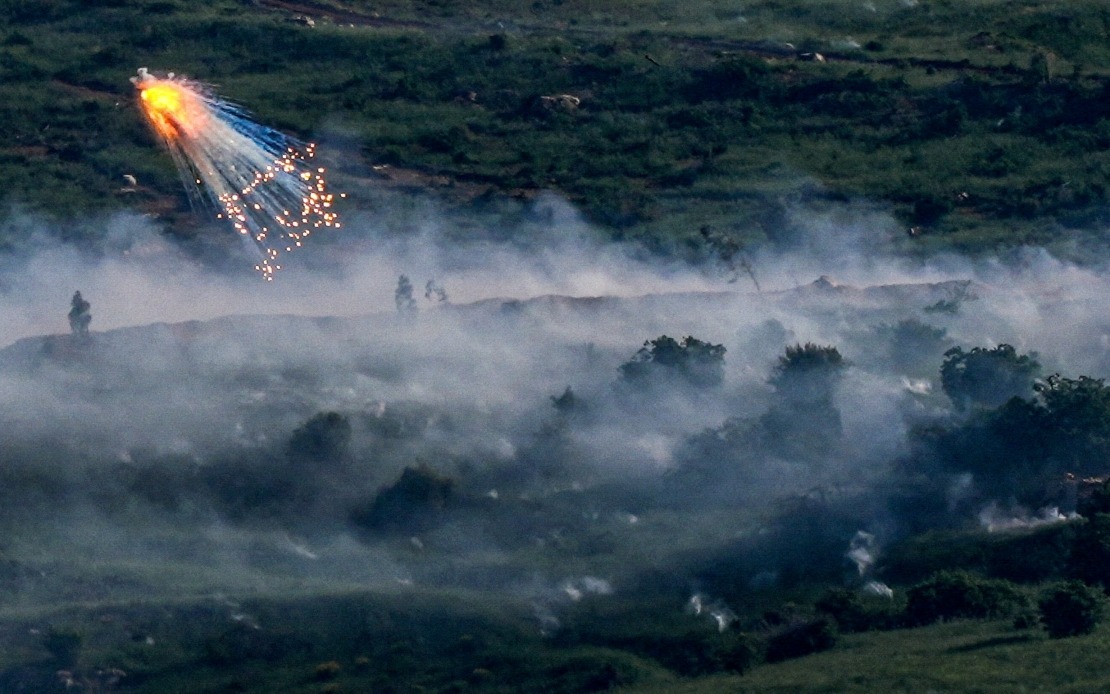
The United States has intensified its travel warnings for the Middle East, with both its diplomatic missions in the region cautioning American citizens to steer clear of Lebanon and Israel's northern territories. The advisory, issued on Saturday through statements from the US Embassy in Beirut and the US Embassy in Jerusalem, reflects deepening concerns about the security landscape across West Asia at a time of considerable instability and geopolitical friction.
According to the Beirut embassy's formal statement, the core rationale for the travel ban centres on what officials describe as "high tensions" coupled with a "complex" security environment that carries genuine potential for rapid and unpredictable escalation. This language suggests American diplomatic staff in Lebanon perceive immediate risk factors that could shift dramatically without warning, making civilian presence in the country inherently hazardous. The embassy's assessment underscores how fragile the current equilibrium has become across the broader region.
The Jerusalem embassy issued complementary guidance that casts an even wider net, explicitly prohibiting Americans from entering Gaza or moving through northern Israeli territory. The advisory further discourages travel through most of West Asia as a precaution, with the sole exception of the Taba crossing into Egypt. This more expansive warning reflects the severity with which American authorities view the constellation of risks stretching across multiple countries and conflict zones simultaneously.
These advisories arrive during a period of acute tension between the United States and Iran, two regional powers whose military and political rivalry has repeatedly threatened to ignite broader conflict. Despite diplomatic efforts, including a Pakistan-brokered memorandum of understanding signed in June intended to establish a ceasefire and pathway toward lasting peace, the two nations have continued trading military attacks and provocations. That agreement, which was supposed to mark a turning point toward de-escalation, has failed to translate into meaningful calm on the ground.
For Malaysian and Southeast Asian readers with business interests, family connections, or travel plans involving the Levantine region, the advisory carries significant practical implications. Malaysia, as a Muslim-majority nation with established diplomatic ties across the Middle East, maintains commercial and people-to-people connections with Lebanon and the broader region. Lebanese expatriate communities exist across Malaysia, and various Malaysian companies maintain operations or supply chains touching these territories. The advisory will likely prompt Malaysian authorities to issue complementary guidance and may affect logistics, insurance, and business confidence in the region.
The timing of this escalation reflects months of simmering conflict that has periodically threatened to boil over into wider warfare. Earlier military exchanges between American and Iranian forces demonstrated how quickly localised incidents can metastasise into regional crises. The presence of multiple armed factions, proxy militias, and competing great-power interests across Lebanon, Israel, and Gaza creates an environment where miscalculation or accident could rapidly overwhelm diplomatic channels.
Lebanon presents particular vulnerability given its fractured political system, struggling economy, and the presence of Hezbollah—a heavily armed group designated as terrorist by Western governments but deeply embedded in the country's political and military structure. The nation's already precarious stability makes it especially susceptible to becoming a flashpoint should tensions elsewhere in the region ignite into armed conflict. The US assessment suggests that American officials now view Lebanon not merely as a fragile state, but as a location where Americans could face direct danger from fallout triggered by external events.
The northern Israeli territories, similarly, sit near the border with Lebanon and Syria, regions through which Iranian militias operate and where various armed groups maintain presence. The heightened advisory for these areas specifically reflects concern about potential military action or escalation that could rapidly endanger civilian populations regardless of nationality. Historical patterns show that when tensions peak in this region, all civilian areas within proximity to conflict zones become hazardous, and evacuation logistics become complicated.
The broader implications for regional stability suggest that diplomatic efforts so far have failed to reduce underlying tensions despite formal agreements. The Pakistan-brokered memorandum, while representing diplomatic progress on paper, has not translated into behavioural change that American security assessments consider sufficient to reduce risk. This gap between formal agreements and actual security improvements indicates that deeper structural problems—competing geopolitical interests, ideological conflicts, and unresolved disputes—remain unaddressed.
For multinational corporations and investors with exposure to West Asia, such warnings typically trigger risk reassessments and may prompt withdrawal of non-essential personnel. Insurance costs rise, supply chain disruptions multiply, and project timelines extend. The tourism sector, already strained across Lebanon by economic collapse and political dysfunction, faces further contraction. Lebanese nationals seeking employment abroad may find visa processes complicated, and remittances from diaspora communities—crucial to Lebanon's economy—may decline if security perceptions worsen further.
The advisory also highlights how American threat assessment mechanisms remain sensitive to regional developments even when dramatic military clashes do not occur. The "potential for unforeseen escalation" language suggests US intelligence agencies view the region as inherently unpredictable, with multiple trigger points that could ignite with little warning. This assessment will influence perceptions held by other Western nations, likely prompting similar warnings and further isolation of these territories from normal international engagement.
For Southeast Asian governments and citizens, these developments underscore the interconnected nature of Middle Eastern stability with broader global security. Energy prices, refugee flows, terrorism financing, and extremist recruitment networks all connect back to stability in West Asia. Malaysia's position as a regional economic hub means that protracted instability, military escalation, or humanitarian crises in the Middle East can reverberate through Asian markets and communities within weeks.

