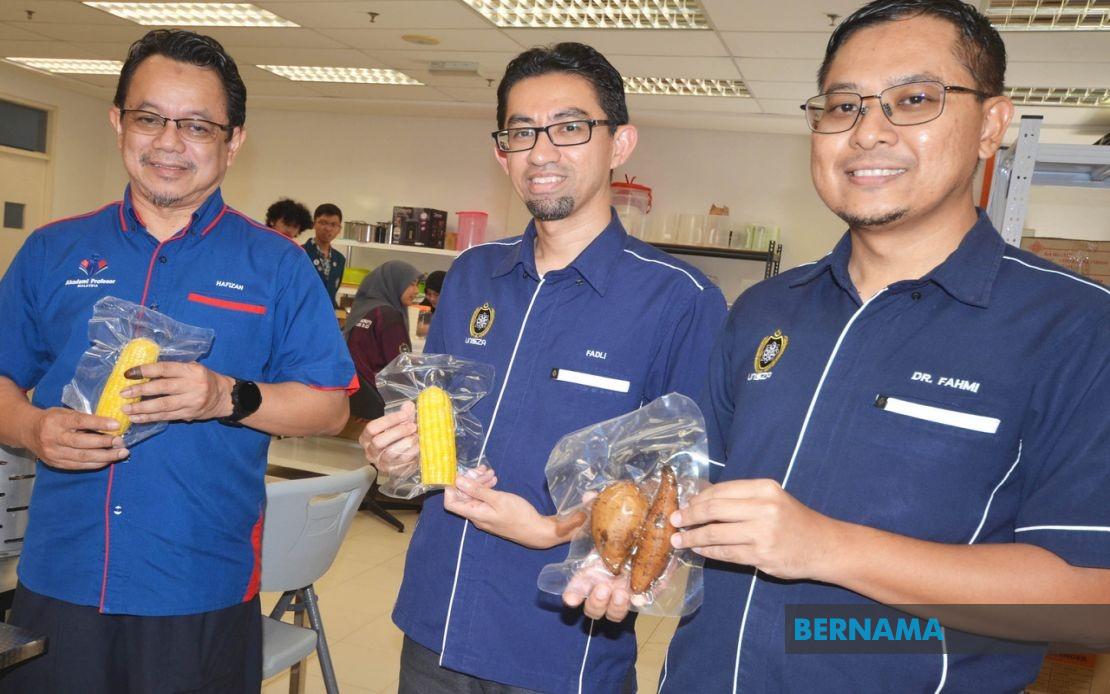
Universiti Sultan Zainal Abidin (UniSZA) has launched an innovative response to a persistent problem facing agricultural communities in Terengganu: the chronic oversupply of fresh produce that cannot be marketed, leading to significant losses for farmers and food waste. The Dapur Komuniti (Community Kitchen) initiative, championed by the university's faculty dean Prof Dr Hafizan Juahir, tackles this challenge by transforming surplus agricultural output into value-added products with extended shelf lives, while simultaneously strengthening local economic resilience and creating new income pathways for rural communities.
The genesis of the initiative stems from detailed research conducted by UniSZA into the economic struggles of farming communities in the Besut district. Farmers operating in this region face a squeeze from multiple directions: limited access to profitable markets, dependency on middlemen who capture most of the retail margin, inadequate digital marketing capabilities, and physical distance from urban consumption centres. These structural barriers have depressed farm-gate prices to unsustainable levels, exemplified by sweet potatoes that sold for less than RM2 per kilogramme locally, despite commanding significantly higher prices in Kuantan and major Malaysian cities. The differential reflects not product quality but rather logistical friction and farmer disconnection from direct-to-consumer channels.
Working collaboratively with the Sustainable Community Farm at UniSZA's Besut campus, the Community Kitchen functions as both a research facility and operational hub for developing an expanding portfolio of shelf-stable products. The dual mandate proves crucial: the initiative operates as a research and development centre focused on identifying commercially viable preservation and processing techniques that extend product viability beyond one year, while simultaneously operating as an active food innovation enterprise that directly purchases or accepts surplus produce from local farmers. This creates an immediate market outlet for otherwise unsaleable agricultural output, preventing total loss while extracting economic value from material that would otherwise decompose.
A practical example illustrates the approach's effectiveness. Lower-grade Terengganu sweet melons that fail to meet market standards for fresh sale have been successfully processed into pickled products, creating an entirely new revenue stream from material destined for disposal. This conversion process simultaneously addresses food waste—a growing concern across Southeast Asia—while providing farmers with a secondary market mechanism for substandard but perfectly edible produce. The strategy acknowledges market realities: not all harvested output meets aesthetic or uniformity standards demanded by fresh produce retailers, yet significant nutritional and culinary value remains.
Beyond product innovation, the Community Kitchen's educational dimension carries substantial significance. The facility provides hands-on training in food processing techniques for local residents, with particular emphasis on farmers themselves and their families. This knowledge transfer addresses a critical capacity gap: many smallholder farmers lack the technical expertise to execute value-addition processes, creating dependency on external processors or middlemen. By developing in-house processing skills, farmers gain agency to capture additional value along the supply chain themselves, reducing reliance on intermediaries and improving income stability.
The university is actively pursuing accreditation status for the facility as a Malaysian Skills Certificate (SKM) training centre specializing in food processing. This institutional recognition would permit UniSZA to award both undergraduate degrees and industry-recognized SKM Level 3 qualifications to students and community members, creating stackable credentials that enhance employability. The dual qualification pathway proves particularly valuable for rural populations who can acquire practical, immediately deployable skills alongside formal academic achievement, increasing lifetime income prospects and economic mobility.
The initiative explicitly targets Malaysia's Armed Forces veteran population, an often-overlooked demographic facing reintegration challenges following service conclusion. Veterans possess discipline and work ethic but frequently lack civilian-sector skills or business experience. Through the Community Kitchen's training programmes, this cohort gains concrete food processing competencies that enable post-retirement income generation, whether through wage employment in established food processing enterprises or entrepreneurial ventures developing their own product lines. This dimension transforms the initiative from purely agricultural assistance into broader social policy supporting veteran wellbeing and economic independence.
For Malaysian policymakers and regional development specialists, the UniSZA model demonstrates how universities can function as catalytic institutions addressing systemic rural economic problems. Rather than pure research or pure service, the Community Kitchen integrates investigation, training, direct economic activity, and policy engagement into a coherent system tackling interconnected challenges simultaneously. The approach proves replicable across Southeast Asia, where agricultural oversupply, farmer income pressure, rural-urban migration, and food waste represent common regional concerns.
The Besut context offers particular relevance. As a relatively peripheral agricultural region within Terengganu, the district faces competitive disadvantage compared to established horticultural zones with stronger infrastructure and market connections. Rather than attempting futilely to compete with better-positioned producers in fresh-produce distribution, the Community Kitchen accepts locational constraints while developing alternative comparative advantage through value-addition and processing. This pragmatic recognition of geographic reality—combined with investment in local human capital development—represents sustainable rural development strategy.
The initiative also illustrates emerging recognition among Malaysian institutions that food security transcends mere production volume. Creating reliable markets and processing pathways for farmers proves equally essential as supporting agricultural output itself. Southeast Asia's urbanization trajectory means agricultural employment continues declining in absolute terms, yet farmland productivity becomes increasingly critical as population grows. Solutions like the Community Kitchen that maximize economic extraction from existing agricultural land, while developing skills transferable to non-agricultural employment, address this tension pragmatically.
Looking forward, successful operation of the Community Kitchen could generate valuable data about value-chain economics in Malaysian agriculture, product development possibilities, and workforce training efficacy. Such evidence could inform broader policy discussions around agricultural transformation, rural poverty reduction, and skills development strategies. If the facility achieves financial sustainability while demonstrating measurable farmer income improvements and employment creation, the model becomes attractive for replication by other institutions or government agencies across Malaysia and the region.

