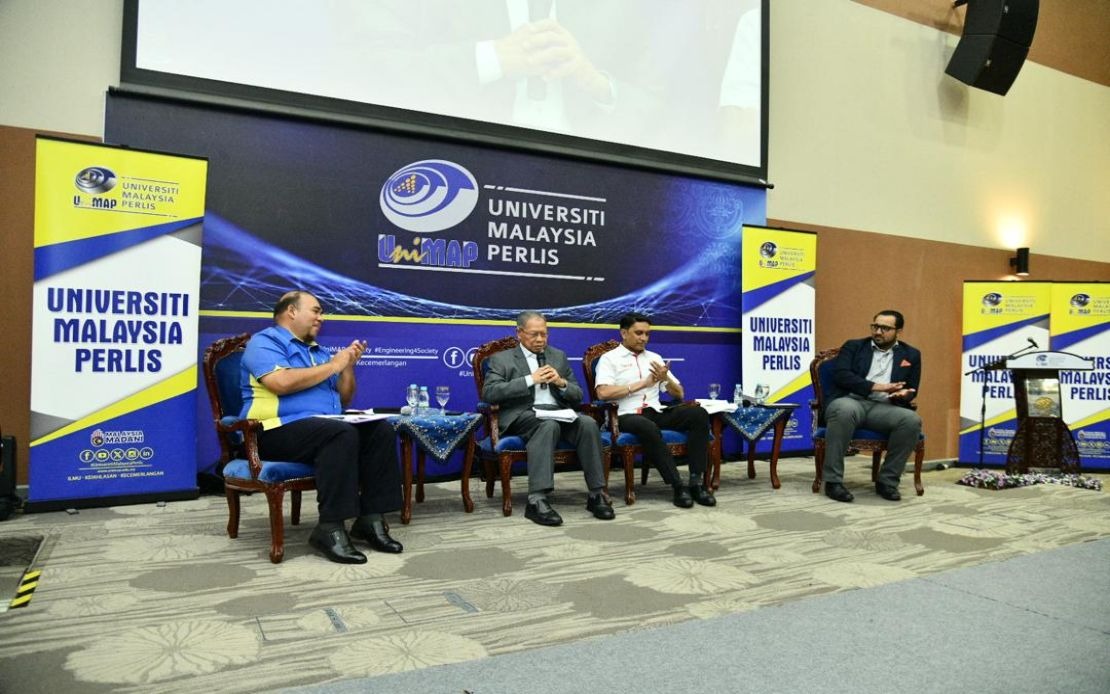
Universiti Malaysia Perlis (UniMAP) is emerging as a crucial talent incubator for Malaysia's growing semiconductor ecosystem, producing nearly 2,000 graduates each year who are entering careers in the electrical, electronics, and chip manufacturing sectors. The university's substantial output represents a significant contribution to the nation's broader ambitions in high-tech manufacturing, a sector increasingly central to economic competitiveness in Southeast Asia and globally. Speaking at a major industry forum in Arau, UniMAP Vice-Chancellor Datuk Prof Dr Zaliman Sauli outlined how the institution is strategically positioning itself to address workforce demands in fields that are reshaping the global economy.
The university's graduation figures directly align with Malaysia's National Semiconductor Strategy (NSS), an ambitious roadmap that targets the creation of 60,000 skilled workers and engineers by 2030. This 2030 target represents a comprehensive effort spanning government agencies, industry players, and educational institutions to transform Malaysia into a regional technology powerhouse and solidify its position in global semiconductor supply chains. UniMAP's contribution alone demonstrates that Malaysia possesses domestic capacity to grow its skilled workforce without relying entirely on international talent acquisition, though cross-border recruitment will likely remain necessary for specialised roles and leadership positions.
Employment data from UniMAP reveals that over 30 per cent of graduates from 2024 and 2025 have begun careers in the E&E sector, illustrating strong industry demand for the university's outputs. This employment concentration indicates that Malaysian employers actively recruit from UniMAP's talent pool, suggesting the quality and relevance of the institution's engineering and technical programmes align closely with industry requirements. The figure also underscores the depth of sectoral growth occurring across Malaysia's manufacturing hinterland, where opportunities in electronics assembly, testing, packaging, and increasingly in design and innovation are expanding.
Malaysia's position in the global semiconductor landscape provides essential context for understanding why universities like UniMAP are intensifying their focus on this sector. The country ranks as the world's sixth-largest semiconductor exporter and commands a significant seven per cent share of global chip trade. More notably, Malaysia controls 13 per cent of the global Assembly, Testing and Packaging (ATP) market, a segment where the nation has historically maintained considerable competitive advantage due to established manufacturing infrastructure, workforce expertise, and established supply chain relationships. These figures demonstrate that Malaysia is not a marginal player but rather an integrated participant in a critical global industry.
Semiconductors have transcended their traditional role as merely one industrial sector among many. These components now constitute the technological backbone of contemporary digital transformation across industries. From consumer electronics like smartphones to emerging technologies such as artificial intelligence systems, from electrification of the automotive industry to the expansion of global data centre infrastructure, semiconductors enable virtually every major technological and economic transition underway globally. This universal importance means that nations controlling semiconductor capacity, expertise, and workforce capabilities enjoy significant economic and strategic leverage.
UniMAP's strategic response involves deliberately strengthening its connections to industry through multiple collaborative mechanisms. The university is implementing Industry-on-Campus initiatives that embed company operations and expertise within university environments, creating learning opportunities that blend academic rigour with practical industrial problems. Industry Advisory Panels ensure that curriculum development and research priorities remain aligned with evolving employer needs rather than drifting into academic insularity. The appointment of International Adjunct Professors brings global expertise and international networks into Malaysian classrooms, exposing students to world-class instruction and expanding their professional horizons beyond Southeast Asia.
Professional certification programmes represent another dimension of UniMAP's approach. By offering industry-recognised credentials alongside traditional degrees, the university enables students to gain specialised qualifications that employers value immediately, accelerating both employment prospects and the development of deeper technical expertise. This multi-pathway approach recognises that not all high-value semiconductor careers require traditional four-year engineering degrees; many specialised technical roles benefit from focused certification-based pathways that can be completed more rapidly while still meeting rigorous quality standards.
The Vice-Chancellor's emphasis on collaboration between government, industry, and universities reflects a growing consensus across Southeast Asia that educational institutions cannot independently build sufficient capacity to meet 21st-century workforce demands. Government provides strategic direction, policy frameworks, and sometimes direct funding; industry contributes real-world expertise, research partnerships, and employment pathways; universities deliver foundational knowledge, research innovation, and credential-granting authority. When these three sectors align effectively around clear sectoral priorities, outcomes compound substantially. Malaysia's semiconductor strategy represents an attempt to create this alignment systematically across the entire value chain.
The forum where these themes were discussed featured senior participation from across Malaysia's semiconductor ecosystem. Former International Trade and Industry Minister Datuk Seri Dr Mustapa Mohamed brought governmental perspective on industrial policy and trade strategy. The Northern Corridor Implementation Authority (NCIA), represented by Chief Executive Datuk Mohamad Haris Kader Sultan, oversees regional development initiatives that channel investment and infrastructure development toward northern Malaysia's growing technology clusters. Micron Technology Inc Malaysia's Head of Government and Public Affairs Ahmed Zaki Moten represented multinational capital and operational expertise from one of the world's largest semiconductor manufacturers with significant Malaysian operations.
This constellation of participants reflects how Malaysia's semiconductor ambitions involve layered institutional coordination. NCIA's role is particularly significant for understanding northern Malaysia's economic trajectory. The Northern Corridor, encompassing states like Perlis where UniMAP is located, represents Malaysia's deliberate effort to distribute high-tech industrial development beyond the Klang Valley and Johor regions that have historically dominated foreign direct investment. By establishing semiconductor hubs and supporting educational capacity in northern states, Malaysia aims to create more geographically balanced economic growth while leveraging existing assets in these regions.
For Malaysian readers and policymakers, the implications are multifaceted. First, Malaysia possesses genuine domestic capacity to develop the skilled workforce that semiconductor industries require; the nation need not rely entirely on importing foreign talent. Second, universities are adapting their traditional missions to serve contemporary industry needs, suggesting that educational institutions can evolve beyond conventional academic models when appropriate incentives and collaborations exist. Third, regional development is feasible through targeted sectoral investment that aligns educational capacity, infrastructure development, and industry incentives across multiple years.
However, challenges remain substantial. Malaysia must ensure that the quality of training matches international standards as competition for semiconductor talent intensifies globally. Rising wages in Vietnam, India, and China may threaten Malaysia's traditional cost advantages. Retaining top graduates requires career pathways and compensation competitive with opportunities in advanced economies. Building research and development capacity for higher-value design work, rather than remaining concentrated in manufacturing and assembly, requires continuous investment in postgraduate education and research infrastructure that universities cannot sustain entirely through their own revenues.
The National Semiconductor Strategy's ambitious 60,000-worker target represents more than numerical expansion; it embodies a deliberate effort to shift Malaysia's economic model toward higher-value technological sectors. If successfully executed, this strategy could position Malaysia as a rare Southeast Asian nation with integrated capabilities spanning semiconductor manufacturing, packaging, testing, and increasingly design and innovation. UniMAP's role as a primary talent source for this transformation makes it a significant institution not merely for Perlis and northern Malaysia, but for the country's broader industrial and economic future.

