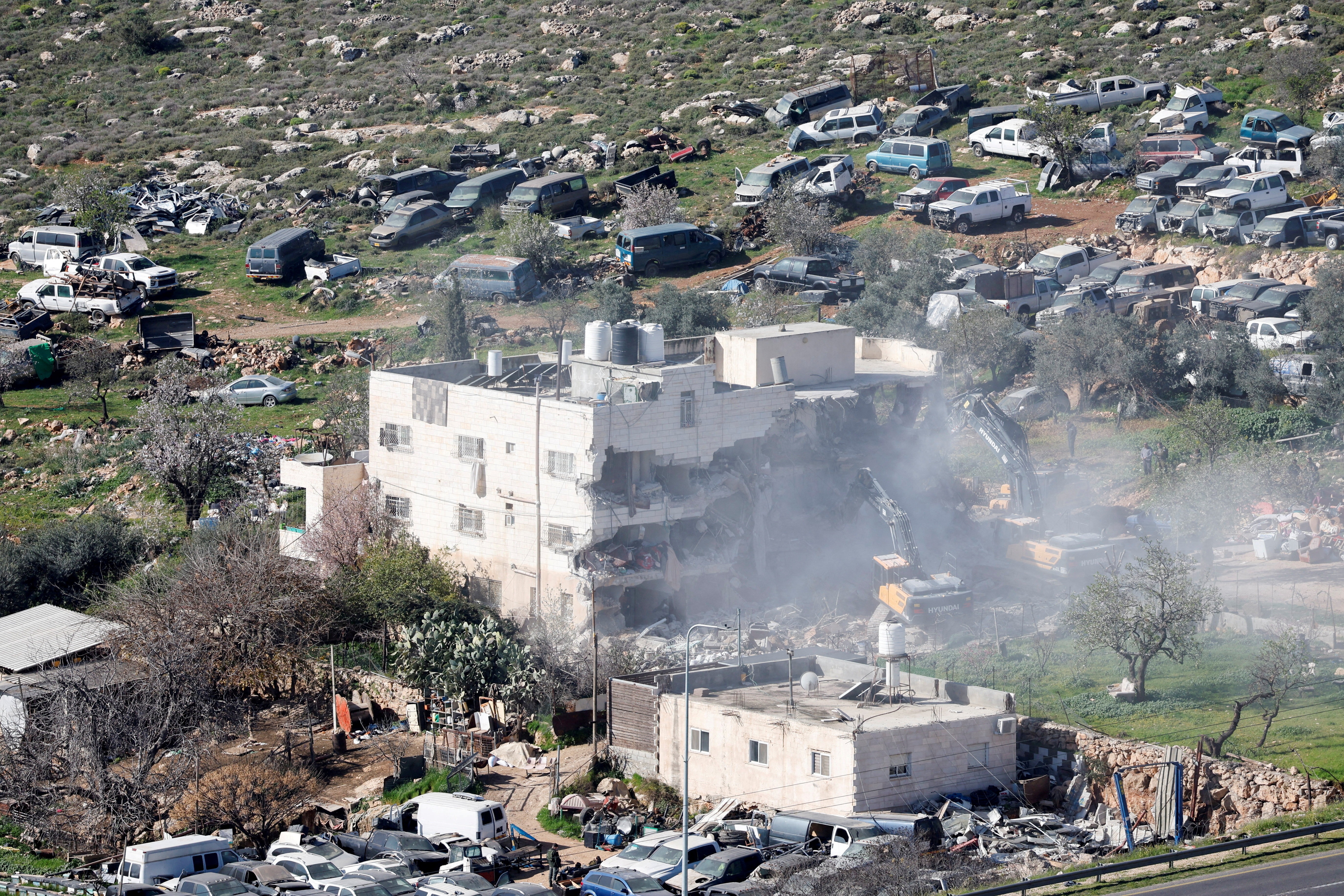
United Nations Secretary-General Antonio Guterres has publicly expressed deep concern about the establishment of fresh illegal settlement outposts across the occupied West Bank, urging Israel to halt further construction activities in the contested territory. The alarm was conveyed through Stephane Dujarric, the UN chief's official spokesperson, during a routine media briefing on Wednesday, signalling the international body's ongoing frustration with settlement expansion policies that continue to complicate Middle Eastern peace efforts.
The UN's particular worry centres on the expansion of the E1 settlement, a strategically significant zone whose development poses unique challenges to Palestinian territorial coherence. According to Dujarric, this specific settlement project threatens to create a physical and administrative barrier that would effectively isolate the northern portions of the West Bank from its southern regions. Such a division would fundamentally undermine the geographic continuity necessary for any viable Palestinian state, transforming what should be a unified territory into fragmented, disconnected enclaves.
This fragmentation carries implications that extend far beyond regional borders, affecting international efforts to establish sustainable peace arrangements in the Middle East. Guterres' position reflects growing consensus among international observers that settlement expansion directly contradicts the foundational principles underpinning the two-state solution—a framework that has long served as the baseline for peace negotiations between Israel and Palestine. By physically severing connections between Palestinian population centres, the E1 development would create administrative and logistical obstacles that make territorial coherence and self-governance increasingly difficult.
The UN chief's call for restraint specifically references the International Court of Justice advisory opinion released on July 19, 2024, which delivered a landmark ruling on Israel's presence in Palestinian territories. The court determined that Israel's continued occupation constitutes an unlawful situation under international law, establishing legal precedent that carries weight within the global diplomatic framework. This judicial determination provides Guterres with formal legal grounding for his intervention, moving the dispute beyond political rhetoric into the realm of international legal obligations.
The ICJ's advisory opinion contained explicit directives addressing multiple dimensions of the occupation. The court mandated that Israel terminate its presence in the occupied Palestinian territory at the earliest possible opportunity, a requirement that fundamentally contradicts ongoing settlement activities. Additionally, the ruling demanded an immediate halt to all new settlement construction, the evacuation of existing settlers, and compensation for damages caused by settlement activities. These provisions establish clear benchmarks against which Israel's subsequent actions can be measured.
Guterres' invocation of the ICJ opinion signals that the UN is leveraging the highest available international legal authority to pressure Israel toward compliance. By grounding his demands in formal judicial findings rather than relying solely on UN resolutions, the Secretary-General strengthens the argumentative position that settlement expansion violates established international law. This approach reflects a strategic effort to create legal rather than merely political pressure for policy change.
For Malaysia and other Southeast Asian nations, the UN's stance carries particular relevance given the region's historical commitment to supporting Palestinian self-determination and opposing illegal territorial occupation. Malaysia has consistently aligned itself with international positions critical of settlement expansion, viewing it as an obstacle to regional stability and international law. The UN's formal intervention reinforces the legitimacy of such positions, validating concerns that Southeast Asian nations have articulated in various international forums.
The settlement expansion issue also intersects with broader questions about international law enforcement and the credibility of global institutions. When the highest court in the international system issues binding opinions that are subsequently ignored or contradicted through continued policy implementation, the effectiveness of international governance mechanisms comes into question. This pattern has long troubled developing nations that depend on international law as a counterweight to military or economic superiority.
Settlement activities represent a chronic flashpoint in Israeli-Palestinian relations, one that periodically escalates diplomatic tensions and complicates peace initiatives. The cyclical nature of settlement announcements followed by international condemnation suggests that existing diplomatic mechanisms have proven insufficient to deter such activities. Guterres' latest intervention, while important symbolically, reflects the ongoing tension between international legal standards and their practical implementation on the ground.
The expansion threatens not only Palestinian territorial integrity but also the credibility of international agreements and legal frameworks that underpin global stability. When major regional actors systematically challenge established international law without facing substantial consequences, it erodes faith in rule-based international systems that smaller nations depend upon for protection and peaceful dispute resolution. This dynamic affects countries throughout Asia and beyond that lack military dominance but seek protection through adherence to international legal norms.
The UN's repeated interventions on this issue, while representing the consensus of international bodies, have not substantially altered Israeli policy direction. This gap between international pronouncements and on-the-ground realities highlights the limitations of diplomatic pressure without supporting enforcement mechanisms. Whether Guterres' latest warning will prove more effective than previous statements remains uncertain, though the explicit legal foundation from the ICJ provides stronger argumentative ground than earlier appeals based solely on UN resolutions.
Looking forward, the situation illustrates fundamental challenges facing international institutions when confronting powerful states that enjoy strategic partnerships with other influential nations. The dynamics surrounding West Bank settlements reflect broader questions about how international law functions when major powers choose to shield allies from consequences, and whether multilateral institutions can maintain legitimacy and effectiveness under such constraints.

