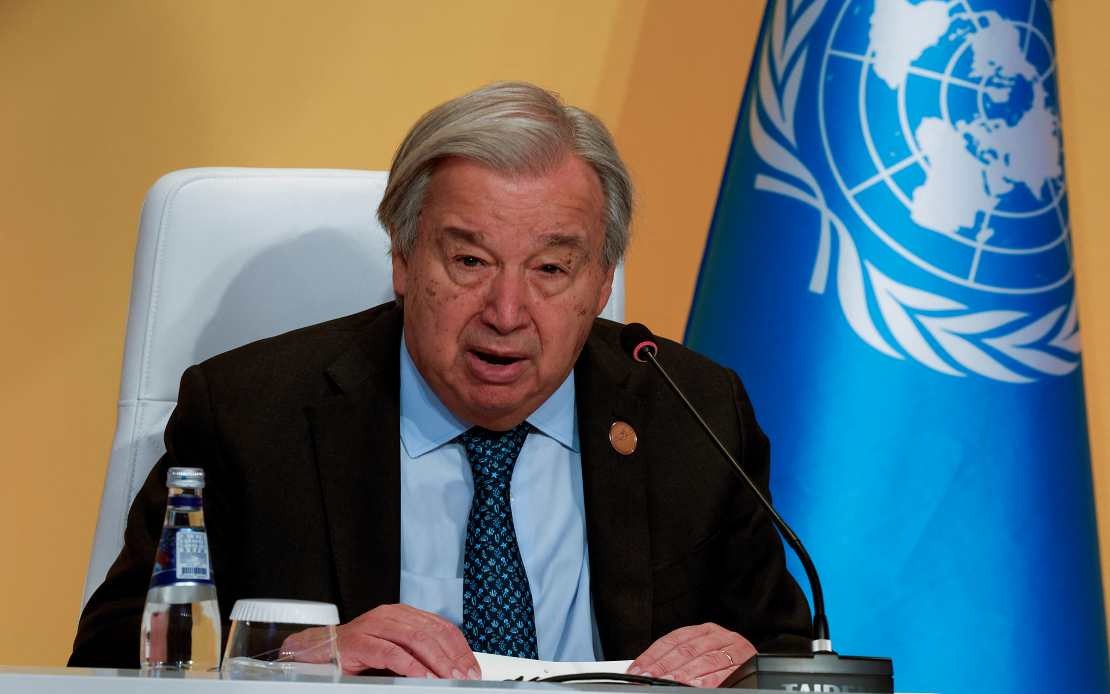
The United Nations leadership is sounding urgent alarm bells over rapidly deteriorating security conditions in the Gulf region, with Secretary-General Antonio Guterres expressing grave concern about the cycle of military confrontations that threatens regional and global stability. Through his spokesperson Stephane Dujarric, the UN chief underscored the severity of the situation by highlighting a troubling pattern of escalatory incidents—Iranian attacks on maritime vessels transiting the Strait of Hormuz, American military responses targeting Iranian assets, and subsequent Iranian strikes against facilities across neighbouring countries. This tit-for-tat dynamic represents precisely the kind of uncontrolled escalation that international peacekeeping bodies fear most, particularly when nuclear-armed or technologically advanced nations are involved.
Dujarric's statement, delivered on Sunday, contained an emphatic message directed at all belligerents: the imperative to step back from the brink. The UN chief's appeal for "maximum restraint" signals that even incremental further military action risks spiralling into open conflict. This language carries particular weight given Guterres's position as the world's foremost advocate for peaceful resolution of disputes. The call for parties to "avoid further escalatory action and take immediate steps to de-escalate" reflects a diplomatic strategy aimed at breaking the current momentum toward conflict by introducing deliberate pauses that allow space for cooler heads to prevail.
The potential consequences of unabated hostilities would extend far beyond the Gulf itself, creating ripple effects across multiple dimensions of international concern. The secretary-general explicitly warned that a return to full-scale military operations would prove catastrophic for the region's civilian populations, who would bear the human cost of renewed warfare. Beyond humanitarian suffering, such escalation would destabilise the global order and severely disrupt international commerce and energy supplies. For Malaysia and other Southeast Asian economies heavily dependent on secure maritime trade routes and stable energy markets, the implications are substantial—any disruption to Gulf shipping or petroleum flows could trigger supply chain disruptions and inflationary pressures affecting everything from fuel prices to manufacturing costs.
The emphasis on restoring "full freedom of navigation" in the Strait of Hormuz reflects a core international principle that transcends any single bilateral dispute. Through which roughly one-third of global seaborne traded oil passes annually, the strait represents a critical artery in the world's economic circulatory system. When maritime navigation becomes contested territory, the entire international community faces consequences. The UN position maintains that regardless of underlying political or military disagreements, no power should be permitted to weaponise control of this vital waterway.
Crucially, the UN statement pivots toward diplomacy as the only viable path forward, directly calling on Iran and the United States to resume negotiations. This appeal acknowledges a fundamental reality: military escalation has proven incapable of resolving the underlying disputes between these two nations. The accumulation of tit-for-tat attacks demonstrates that each side's military responses fail to compel the other toward capitulation or concession. Instead, the pattern perpetuates grievance and justifies further retaliation in a self-reinforcing cycle. Diplomatic channels, by contrast, offer mechanisms for addressing outstanding issues through structured dialogue, compromise formulations, and third-party mediation.
The international community's anxious observation of these developments reflects awareness of how quickly Gulf crises can metastasise into broader regional and global conflicts. Historical precedent offers cautionary examples—the 1973 Yom Kippur War, the 1990 Iraqi invasion of Kuwait, and multiple phases of conflict between regional powers demonstrate how local disputes can rupture international stability and trigger worldwide economic shocks. Contemporary tensions carry additional complexity given the involvement of technologically sophisticated military forces and the presence of various proxy actors throughout the region.
For Southeast Asian nations including Malaysia, maintaining Gulf stability carries direct strategic interest. The region supplies critical energy resources and serves as a major transit corridor for trade flowing between Europe, Asia, and Africa. Economic interdependence means that prolonged instability in the Gulf inevitably reverberates through regional supply chains, investment flows, and financial markets. Malaysian companies with operations throughout the Gulf region face heightened operational risks, while Malaysian consumers ultimately absorb the costs of energy price volatility triggered by geopolitical upheaval.
The UN secretary-general's intervention demonstrates the institution's continuing relevance in addressing major power tensions, even as traditional multilateral frameworks face credibility challenges. By articulating widely shared international interests—stable maritime commerce, civilian protection, adherence to international law—the UN provides a neutral platform for expressing global concerns without appearing to take sides in bilateral disputes. This positioning can prove valuable in creating diplomatic openings.
Ultimately, whether either party heeds the UN appeal depends on calculations of national interest and perceptions of relative strength. The secretary-general's ability to influence outcomes remains limited when major powers prioritise confrontation over cooperation. Nevertheless, the clear articulation of potential catastrophic consequences carries moral and diplomatic weight. The UN statement essentially warns that continued escalation will produce outcomes satisfying neither party while harming innocent civilians and destabilising the global order—a message that resonates particularly strongly for smaller nations dependent on peaceful international commerce and stability.

