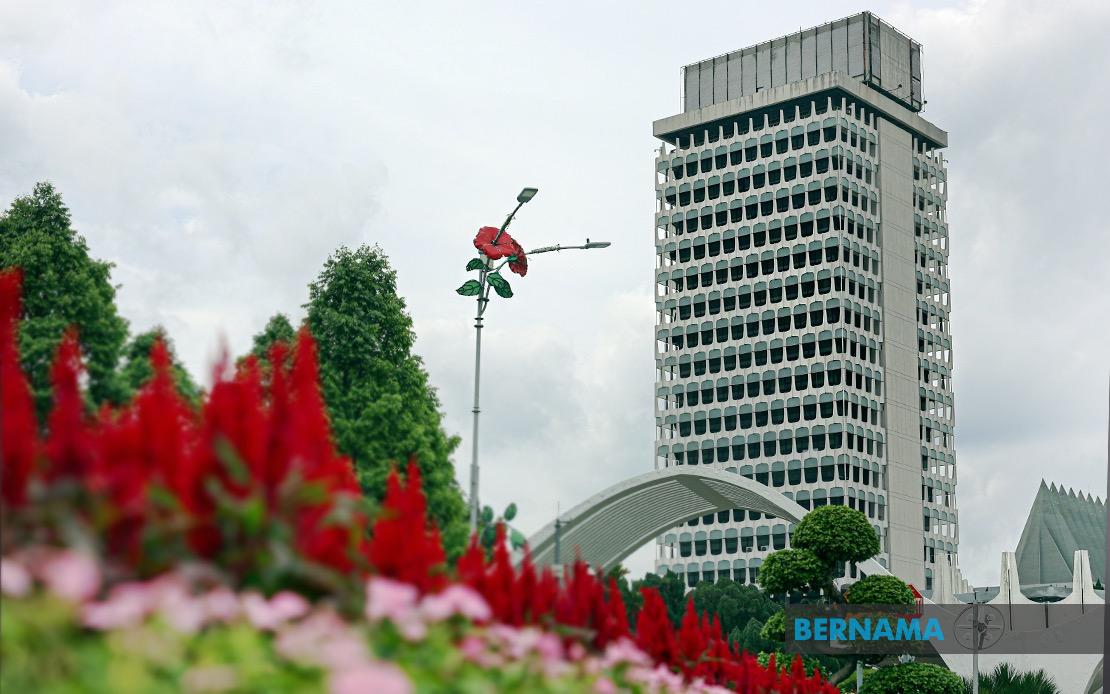
Malaysia's lawmakers will confront three pressing international and domestic concerns when the Dewan Rakyat reconvenes in Kuala Lumpur today, signalling the government's focus on systemic global governance reform, agricultural sustainability, and national defence autonomy. The 16-day parliamentary session, which runs until July 16, will feature parliamentary questions addressing the structural inequities within the United Nations Security Council, the country's readiness to mitigate an anticipated food shortage, and Malaysia's reliance on foreign military suppliers—issues that collectively reflect deepening anxieties about regional stability and self-sufficiency.
The question of UN Security Council reform has emerged as a significant diplomatic priority for the government. Datuk Seri Sh Mohmed Puzi Sh Ali, representing the Pekan constituency under the Barisan Nasional coalition, will press the Foreign Minister to articulate Malaysia's strategic blueprint for advancing institutional changes within the UN system. The enquiry extends beyond rhetorical commitment to reform, seeking clarification on concrete steps the administration intends to pursue to elevate Malaysia's standing and influence within the world body. The veto authority concentrated among permanent Security Council members has long constrained global responses to humanitarian crises and regional conflicts, a structural weakness that developing nations like Malaysia have increasingly criticised as undermining the UN's legitimacy and efficacy.
Parallel to diplomatic questions, agricultural security has surfaced as a matter demanding immediate parliamentary scrutiny. Shaharizukirnain Abd Kadir, a Perikatan Nasional representative from Setiu, will demand disclosure of the government's contingency strategies to navigate an anticipated food supply crisis. His question specifically targets the effectiveness of financial incentives distributed to agricultural states in strengthening domestic food production capacity. This inquiry arrives amid mounting agricultural input costs, a consequence of geopolitical tensions in West Asia that have disrupted fertiliser markets and pushed production expenses beyond traditional benchmarks. Malaysia, as a net food importer heavily dependent on imported staples from Thailand, Vietnam, and Indonesia, remains vulnerable to supply chain disruptions and price volatility—concerns that have intensified following recent regional developments.
The government's track record in promoting self-sufficiency in food production has proven mixed. Successive administrations have launched various agricultural support schemes, yet Malaysia continues to rely significantly on imported grains, proteins, and fresh produce. The parliamentary question reflects mounting urgency to demonstrate tangible progress, particularly as inflation pressures households and consumer confidence faces headwinds. Policymakers must balance support for domestic farmers against the economic reality that imported food often undercuts locally produced alternatives in price, creating a dilemma for a government attempting to reconcile affordability with agricultural sector viability.
Defence procurement autonomy presents another dimension of national vulnerability now entering parliamentary debate. Datuk Awang Hashim from Pendang will interrogate the Defence Minister regarding the extent to which Malaysia's armed forces depend on foreign suppliers and how this dependency shapes strategic planning for critical national assets. Beyond this structural concern, he seeks assurance about measures to mitigate supply disruptions, reduce delivery delays, and forestall contract cancellations. The Malaysian Armed Forces procurement landscape has historically been shaped by relationships with international defence contractors, yet geopolitical friction and sanctions regimes have occasionally complicated acquisition timelines and pricing. This question underscores a broader regional anxiety about ensuring autonomous capacity for national defence without surrendering to any single foreign power.
Parallel parliamentary enquiries will address energy transition priorities. Rodiyah Sapiee, representing Batang Sadong under the GPS coalition, will ask the Science, Technology and Innovation Minister to outline coordination mechanisms between federal and state-level energy policies to catalyse green hydrogen development. Her question spotlights Sarawak's ambitions to establish itself as Southeast Asia's premier green hydrogen production hub—an aspiration that carries substantial economic and geopolitical implications. Green hydrogen production aligns with global decarbonisation trajectories while potentially positioning Sarawak as a critical energy exporter within the region, contingent on coordinated investment in infrastructure, research capacity, and international partnerships.
The parliamentary agenda extends beyond oral questions into substantive legislative business. Seven government Bills will proceed to first reading, including instruments addressing communications and multimedia regulation, social work professions, and paddy and rice control mechanisms. The Communications and Multimedia (Amendment) Bill 2026 and its companion Malaysian Communications and Multimedia Commission (Amendment) Bill 2026 will likely provoke debate around content regulation, digital freedoms, and jurisdictional clarity in an increasingly complex online environment. Meanwhile, the Control of Paddy and Rice (Amendment) Bill 2026 touches directly on agricultural policy, following resumed deliberation on earlier debate sessions.
The convergence of these questions and legislative initiatives illustrates a parliament grappling with interconnected vulnerabilities: diplomatic marginalisation within global institutions, precarious food supply chains, defence procurement dependencies, and the energy transition. Malaysia's position as a mid-sized economy in a strategically crucial region demands simultaneous attention to multiple fronts—maintaining diplomatic influence, securing basic necessities for citizens, ensuring military capability, and positioning itself advantageously within emerging economic sectors. The parliamentary session thus provides a barometer of whether the government has developed coherent, integrated strategies addressing these challenges or whether it continues to respond reactively to external pressures.
For Malaysian observers and regional analysts, the tenor and substance of parliamentary responses will signal the administration's strategic clarity and its capacity to mobilise resources toward long-term resilience. The questions posed reflect legitimate citizen concerns about national security, economic stability, and global standing—anxieties that transcend partisan divisions and warrant serious, substantive engagement from policymakers responsible for steering the nation through a period of considerable international flux.

