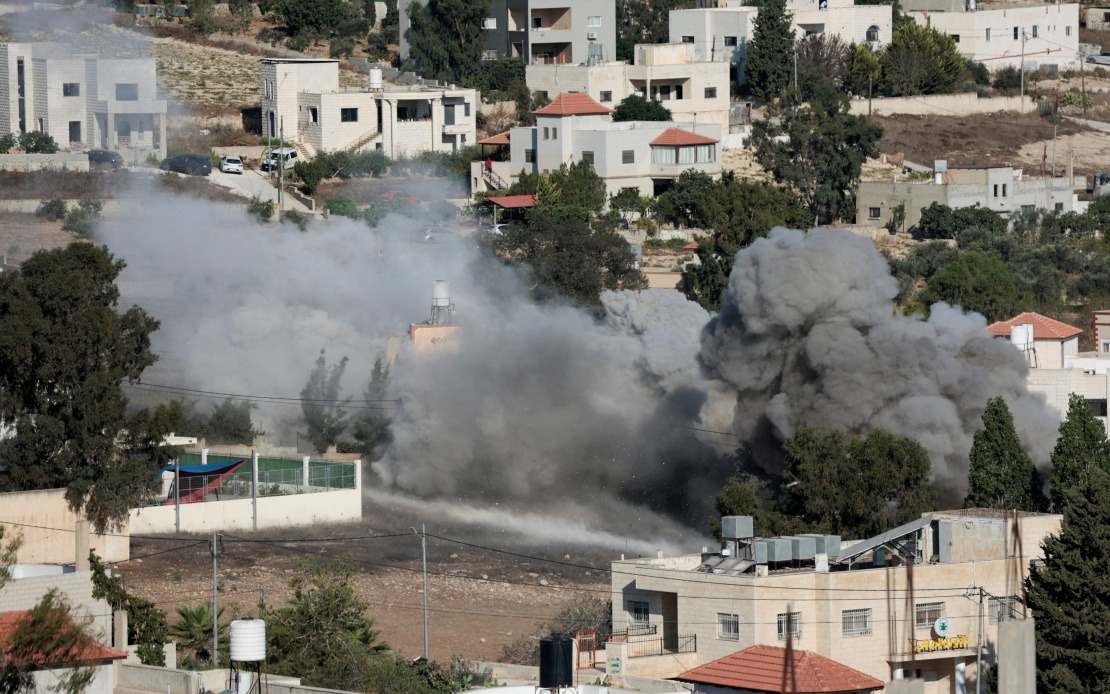
The United Nations Human Rights Office operating in the Occupied Palestinian Territory has issued a stark warning about the escalating violence perpetrated by Israeli settlers against Palestinian civilians, describing the situation as having reached levels that can no longer be tolerated. The office has called for urgent intervention from Israeli authorities, specifically demanding the removal of settlers who engage in violent confrontations with Palestinians and the cessation of land seizures and colony expansion activities.
The concerns outlined in Thursday's statement centre on a pattern of violence that extends far beyond isolated incidents. The office documented a range of abusive practices, including forcible entry into homes, physical beatings, property destruction, theft, and arson attacks. These actions represent a systematic approach to intimidating Palestinian residents, with some assaults targeting community infrastructure such as mosques. For Malaysian observers familiar with discussions of collective punishment and civilian protection under international humanitarian law, the scale and nature of these actions raises significant questions about adherence to established legal frameworks.
One particularly severe case examined by the UN office involves settlers from a colony established near Qusra, south of Nablus, in November 2025. Following the settlement's establishment, the frequency and intensity of attacks against neighbouring Palestinian communities increased markedly. The situation deteriorated dramatically when settlers cut off water and electricity supplies to three Palestinian homes in the Ras al-Ain area, fundamentally undermining the residents' ability to sustain basic living conditions.
The situation deteriorated further when settlers subsequently sealed all access points to these homes by closing gates and erecting barriers, effectively imprisoning three Palestinian families comprising approximately 15 people, including at least two children. Residents found themselves unable to leave their homes or receive assistance, trapped in a situation where their fundamental needs for water, food, and medical care could not be met. The families' attempts to seek help from Israeli military forces stationed nearby proved unsuccessful, as those forces declined to intervene despite witnessing the confinement.
During this period of isolation, the UN office documented that paramedics, humanitarian workers, and journalists were prevented from approaching the affected homes, further restricting the families' access to assistance and external documentation of their situation. While Israeli soldiers eventually removed the physical barriers constructed by settlers on August 12, they notably did not remove the settlers themselves, who continued to maintain a threatening presence around the homes. This selective action suggests a distinction in enforcement that the UN considers problematic under occupation law.
The UN Human Rights Office characterised these actions as criminal conduct carried out either with explicit support or implicit tolerance from Israeli authorities acting as the occupying power. The office stressed that such systematic harassment and physical isolation constitute deliberate efforts to force Palestinian families from their homes and ancestral lands through intimidation and deprivation rather than through legal processes. This interpretation aligns with international legal principles regarding forced displacement and the rights of civilians in occupied territories.
For Southeast Asian nations following this situation, the case raises important questions about the application of international humanitarian law and the International Court of Justice's 2024 advisory opinion affirming that all Israeli settlements contravene international law. The UN office reiterated that this ruling requires Israel to halt all settlement expansion, evacuate colonists, and terminate its unlawful presence in the West Bank. The emphasis on the ICJ's position reflects growing international consensus on this matter, though implementation remains contested.
The UN's statement highlighted Israel's obligations under international law to protect civilian populations regardless of nationality or status, extending to Palestinians living under occupation. These responsibilities encompass preventing settler violence, conducting thorough investigations into attacks, holding perpetrators accountable through proportionate penalties, and ensuring consequences for officials who tolerate or facilitate such abuses. The office implied that current enforcement mechanisms have proven inadequate to address the scope of violations occurring.
The situation in Qusra exemplifies a broader pattern documented across the West Bank, where settler communities have expanded territorially while Palestinians have experienced increasing restrictions on movement and resource access. The convergence of physical violence, economic deprivation through utility cutoffs, and movement restrictions creates what international observers describe as an environment designed to make Palestinian residence untenable. The UN's warning that time is running out for the three families underscores the urgency officials perceive regarding potential forced displacement.
For Malaysian policymakers and civil society organisations engaged with human rights advocacy, this case presents concrete examples of international legal frameworks in practice and the challenges of enforcement when powerful states resist implementation. The gap between established legal standards and actual ground conditions in occupied territories reflects broader questions about international law's effectiveness and the mechanisms available for accountability. The situation also illuminates why many nations have adopted positions critical of settlement expansion and supportive of Palestinian self-determination.
The UN's call for accountability extends beyond individual settlers to encompass Israeli security forces and administrative officials who either facilitate violence or fail to prevent it. This systemic approach recognises that settler violence rarely occurs in isolation from state structures and that patterns of abuse typically reflect institutional tolerance. The office's emphasis on investigating not just perpetrators but also supporters and enablers suggests frustration with previous attempts to address these issues through narrow criminal prosecution alone.

