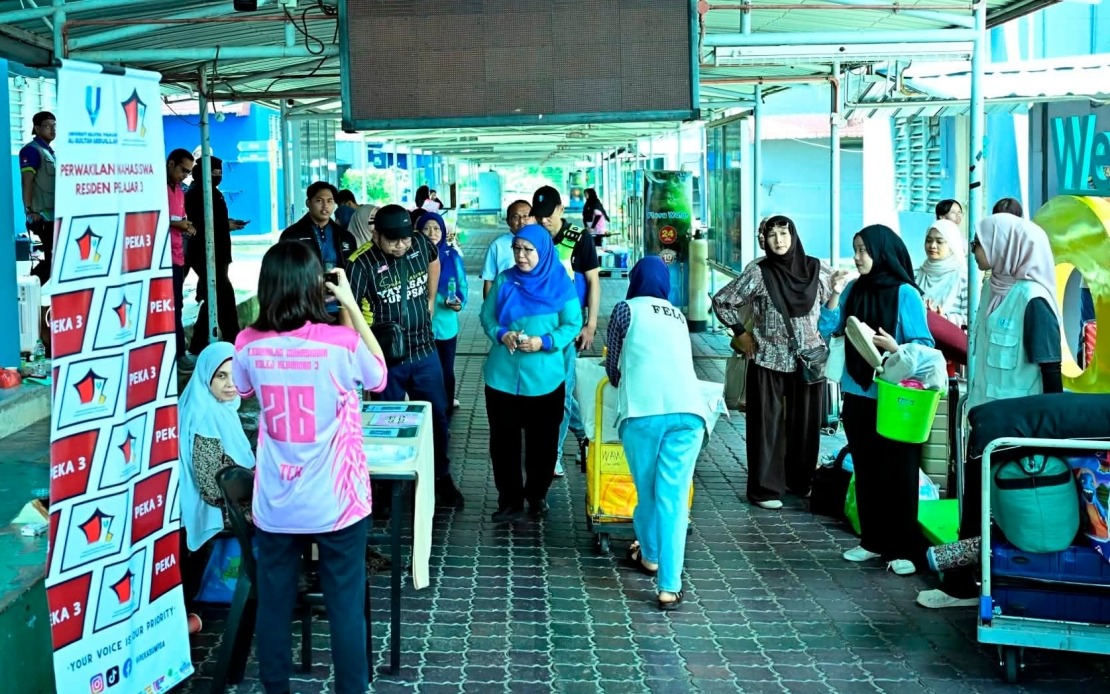
Universiti Malaysia Pahang Al-Sultan Abdullah (UMPSA) has underscored its unwavering dedication to supporting economically disadvantaged students, ensuring that financial circumstances do not impede access to quality higher education. Vice-chancellor Prof Dr Yatimah Alias made the commitment during the institution's diploma registration period, emphasising that UMPSA views student welfare as central to its educational mission. The university's proactive stance reflects broader challenges facing Malaysian higher education, where many capable students from lower-income households struggle to afford tuition and living expenses despite meeting academic entry requirements.
The financial support mechanisms UMPSA has established demonstrate a systematic approach to removing barriers to university attendance. Twenty diploma students received scholarships covering the full spectrum of their educational costs, including tuition fees and monthly living allowances that enable them to focus on studies rather than immediate financial survival. This comprehensive assistance model recognises that educational success depends not merely on academic capability but on the practical ability to remain enrolled throughout a programme without interruption. For many families in rural Pahang and surrounding regions, such support transforms the feasibility of higher education from aspiration to achievable reality.
Beyond traditional scholarship mechanisms, UMPSA has introduced the Early Education Incentive, a RM1,000 grant programme administered through the UMPSA Foundation for students facing immediate financial hardship. This responsive approach acknowledges that financial crises can emerge unexpectedly during an academic year, threatening student retention. The grant programme functions as both safety net and practical acknowledgement that poverty often manifests in episodic crises rather than steady deprivation. By providing rapid emergency support, UMPSA reduces the likelihood that temporary financial setbacks force talented students to abandon their education.
Yatimah's statements regarding equal educational opportunity reflect Malaysia's ongoing commitment to social mobility through education. Access to diploma programmes, which form a critical pathway into the workforce and further academic study, remains unequally distributed across socioeconomic groups. By actively recruiting and supporting students from disadvantaged backgrounds, UMPSA contributes to diversifying the student body and ensuring that professional and technical expertise develops across a broader cross-section of Malaysian society rather than concentrating within already-privileged groups.
The timing of these welfare initiatives coincides with UMPSA's unprecedented enrolment expansion. A total of 1,045 new diploma students registered for the 2026/2027 academic session, representing the highest intake since the institution's establishment. This significant growth creates both opportunity and obligation: expanded capacity enables more students to access education but simultaneously demands proportionately greater institutional resources for student support services. UMPSA's concurrent emphasis on welfare mechanisms suggests the university recognises that expansion without adequate support infrastructure risks reproducing inequality rather than ameliorating it.
Financial assistance initiatives like those at UMPSA address a systemic challenge in Malaysian higher education. While public universities charge substantially lower fees than private institutions, the total cost of diploma and degree programmes remains prohibitive for families in the bottom income deciles. Accommodation, textbooks, transport, and daily expenses accumulate rapidly, particularly for students from rural areas relocating to university towns. Scholarship and grant programmes effectively redistribute institutional resources toward students most likely to otherwise abandon their studies, thereby improving overall institutional completion rates and maximising societal return on educational investment.
The academic support component that Yatimah referenced operates alongside financial assistance. Students from disadvantaged educational backgrounds often require additional tutoring, writing centres, and mentorship to succeed in higher education environments. This comprehensive approach to student success recognises that poverty frequently correlates with attendance at under-resourced secondary schools, meaning disadvantaged university students may require remedial academic support their more privileged peers do not need. Institutional commitment to such support distinguishes universities genuinely dedicated to equity from those offering scholarships as symbolic gestures.
For Malaysian policymakers and educational administrators, UMPSA's model offers useful lessons regarding sustainable approaches to access and equity. Rather than viewing student welfare as marginal institutional responsibility, UMPSA integrates support mechanisms throughout its operational structure. The Vice-chancellor's personal engagement with new students during registration signifies that welfare considerations occupy institutional leadership attention, not merely administrative sidelines. This visibility communicates to disadvantaged students that their presence matters to the institution's senior decision-makers.
The scholarship initiative also reflects evolving attitudes toward diploma qualifications within Malaysian education systems. Historically marginalised relative to university degrees, diploma programmes now receive increased recognition as credible pathways to skilled employment. UMPSA's substantial investment in diploma student recruitment and support suggests institutional confidence that these programmes serve genuine workforce development needs. For students unable to pursue bachelor's degrees, well-supported diploma pathways offer realistic routes to economic security and professional advancement.
Looking forward, UMPSA's expansion and welfare commitments establish benchmarks for other Malaysian higher education institutions. As universities face pressure to increase enrolment to support demographic and economic objectives, the question of whether expansion includes corresponding commitment to disadvantaged student support becomes increasingly significant. Institutions expanding access without ensuring adequate welfare infrastructure risk creating cohorts of underprepared, unsupported students whose failure rates ultimately damage institutional reputation and waste public educational investment.

