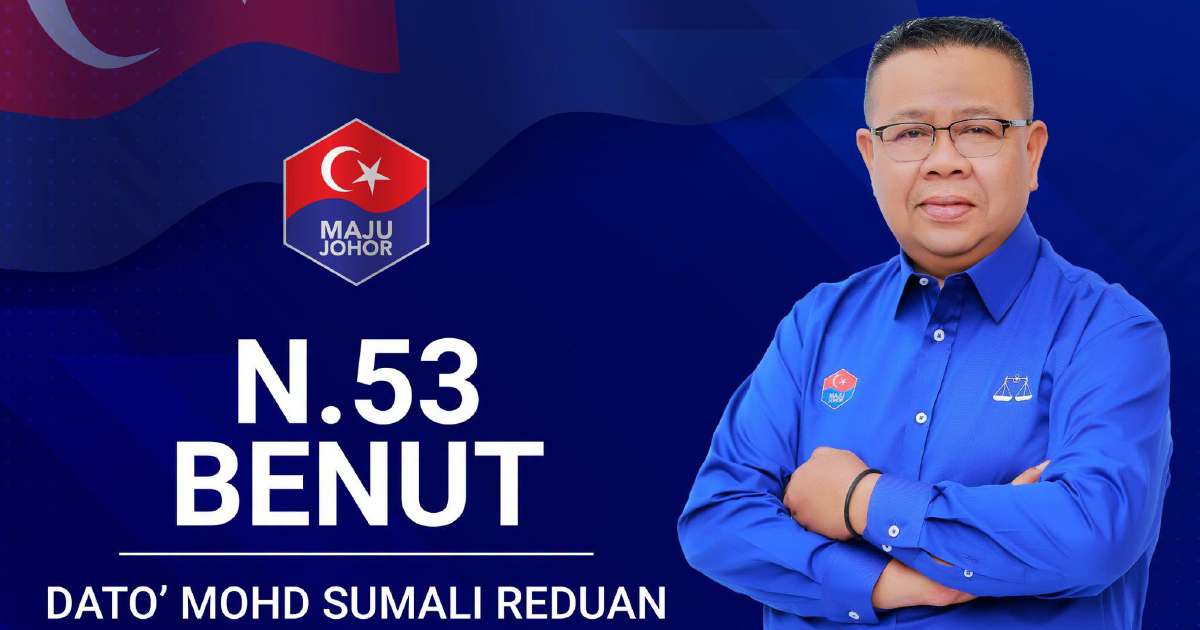
Johor's Barisan Nasional coalition has turned to Umno party executive Datuk Mohd Sumali Reduan to contest the Benut state seat in the approaching state election, signalling the ruling coalition's confidence in deploying administrative talent into the competitive electoral arena. The selection of Sumali Reduan, who serves as the party's executive secretary, represents a calculated move by Umno to leverage internal party machinery and organisational experience in what appears to be a strategically important constituency.
Benut, located within Johor Baru district, has featured prominently in recent state political contests and carries significance for both Barisan Nasional's maintenance of parliamentary dominance and opposition efforts to consolidate strength in the southern region. The constituency's social and economic composition—encompassing both urban and semi-rural populations—demands candidates capable of addressing diverse voter concerns ranging from infrastructure development to agricultural support. By nominating Sumali Reduan, Barisan Nasional appears confident that his administrative background within party structures will translate effectively into grassroots representation.
Sumali Reduan's appointment as candidate represents a notable career progression and marks his transition from behind-the-scenes party operations into direct electoral competition. As executive secretary of Umno, he would have developed extensive networks within the party's organisational hierarchy and maintained relationships with divisional leaders across the state. These connections could prove invaluable in mobilising grassroots support and coordinating campaign mechanics during the election period. However, his candidature also represents a test of whether internal party administrative credentials carry sufficient weight among voters prioritising constituency-level development and accessibility.
The Johor election campaign environment has become increasingly competitive, with opposition parties strengthening their presence across multiple seats. Barisan Nasional's selection of newer faces like Sumali Reduan suggests the coalition recognises the need for refreshed candidates capable of engaging younger voters and presenting alternative narratives to established political challengers. The party has likely assessed voter sentiment in Benut and determined that Sumali Reduan's administrative experience and party standing provide competitive advantages over potential opposition nominees.
Umno's positioning of senior administrative officials as electoral candidates reflects broader coalition strategy in Johor, where the party maintains numerical superiority but faces consistent pressure to retain previously secure constituencies. The deployment of party machinery executives into electoral politics serves dual purposes: it tests their political viability and public appeal while simultaneously signalling party unity and confidence in the candidacy. Such moves typically indicate internal party consensus around electoral strategy and the distribution of available resources across prioritised seats.
Malaysian electoral contests have increasingly emphasised candidates' ground engagement and demonstrated commitment to constituency development outside election periods. Voters across urban and semi-urban constituencies like Benut increasingly scrutinise candidates' accessibility records, responsiveness to constituent complaints, and tangible initiatives addressing local concerns. Sumali Reduan's primarily administrative background may necessitate intensive ground-building efforts to establish direct relationships with diverse voter groups and demonstrate understanding of Benut-specific challenges requiring state-level solutions.
The Benut selection illustrates Barisan Nasional's continued confidence in Umno's organisational capacity to deliver electoral victories, particularly in constituencies where party machinery remains substantially intact. Umno's extensive divisional structures throughout Johor represent significant resources that newer or weaker political organisations cannot readily replicate. Leveraging executive-level party members as candidates enables Umno to maintain tight control over campaign messaging while simultaneously introducing personnel viewed as representing progressive, professionally-oriented party direction.
Johor's political landscape has shifted considerably following earlier electoral cycles, with varying levels of competition across different constituencies and evolving voter preferences regarding candidates' qualifications and accessibility. Barisan Nasional's continued dominance in the state, while substantial, has faced periodic challenges requiring strategic recalibration of candidate selection approaches and campaign resource allocation. The decision to field Sumali Reduan in Benut reflects calculations regarding both the constituency's electoral dynamics and the party's broader competitive positioning throughout the state.
For Malaysian political observers tracking Umno's internal evolution and Barisan Nasional's coalition management, Sumali Reduan's electoral debut provides valuable insight into how traditionally administrative party positions connect with political representation. His campaign performance in Benut may influence future decisions regarding placement of senior party officials into electoral contests. Success would reinforce reliance on administrative expertise as campaign credential, while electoral difficulty might prompt Barisan Nasional to reconsider the balance between internal party credentials and voters' demand for candidates with demonstrated constituency engagement histories preceding candidacy announcement.