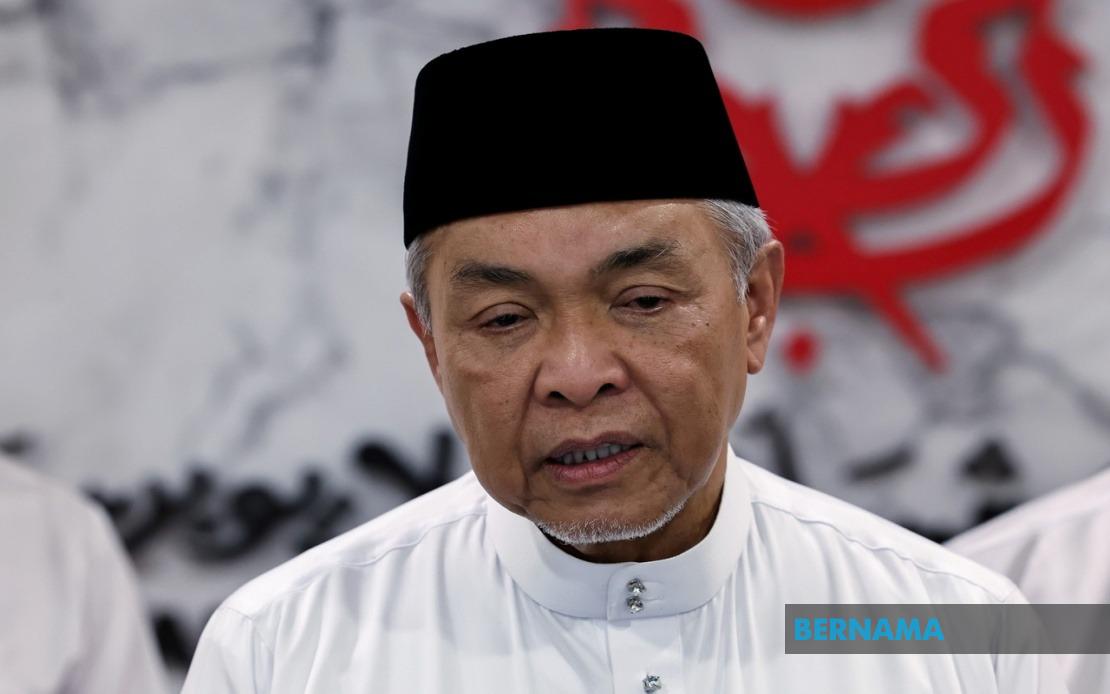
UMNO's leadership has signalled its readiness to engage in substantive negotiations regarding potential political alliances for the forthcoming Melaka state election, with discussions to commence only after the state legislative assembly undergoes formal dissolution. Party president Datuk Seri Dr Ahmad Zahid Hamidi, who also serves as Deputy Prime Minister, made this announcement in Kuala Lumpur on August 30, emphasising that while preliminary conversations may already be occurring informally amongst party members, any binding negotiations would await the official dissolution process. The decision reflects UMNO's disciplined approach to coalition-building, establishing a clear demarcation between exploratory discussions and formal commitment to potential partners.
Chief Minister Datuk Seri Ab Rauf Yusoh has been tasked with overseeing the negotiation framework, positioning him as the primary figure responsible for orchestrating UMNO's engagement with other political entities seeking collaboration in the state contest. This delegation to the Chief Minister underscores the party's recognition that state-level political dynamics require localised decision-making authority, particularly when navigating complex coalition mathematics. The assignment also reflects Zahid's confidence in Yusoh's political acumen and his understanding of Melaka's electoral terrain, which has historically proven volatile and competitive across multiple constituencies.
The UMNO president's remarks arrived in response to persistent queries regarding the party's stance toward potential cooperation with Perikatan Nasional (PN), a significant coalition partner in Malaysia's current federal administration. The question of whether UMNO and PN would contest together or separately in Melaka represents a strategically consequential matter for both organisations, as alliance configurations substantially influence seat distribution and electoral outcomes. PN's presence in Melaka politics remains noteworthy, and any formal arrangement—or deliberate decision to contest independently—carries implications for vote-splitting dynamics and overall electoral performance.
Prior to publicly addressing speculation about coalition possibilities, Zahid conducted extensive consultations within UMNO's Melaka political leadership. He engaged comprehensively with members of the UMNO Melaka Political Bureau, during which party operatives presented detailed organisational preparations and strategic positioning for the forthcoming election campaign. This internal briefing enabled senior party leadership to review pertinent information and assess the party's readiness across various constituencies and demographic segments within the state.
The insights gathered through UMNO Melaka's operational structures, including data compiled by the party's dedicated campaign operations centre, subsequently received scrutiny during a plenary session of the UMNO Supreme Council (MKT). This elevated deliberation ensured that federation-level party leadership maintained visibility over state-specific intelligence and strategic assessments, facilitating coordinated decision-making between federal and state party apparatus. The layered consultation process demonstrates institutional discipline within UMNO's governance framework, whereby critical political decisions undergo comprehensive internal vetting before public articulation.
Melaka's electoral significance within Malaysia's broader political landscape warrants particular attention, as the state has demonstrated considerable volatility in recent election cycles. The state has historically served as an important testing ground for coalition arrangements and organisational strategies, with its relatively compact voter population permitting intensive campaign efforts. Electoral momentum achieved in Melaka frequently generates ripple effects influencing perceptions of party momentum nationally, particularly given media attention surrounding competitive state contests.
The timing of Zahid's announcement reflects practical realities governing Malaysian electoral law and constitutional procedures. Dissolution of a state legislative assembly represents a formal institutional step preceding election scheduling, and UMNO's deliberate decision to await this procedural event before commencing formal negotiations demonstrates adherence to established political conventions. This approach also mitigates potential complications arising from premature public alliance declarations, which could inadvertently constrain negotiating flexibility or generate intra-party friction during delicate coalition discussions.
For Malaysian political observers and stakeholders monitoring coalition dynamics, UMNO's measured stance carries significance beyond Melaka's borders. The mechanisms through which UMNO structures internal deliberation regarding alliance decisions provide insights into the party's broader approach toward political cooperation, particularly as federal politics continues evolving in response to shifting electoral mathematics and demographic realities. The party's insistence upon formal institutional processes before binding commitments suggests institutional conservatism, potentially reflecting lessons from previous coalition experiences.
The uncertainty surrounding PN cooperation reflects broader complexities within Malaysia's current coalition landscape. While PN and UMNO represent complementary political forces within the federal government, their state-level relationship dynamics sometimes diverge from national-level arrangements. Melaka's particular political circumstances—including existing seat distributions, incumbent positions, and local factional alignments—create scenarios whereby state-level cooperation may prove either strategically essential or potentially counterproductive depending on specific electoral calculations.
For Malaysian voters and political analysts, the formal negotiations set to commence following assembly dissolution will warrant close scrutiny. Coalition arrangements established for Melaka may establish precedents or reveal strategic priorities that shape UMNO's approach toward forthcoming contests in other states, particularly as Malaysia's electoral calendar unfolds across multiple years and multiple constituencies. The Melaka election thus assumes importance transcending its immediate state-level implications, serving as an indicator of broader coalition stability and UMNO's evolving political positioning within Malaysia's contemporary electoral environment.

