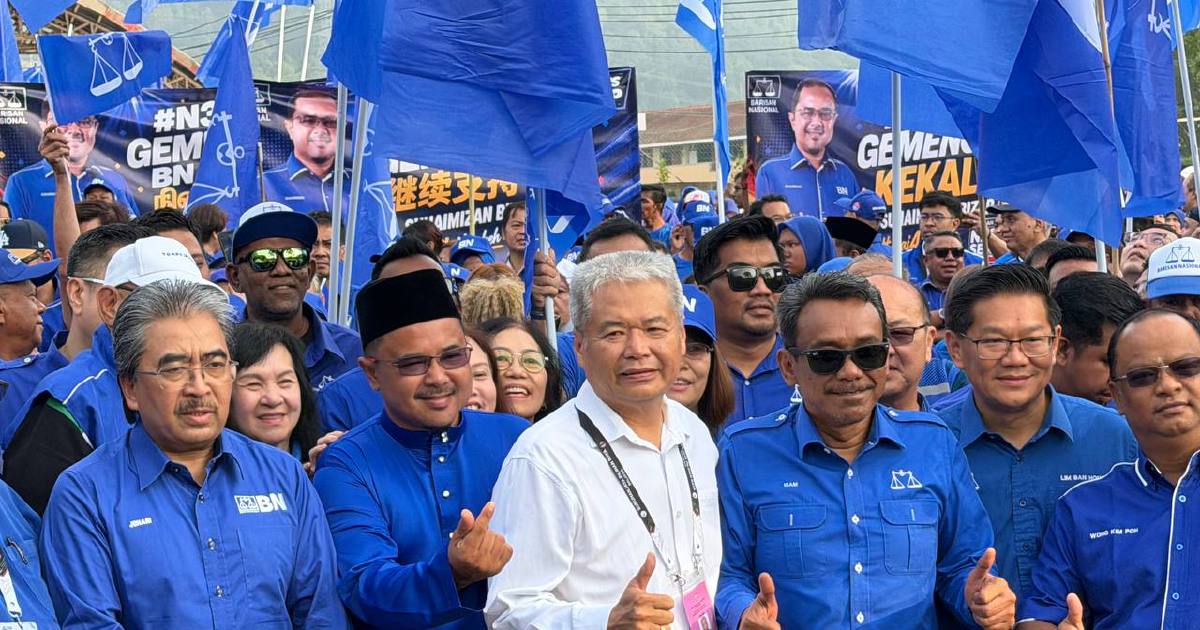
Umno vice-president Datuk Seri Johari Abdul Ghani and party treasurer Datuk Seri Tengku Adnan Tengku Mansor made a high-profile appearance at Dewan Perdana Tampin on Monday morning, positioning themselves alongside Barisan Nasional candidates preparing to contest in the Negri Sembilan state election. Their presence at the nomination centre underscored the coalition's emphasis on party unity and leadership visibility during a pivotal electoral period for the state.
The arrival of these two senior figures represented a calculated display of UMNO's organisational strength and internal cohesion. As the largest component party within the ruling Barisan Nasional coalition, UMNO's positioning in state-level contests carries substantial weight in determining electoral outcomes and regional political momentum. The attendance of both the vice-president and treasurer signalled that party hierarchy viewed the Negri Sembilan contest as sufficiently important to warrant direct senior leadership engagement during the candidate nomination phase.
Tampin, situated in the southern region of Negri Sembilan, has historically served as a significant political battleground. The nomination centre witnessed the formal registration of candidates seeking to represent their respective parties and coalitions in the state election. The presence of Johari Abdul Ghani and Tengku Adnan Tengku Mansor conveyed a message of institutional party backing to candidates navigating the nomination process, a gesture intended to bolster their confidence and signal organisational support to the electorate.
Johari Abdul Ghani's position as UMNO vice-president places him among the party's top decision-making echelon, responsible for strategic direction and inter-party coordination. His direct involvement in supporting BN candidates reflected the party's determination to consolidate support across Negri Sembilan's diverse constituencies. Similarly, Tengku Adnan Tengku Mansor's role as treasurer positioned him as a custodian of party resources and financial strategy, his participation adding weight to the narrative of comprehensive institutional backing.
The Negri Sembilan state election represents a critical juncture for evaluating BN's electoral viability in a state where political fortunes have shifted significantly in recent electoral cycles. UMNO's commitment to visible leadership presence during nomination proceedings aimed to reinforce party discipline and demonstrate to members and supporters alike that senior figures remained actively engaged in the electoral process. Such visibility tends to strengthen grassroots morale and project an image of organisational preparedness to the broader electorate.
For Malaysian political observers, the strategic deployment of senior leadership at nomination centres reveals how parties calibrate their public messaging and resource allocation during election seasons. By positioning prominent figures at such venues, UMNO sought to frame its candidates as carrying the full weight of party institutional support rather than operating as individual political entrepreneurs. This approach has proven effective in communicating party unity, particularly when factions or internal divisions threaten to undermine electoral performance.
The timing of their appearance held particular significance given that nomination periods typically generate media coverage and public attention to electoral contests. Having senior party leadership present at nomination centres transforms what might otherwise be routine administrative procedures into occasions for political theatre and messaging, allowing parties to control narratives about their electoral readiness and confidence levels.
Negri Sembilan's electoral landscape reflects broader patterns of political competition in Malaysia's heartland states, where UMNO traditionally maintains organisational strength but faces increasing challenges from opposition coalitions and changing voter preferences. The state election provided BN with an opportunity to demonstrate its continued vitality and capacity to retain political control in constituencies that have formed part of its traditional support base.
The nomination centre gathering represented one of numerous such events occurring across Negri Sembilan as candidates from multiple parties and coalitions formalised their candidacy. The concentration of senior UMNO figures at Tampin specifically suggested the party viewed this particular constituency or group of constituencies as strategically important for the overall electoral outcome. Such targeted deployment of leadership resources indicates sophisticated campaign planning aimed at maximising electoral returns in priority battleground areas.
For voters in Negri Sembilan and observers monitoring national political developments, the presence of Johari Abdul Ghani and Tengku Adnan Tengku Mansor signalled that the state election would receive sustained attention from the coalition's leadership throughout the campaign period. This commitment of senior personnel suggested that BN anticipated a competitive contest requiring dedicated high-level engagement rather than a foregone conclusion that could be managed through routine party machinery.
The broader implications of such leadership visibility extend beyond immediate electoral considerations. By actively participating in the nomination process, senior UMNO figures reinforced the party's foundational narrative that it remains the dominant political force capable of marshalling institutional resources and maintaining internal discipline. This matters considerably for UMNO's positioning within the wider Malaysian political system, where questions about the coalition's future relevance and electoral competitiveness have become increasingly prominent following recent electoral setbacks in other states.
As Negri Sembilan moves forward with its election campaign, the early presence of party leadership at nomination venues established the baseline for what voters might expect in terms of engagement from BN and its component parties. The appointment of high-ranking figures to support candidates suggested the coalition intended to contest vigorously across the state rather than concede ground to opposition parties. For Malaysian political analysis, such developments provide important indicators about coalition morale, strategic priorities, and confidence levels entering what many observers view as a consequential state-level electoral contest.

