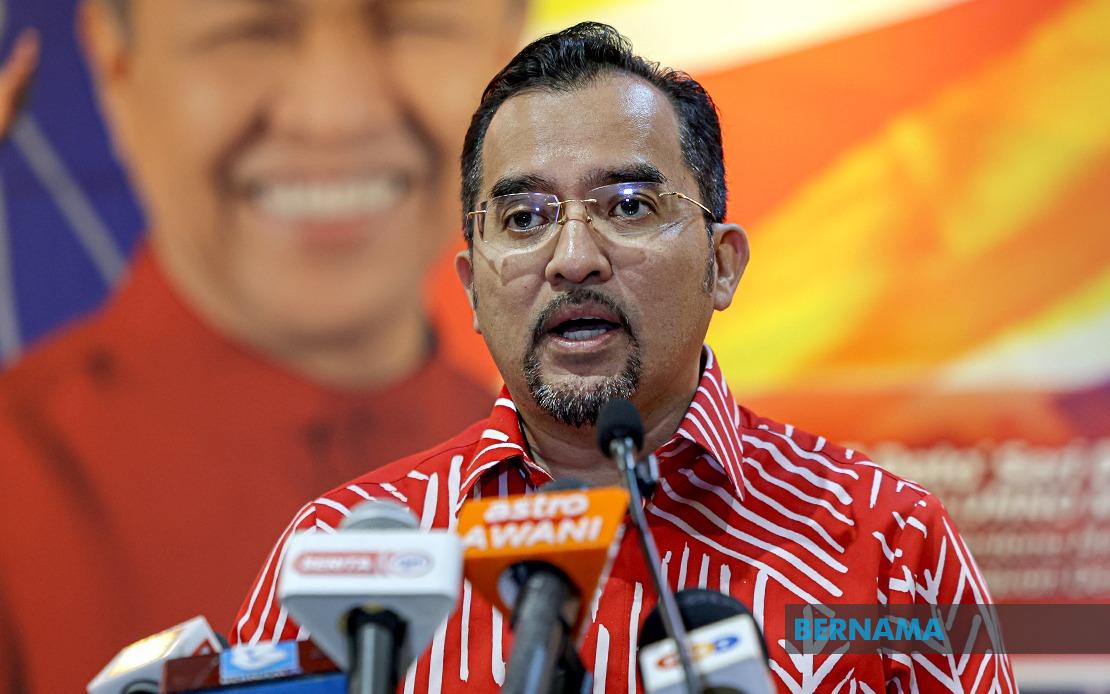
UMNO has given its state-level leadership the authority to engage in substantive discussions and negotiation frameworks with political parties seeking electoral cooperation in the lead-up to the next general election. The decision, announced by party secretary-general Datuk Dr Asyraf Wajdi Dusuki following a Supreme Council meeting chaired by president Datuk Seri Dr Ahmad Zahid Hamidi, represents a significant tactical shift that signals the party's openness to coalition-building while maintaining central oversight of core strategy.
The timing of this mandate carries considerable weight for Malaysian politics. By delegating negotiating authority to state chapters, UMNO effectively recognises the complex and fragmented nature of coalition-building across Malaysia's thirteen states and federal territories. State-level dynamics often diverge sharply from national positioning, and granting this flexibility allows UMNO representatives to respond swiftly to local political opportunities without waiting for centralised approval. Deputy president Datuk Seri Mohamad Hasan and other Supreme Council members were present during the deliberations, indicating this represented a consensus position within the party's upper echelons rather than a unilateral executive decision.
Crucially, Dr Asyraf Wajdi emphasised that any prospective arrangements must rest on foundations of genuine sincerity and mutual trust rather than coercive tactics or ultimatums. This phraseology suggests UMNO remains cautious about being pressured into unfavourable terms by negotiating counterparts, a concern particularly relevant given Malaysia's recent history of shifting coalitions and realignments. The specification serves as both a negotiating principle and an internal boundary, signalling to state leaders that opportunistic or rushed alliances will not pass muster with the national leadership.
The Supreme Council's agenda extended beyond electoral positioning. The gathering approved extending a formal invitation to PAS leadership to participate in UMNO's 2026 General Assembly, scheduled for September 9 through 12 at venues in Kuala Lumpur. This gesture, while ceremonial in appearance, carries symbolic weight within Malaysia's Islamist and conservative political circles. PAS and UMNO, despite historical rivalry and occasional cooperation, represent competing visions for Muslim-majority Malaysia's political future. The invitation acknowledges PAS as a legitimate interlocutor and suggests the possibility of future collaboration at the national level, even as both parties maintain separate electoral bases and ideological positions.
Accompanying the General Assembly will be three significant public-facing events scheduled for September 8. The 2026 Malay Education Convention represents UMNO's continued engagement with educational policy and the Malay-Muslim constituency's concerns about institutional representation and curriculum direction. The Malaysian Islamic Scholars Convention situates UMNO within a broader intellectual and religious framework, reinforcing the party's claim to custodianship of Islamic interests in Malaysian politics. Laman Wanita Kreatif, by contrast, targets women's participation and economic empowerment, recognising that female voters constitute a critical demographic swing group in contemporary Malaysian elections.
Dr Asyraf Wajdi also reiterated UMNO's commitment to the principle of rule of law and judicial integrity, stating explicitly that no individual should face presumption of guilt outside formal court proceedings. This pronouncement, whilst seemingly elementary in any functioning democracy, reflects ongoing tensions within UMNO regarding certain members' legal entanglements and the party's desire to distance itself from perceptions of protecting figures facing corruption or misconduct allegations. By emphasising that party membership does not exempt anyone from accountability, UMNO seeks to project an image of institutional integrity and respect for legal processes.
The party further clarified that it has consistently refused to shield members or leaders from legal consequences regardless of their status within UMNO's hierarchy. This stance responds, at least in part, to periodic criticism that UMNO has sheltered senior figures accused of financial irregularities or governance failures. The explicit reaffirmation signals an attempt to recalibrate the party's public positioning around transparency and adherence to constitutional frameworks, particularly important as Malaysia navigates persistent questions about institutional credibility and anti-corruption enforcement.
For Malaysian voters and regional observers, UMNO's recalibration carries implications extending beyond internal party management. The authorization for state-level negotiations suggests the party recognises that next-election outcomes will likely be determined at subnational levels, where local grievances, demographic composition, and incumbent performance diverge significantly from national narratives. This devolution of negotiating authority also hints at potential fracturing within UMNO itself, with state leaders potentially pursuing divergent coalition strategies that could complicate coordination at the national campaign level.
The invitation to PAS and the emphasis on Islamic scholarly and educational forums indicate UMNO remains committed to positioning itself as the primary representative of Malay-Muslim interests, a designation contested by PAS and increasingly by younger, urban voters attracted to alternative political movements. Whether state-level negotiations will produce substantive new coalitions or merely reinforce existing arrangements remains uncertain, but the mandate clearly signals UMNO's determination to remain electorally competitive through flexible, locally-responsive political positioning rather than rigid national directives.

