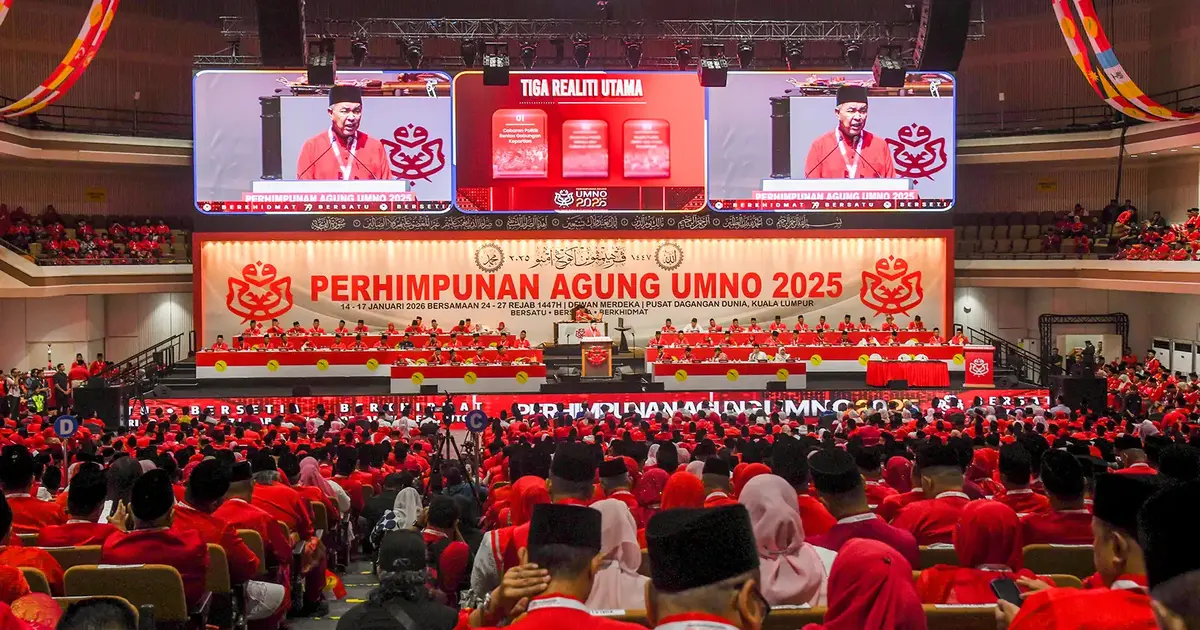
Friction has erupted within Umno's Negeri Sembilan division following the distribution of electoral seats between the party and its PN coalition allies, according to reports emerging from grassroots organisational channels. The allocation of 11 seats to PN in the state assembly contests has triggered significant unhappiness among senior division operatives, who view the arrangement as unfavourable to Umno's electoral prospects and political standing in the state.
The crux of the grievance centres on what division leaders perceive as disproportionate rewards for PN components, particularly the newcomer Wawasan. The party's receipt of four assembly constituencies marks an unusually generous distribution for an entity making its electoral debut, raising questions about the political logic underpinning the seat-sharing formula. This arrangement has proven especially galling to Umno grassroots figures who have invested years building party machinery and voter networks across the state.
Negeri Sembilan holds strategic importance within Malaysia's political architecture, serving as a barometer of sentiment in the central region and a crucial battleground for coalition stability. The state assembly elections carry implications extending beyond local governance, potentially signalling shifts in voter confidence that could reverberate through federal coalition dynamics. Umno's performance in the state directly affects its bargaining leverage within the broader Barisan Nasional and PN frameworks, making seat allocation decisions intensely scrutinised by party hierarchies.
The underlying tension reflects broader structural challenges within Malaysia's multi-party coalition arrangements. When partners negotiate seat distributions, they navigate competing pressures between rewarding electoral contribution, accommodating newer or smaller constituents seeking legitimacy, and maintaining internal party cohesion. Umno's experienced machinery and historical dominance in Negeri Sembilan create expectations that the party should command the preponderance of contested constituencies. Conversely, PN partners argue that inclusive seat-sharing strengthens coalition unity and prevents any single party from monopolising advancement opportunities.
Wawasan's emergence as a significant seat recipient despite no electoral track record suggests that coalition negotiators may have weighted factors beyond demonstrated voter mobilisation capacity. These could include attempts to rebuild PN credibility following recent electoral setbacks, political incentives to strengthen certain demographic communities' representation, or bilateral understanding with larger partners regarding future support mechanisms. For Umno divisions on the ground, however, such high-level strategic considerations offer little consolation when they must contest against entrenched opposition machinery with reduced resource allocation.
Division-level dissatisfaction carries practical consequences for campaign execution. Umno candidates in contested seats must operate with party resources stretched across a smaller representative footprint, while PN components enjoy concentrated support in their allocated constituencies. This imbalance potentially disadvantages Umno candidates in marginal constituencies where slim victory margins make resource efficiency decisive. The psychological impact on rank-and-file Umno members, who perceive unequal treatment despite their party's historical strength, risks dampening volunteer enthusiasm and fundraising energy during campaign periods.
The Negeri Sembilan situation exemplifies a recurrent problem within coalition politics across Southeast Asia. Smaller or newer parties frequently demand disproportionate seat quotas to justify their political participation, while established parties resist such claims as unfair to their organisational contributions. Malaysia's specific challenge involves managing these tensions across federal, state, and parliamentary constituency levels simultaneously, with decisions at one tier affecting expectations at others.
Historically, Umno has navigated such distribution disputes through hierarchical resolution mechanisms, with national leadership decisions binding on state divisions. However, contemporary Umno operates with greater transparency and internal democratic pressure, making top-down allocations harder to impose without generating organised resistance. Division leaders increasingly possess platforms to articulate grievances publicly, transforming what were once internal management matters into potential media controversies affecting coalition cohesion.
For Malaysian voters observing coalition partnership dynamics, the Negeri Sembilan allocation row illustrates the complex trade-offs within multi-party arrangements. Coalition stability sometimes requires accommodating partners in ways that seem misaligned with electoral logic or fairness principles. Voters must assess whether such compromises represent necessary partnership lubrication or inefficient power-sharing that dilutes governance focus. The upcoming election results in Negeri Sembilan will test whether the seat allocation successfully mobilised voter support across coalition components or instead created resentment that undermined overall electoral performance.
Longer-term implications depend on election outcomes and subsequent coalition dynamics. Strong coalition performance may vindicate negotiators' strategic calculations, potentially muting division-level criticism through shared victory benefits. Conversely, disappointing results in Umno-contested seats would intensify accusations that unfair allocation damaged the party's competitiveness. Either scenario will inform future seat distribution negotiations, gradually shaping how Malaysian political coalitions evolve their power-sharing architectures in response to grassroots pressure and competitive electoral realities.

