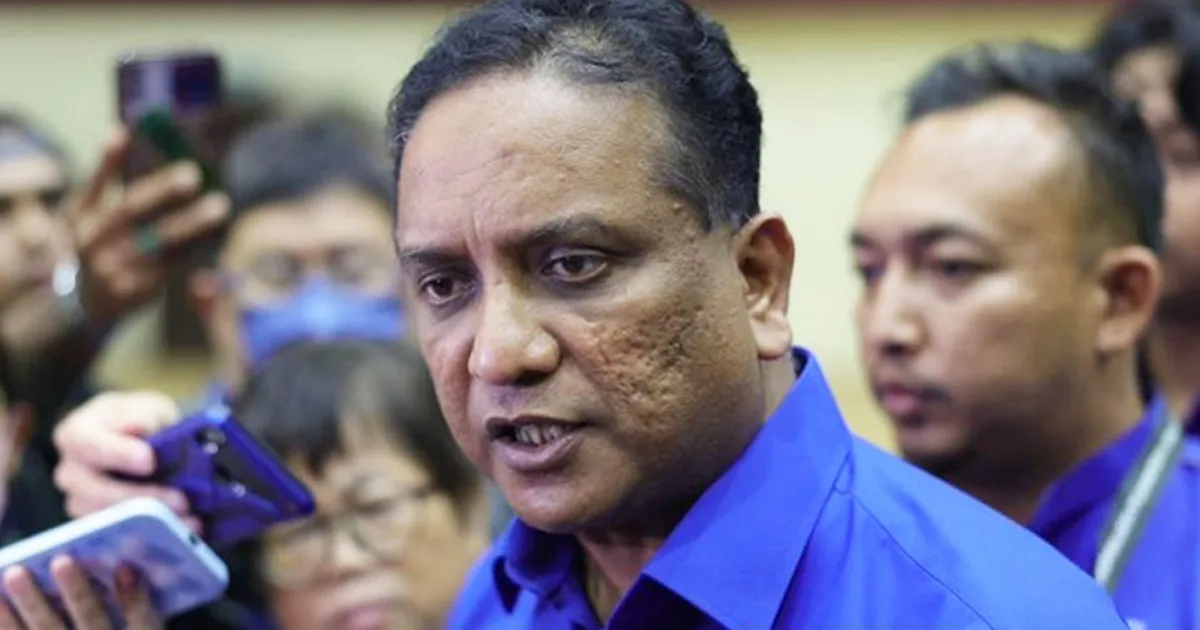
Umno's Reezal Merican Naina Mohamed has hit back at critics seeking to pin the Tabung Haji scandal squarely on the shoulders of his party and its broader political coalition, insisting that the recent Royal Commission of Inquiry's findings should not serve as a cudgel for accusations of systematic wrongdoing or institutional cover-ups. The Supreme Council member's defence represents a vigorous pushback against mounting public and political pressure following damaging revelations about how the pilgrimage fund deteriorated under previous management.
The Tabung Haji controversy, which has captured national attention and eroded public confidence in one of Malaysia's most significant financial institutions, centres on allegations of mismanagement, dubious investments, and governance failures that accumulated over years. The royal commission's investigation uncovered troubling evidence regarding decision-making processes and accountability lapses that observers have linked to the political administration of the fund during periods when Barisan Nasional held executive power. However, Reezal's intervention suggests that Umno views the inquiry findings as being selectively deployed by political opponents to damage the coalition's reputation.
The timing of Reezal's statement carries particular weight in Malaysia's fractious political landscape, where the Tabung Haji affair has become ammunition in the broader struggle between competing coalitions. As the fund attempted to restore its financial standing and rebuild investor trust, the political dimensions of the crisis threatened to overshadow substantive reforms and accountability measures. Reezal's argument essentially separates institutional failure from partisan corruption, a distinction that will likely become contentious as stakeholders interpret the Royal Commission's conclusions through different political lenses.
Underlying this dispute is a fundamental disagreement about institutional responsibility and political accountability in Malaysia. Umno's position suggests that failures within Tabung Haji, while serious, should be addressed through administrative and regulatory remedies rather than used to delegitimise an entire political coalition. This perspective mirrors arguments made by defenders of other institutions that have experienced major crises, where they contend that organisational problems do not necessarily reflect the moral character or governance standards of the overseeing political entity.
Critics, however, contend that political parties holding executive authority bear responsibility for the organisations under their watch, particularly regarding the appointment of board members, oversight mechanisms, and the culture that permits mismanagement to flourish unchecked. The fundamental tension centres on whether systemic failures emerging over years of stewardship constitute grounds for political accountability or whether such problems should be compartmentalised as technical governance issues divorced from party politics.
The Tabung Haji saga carries profound implications for Malaysian Muslim pilgrims, who depend on the institution for hajj financing and savings vehicles. The fund's deterioration damaged the financial security of thousands of Malaysians planning to undertake one of Islam's five pillars, making this far more than an abstract political controversy. When the fund's value declined significantly, pilgrims faced uncertainty about their accumulated savings, intensifying demands for accountability from all quarters.
Reezal's defence implicitly acknowledges that the Royal Commission findings are damaging to Barisan Nasional's political standing, even as he argues they should not be interpreted as confirmation of corruption or complicity. This semantic distinction—between governance failures and political malfeasance—may satisfy party loyalists but is unlikely to persuade sceptical observers. The public's perception of institutional crises is rarely so finely calibrated; when major institutions fail under a particular government's watch, political accountability naturally follows in democratic discourse.
The statement also reflects broader tensions within Malaysian politics regarding how historical institutional failures should be addressed. As Malaysia navigates transitions in political leadership and coalition alignments, questions about how previous administrations are evaluated become increasingly fraught. Umno's insistence on separating institutional from political responsibility suggests the party fears the Tabung Haji controversy will be used to delegitimise its governance record more broadly.
For Malaysian readers and observers of Southeast Asian politics, this exchange illuminates how institutional crises become weaponised in competitive democratic environments. The Tabung Haji affair transcends the specific failures of one institution, touching on fundamental questions about political accountability, institutional reform, and how societies reckon with governance failures. Reezal's defence demonstrates that even as institutions undergo investigations and corrective measures, the political dimensions of institutional failure remain contested and politically charged territory in Malaysia's polarised environment.

