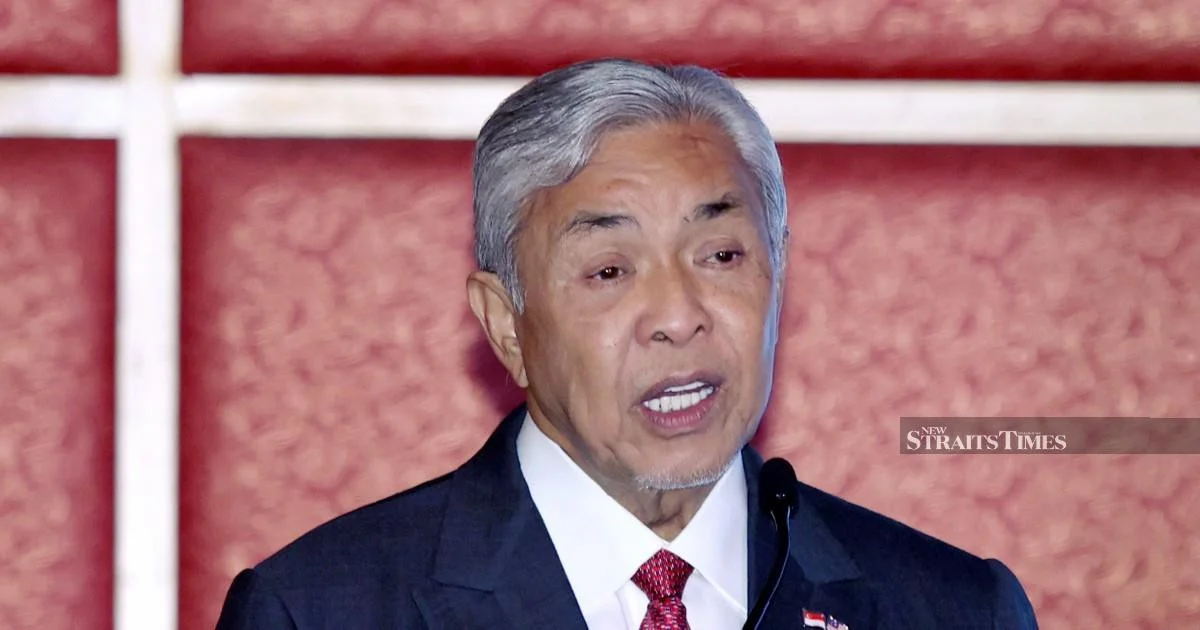
Umno president Datuk Seri Dr Ahmad Zahid Hamidi has categorically dismissed claims that the party has reached any understanding with Pas on seat negotiations ahead of the Negri Sembilan state election. His statement comes amid speculation about potential cooperation between the two major Malay-Muslim parties, which have a history of competing for influence within the Barisan Nasional framework and beyond.
The denial underscores the complex and often delicate dynamics between Umno and Pas, two parties that have long vied for support among Malaysia's Malay-Muslim voter base. While both parties have at various points been part of or aligned with federal coalitions, their relationship has been marked by periods of tension and competition. The question of seat allocation in state elections has traditionally been a contentious issue within Malaysia's political landscape, particularly where multiple Malay parties contest the same constituencies.
Negri Sembilan holds particular significance in Malaysia's political map. The state, with its mixed urban and rural demographics centred around the federal territory capital Kuala Lumpur's sphere of influence, has been a barometer of political shifts. Previous electoral cycles in the state have reflected broader patterns in voter sentiment across the Klang Valley corridor and the Selangor-Negri Sembilan region more broadly.
Ahmad Zahid's firm stance appears designed to protect Umno's negotiating position and demonstrate to party members and supporters that any future seat arrangements will be determined on Umno's terms. In Malaysian electoral politics, admissions of pre-negotiated deals can be perceived as weakness, potentially affecting a party's ability to contest more seats or extract concessions from coalition partners. By issuing a categorical denial, the Umno leader seeks to maintain flexibility and avoid locking his party into predetermined positions.
The timing of such clarifications is rarely accidental in Malaysian politics. Coming as it does amid intense media speculation and social media commentary, Ahmad Zahid's intervention appears aimed at controlling the narrative around potential coalition arrangements. Such statements often precede formal negotiations or serve to position a party advantageously before discussions commence or resume.
Pas, as an Islamist party with a separate organisational structure and leadership hierarchy, operates under its own strategic considerations. The party has alternated between cooperation and competition with Umno depending on political circumstances and internal party preferences. The recent period has seen Pas strengthen its position in certain states and districts, making seat negotiations with larger coalition partners increasingly significant for determining electoral outcomes.
For Malaysian voters and observers, these behind-the-scenes negotiations represent the intricate mechanics of coalition politics that characterise the country's democracy. Unlike systems with clear, predetermined alliances, Malaysia's political landscape requires constant negotiation and realignment, particularly at the state level where different coalition partners may hold varying degrees of influence. Negri Sembilan, sitting between the dominant Selangor and Perak states, offers opportunities for both major parties to strengthen their respective bases.
The broader implications of such seat discussions extend beyond simple numerical allocation. They reflect deeper questions about power distribution within Malay-Muslim political movements and the ideological differences that sometimes separate ostensible allies. Umno's traditional role as the dominant Malay party and Pas's position as an Islamist alternative create inherent tensions that periodic cooperation attempts have not fully resolved.
Ahmad Zahid's denial also carries implications for Umno's internal cohesion. Party members, particularly those with aspirations to contest in Negri Sembilan, will be watching closely to determine whether the leadership will prioritise fairness in candidate selection or reserve seats for political allies. The president's public assertion that no binding arrangements exist provides some reassurance that the selection process retains flexibility and transparency.
Regionally, Malaysian political observers in neighbouring Southeast Asian countries follow developments in Umno-Pas relations closely. The stability and trajectory of Malaysia's major Malay-Muslim parties can influence regional perceptions of Malaysia's political health and governance capacity. Volatile coalition arrangements or perceptions of backroom deals can affect investor confidence and Malaysia's regional standing.

