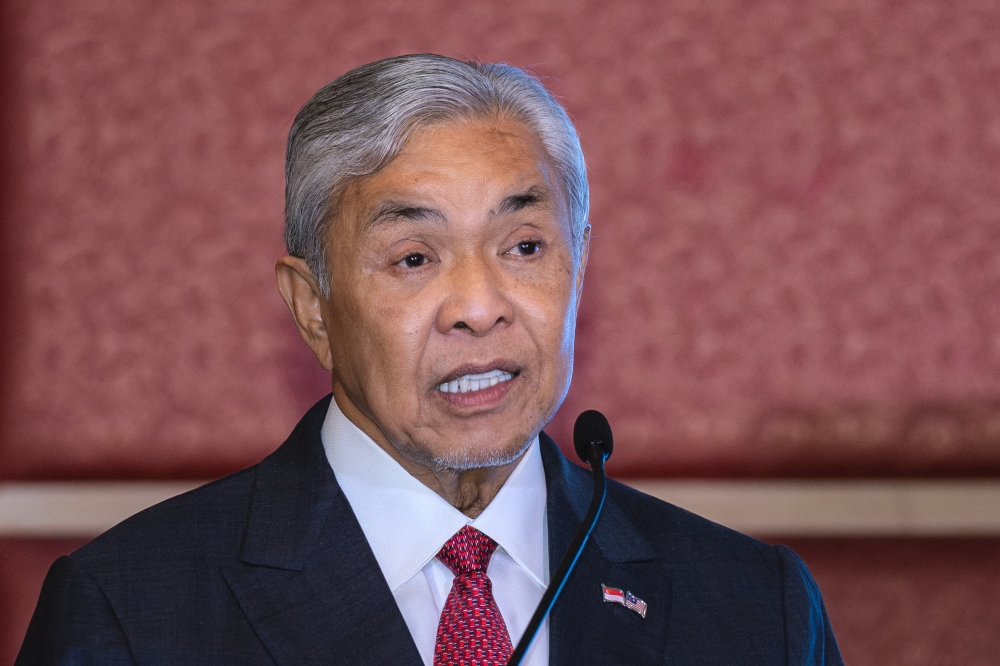
Umno's leadership has moved to distance itself from suggestions of a binding electoral arrangement with PAS in Negeri Sembilan, even as political analysts continue to debate the stability of Malaysia's coalition landscape. Datuk Seri Dr Ahmad Zahid Hamidi, speaking in his capacity as president of the country's largest Malay-Muslim political organisation, rejected characterisations of a fixed partnership framework with the Islamist party for the central state, emphasising instead the provisional nature of contemporary political negotiations.
The clarification comes amid persistent speculation about opposition and government coalition dynamics ahead of potential state-level contests. Zahid's intervention suggests internal deliberation within Umno circles regarding the party's strategic positioning, particularly as it seeks to consolidate its influence in key peninsular states where demographic and electoral patterns remain contested. Negeri Sembilan, traditionally a stronghold of competing political forces, has emerged as a focal point for broader conversations about Malay-Muslim political unity and the architecture of federal government support.
Zahid's warning that "goalposts can change anytime" encapsulates the volatile nature of contemporary Malaysian politics, where electoral pacts often prove malleable and subject to renegotiation based on shifting ground realities. This language suggests that Umno reserves the right to adjust its strategic orientation depending on developments within state-level contests, intra-party dynamics, or shifts in the broader national political environment. Such equivocation reflects the challenges facing coalition partners in maintaining coherent messaging while preserving tactical flexibility.
The Negeri Sembilan question carries particular significance for Umno's broader positioning within Barisan Nasional and its relationship with the government structure. The state has demonstrated considerable electoral volatility in recent years, with varying degrees of support for different political movements. Zahid's remarks suggest that Umno leadership views any arrangement as contingent rather than foundational, potentially allowing the party to respond to emerging opportunities or challenges without being bound by prior commitments.
PAS, meanwhile, occupies an increasingly significant position within Malaysia's political constellation following its enhanced presence in federal politics. The party's orientation toward Negeri Sembilan carries implications extending beyond the state itself, touching on broader questions about the viability of Malay-Muslim political cooperation and the sustainability of existing coalition frameworks. Zahid's clarification may reflect Umno's desire to avoid being perceived as subordinate to PAS or constrained by arrangements it did not publicly endorse.
The statement also illuminates ongoing tensions within Malaysia's governmental and opposition structures regarding formal versus informal arrangements. Many electoral and political agreements operate through unwritten understandings rather than publicly announced pacts, creating space for both parties to maintain plausible deniability while coordinating their activities. Zahid's insistence on the absence of formality perhaps allows Umno to describe cooperation as pragmatic rather than principled, a distinction that matters for both internal party management and public perception.
For Malaysian observers and regional analysts, Zahid's remarks underscore the continued fluidity of domestic political calculations. Unlike systems with stable coalition frameworks, Malaysian politics frequently witnesses rapid realignments based on electoral mathematics, leadership transitions, or shifting grassroots sentiment. The ability to credibly claim flexibility while denying binding commitments represents a valuable political tool, permitting parties to explore multiple options simultaneously while ostensibly maintaining coherent public positions.
Negeri Sembilan's significance extends beyond electoral calculations to encompass broader questions about Umno's role within contemporary Malaysian politics. As the party navigates the aftermath of internal reforms and attempts to rebuild its organisational capacity, its approach to state-level contests carries implications for federal-level positioning. Zahid's emphasis on the contingent nature of political arrangements suggests that Umno leadership views each electoral cycle as presenting fresh opportunities for recalibration based on available evidence and strategic advantage.
The broader context involves ongoing discussions about the future of Barisan Nasional, the sustainability of government coalition arrangements, and the degree to which formal or informal understandings between parties can effectively constrain their behaviour. Zahid's intervention indicates awareness that public commitments to specific partnerships risk constraining Umno's future manoeuvrability, particularly if electoral circumstances change or if internal party considerations demand adjustment. By maintaining ambiguity regarding the precise nature and durability of any arrangement, Umno preserves strategic optionality.
For regional observers monitoring Malaysian political development, such statements reveal the transactional character of contemporary political cooperation, where flexibility often trumps institutional stability. The willingness of senior party figures to openly acknowledge the provisional nature of agreements, rather than obscuring such dynamics, reflects confidence in the party's ability to adapt to changing circumstances while maintaining internal coherence. As Malaysia approaches potential electoral contests at various levels, such positioning will likely shape how coalitions form and potentially fragment.

