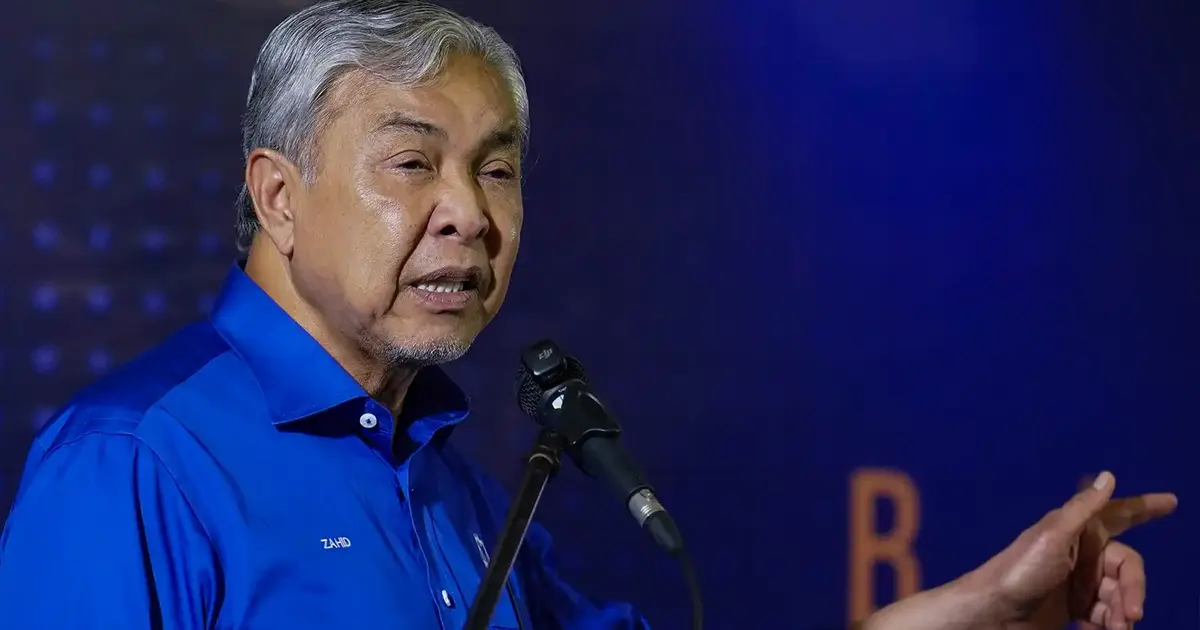
Senior Malaysian politician Puad Zarkashi has suggested that Umno and PAS, despite their acrimonious split, possess sufficient common ground to forge a renewed political partnership. The remarks signal potential shifts in the nation's coalition dynamics, with both Islamist and Malay-majority parties pursuing distinct but potentially complementary objectives in the near term. Zahid, the Umno president, is positioned to leverage his party's considerable parliamentary representation to advance his ambitions for the highest office, while PAS seeks meaningful participation in federal government after periods of exclusion.
The historical relationship between Umno and PAS reflects Malaysia's complex political landscape, where religious ideology, ethnic representation, and personal ambition frequently intersect. Their previous alliance, cemented through decades of cooperation particularly in Peninsular Malaysia, fractured due to disagreements over governance, religious authority, and the spoils of ministerial appointments. The breakdown left both parties reassessing their electoral prospects and coalition options. Puad Zarkashi's comments suggest that beneath the surface antagonism, pragmatic calculations may override ideological differences when immediate political gains are available to both sides.
Zahid's positioning as a prime ministerial candidate represents a significant development within Umno's internal hierarchy and the broader Malaysian political system. As leader of Malaysia's oldest ruling party, Zahid commands substantial parliamentary numbers and state government positions, particularly in Peninsular Malaysia. His appointment as Umno president and subsequently as Deputy Prime Minister provided him with institutional platforms to consolidate support. The pursuit of the prime ministership would require either expanding Umno's current coalition or creating alternative parliamentary configurations that could command majority confidence.
PAS, conversely, faces a distinct strategic challenge. The Islamist party has substantial representation in several state governments and possesses a disciplined organisational structure rooted in its religious mission. However, exclusion from federal cabinet positions has constrained its ability to distribute patronage and demonstrate governance competence to its base. Returning to federal government would provide PAS with tangible benefits: ministerial portfolios to reward supporters, policy influence over matters affecting Malaysia's Muslim-majority population, and validation of its political legitimacy at the national level.
The concept of short-term political objectives underscores a fundamental reality in Malaysian coalition politics. Rather than pursuing comprehensive ideological platforms or long-term institutional reforms, political actors frequently focus on securing immediate parliamentary support, ministerial appointments, and electoral advantages for forthcoming contests. This approach facilitates coalition flexibility because parties can temporarily align despite deeper disagreements, as long as near-term interests overlap. Zahid securing the prime ministership and PAS gaining federal government participation represent precisely such short-term objectives.
Such a realignment would reshape Malaysia's political architecture significantly. The current government configuration would face substantial reconfiguration if major Umno figures and PAS simultaneously adjusted their coalition relationships. This could trigger cascading effects throughout Malaysia's political system, as other parties reassess their strategic positioning and leverage. States governed by competing coalitions might experience shifts in allegiance, and parliament's delicate arithmetic would transform entirely. The implications extend beyond numerical representation to questions of policy direction, particularly regarding religious administration, economic management, and ethnic relations.
The feasibility of renewed Umno-PAS cooperation depends substantially on resolving past grievances and establishing clear agreements about power-sharing arrangements. Previous attempts at reconciliation between the parties have foundered on precisely these issues: which party would receive priority in parliamentary leadership roles, how ministerial positions would be distributed, and what priority would be assigned to competing religious and secular policy agendas. Without transparent mechanisms for managing these disputes, renewed partnership risks replicating previous failures. Puad Zarkashi's confidence suggests either that mechanisms addressing these concerns have been established informally, or that both parties believe immediate benefits outweigh risks of renewed conflict.
For Malaysian voters and regional observers, a Umno-PAS reconfiguration carries substantial implications. Such alignment would strengthen Malay-Muslim representation within government structures and potentially shift policy emphasis toward Islamic affairs and Bumiputera economic arrangements. Opposition constituencies and non-Muslim communities might face reduced parliamentary influence. Conversely, if such arrangements prove unstable and contribute to coalition instability, Malaysia's governance could experience extended turbulence as parties pursue competing advantages. The precedent would also encourage other political movements to view coalition partnerships as temporary tactical arrangements rather than substantial commitments.
The timing of Puad Zarkashi's comments reflects Malaysia's compressed political calendar and the urgency facing various political actors. Electoral cycles approaching at both state and federal levels create pressure for parties to demonstrate government capability and deliver benefits to supporters. Zahid's advancement toward the prime ministership requires establishing unambiguous parliamentary support, which Umno's current coalition partners may not unconditionally provide. Similarly, PAS cannot indefinitely sustain its base while isolated from federal government resources and decision-making authority.
Regional implications also merit consideration. Southeast Asian political observers monitor Malaysian developments closely, as coalition dynamics in Malaysia influence regional stability, ASEAN cooperation, and diplomatic relationships throughout the region. Sudden shifts in Malaysia's political landscape can affect bilateral relationships, trade arrangements, and regional security considerations. A more assertive Islamic influence in Malaysian federal governance might adjust the nation's diplomatic positioning and regional engagement strategies.
Ultimately, Puad Zarkashi's assessment reflects the fluid, interest-driven nature of Malaysian politics where ideological consistency frequently bends to accommodate immediate practical advantages. Whether reconstituted Umno-PAS partnership materialises depends on whether both parties can structure arrangements satisfying their respective leadership and ensuring sustained benefit beyond initial coalition formation. The coming months will likely clarify whether short-term political objectives prove sufficient to overcome historical animosities.

