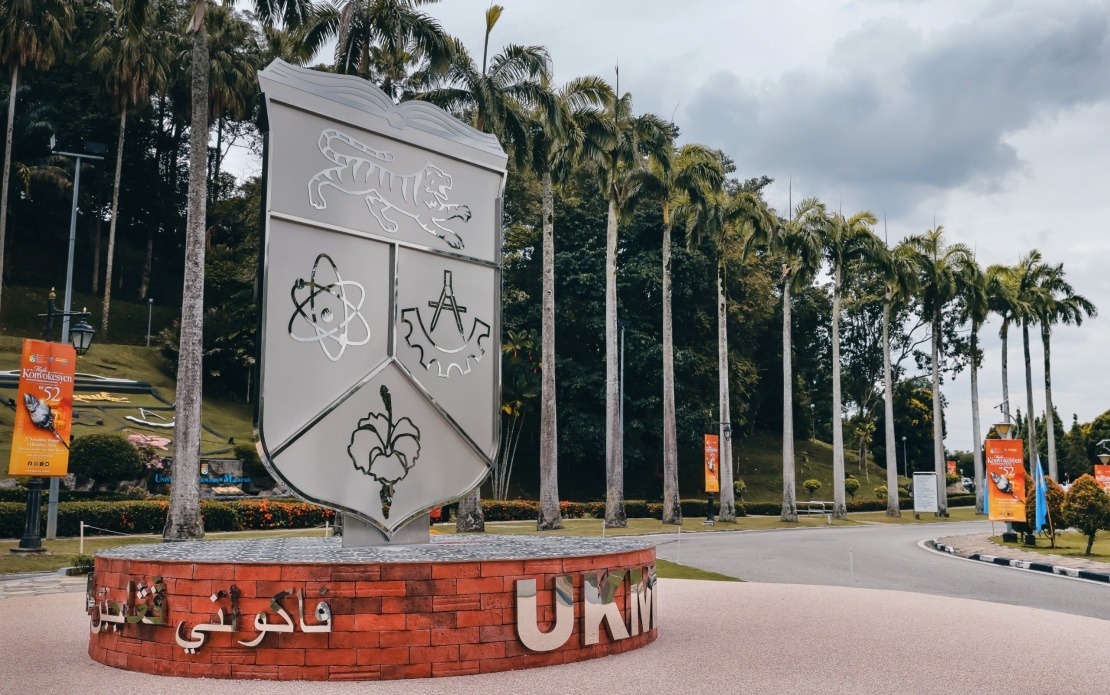
Universiti Kebangsaan Malaysia has moved swiftly to counter misinformation circulating on social media that paints an exaggerated picture of international student dominance at the institution. The university released a formal statement addressing allegations that claimed a ratio of five international students for every local pupil, characterizing such assertions as entirely baseless and damaging to its standing.
The actual enrollment figures tell a markedly different story from what the viral video suggests. According to comprehensive data compiled by UKM's Academic Management Centre and its Centre for Continuing Education and Professional Studies, the university currently hosts 46,151 students in total. Within this cohort, merely 3,917 are classified as international undergraduates, a figure that underscores the predominantly domestic character of the institution's student body.
When converted to percentages, international undergraduates account for just eight per cent of UKM's entire enrollment. This translates into an actual ratio of approximately one international student for every twelve on campus—a stark contrast to the sensational 5:1 claim that sparked the controversy. The mathematical disparity highlights how misleading social media narratives can distort public perception of Malaysia's premier national university without factual grounding.
The institution has signaled its determination to protect its reputation through legal means if necessary. In its formal response, UKM made clear that it regards the dissemination of false or defamatory information with the utmost seriousness and will not shy away from pursuing judicial remedies against those responsible for spreading unverified claims. This stance reflects broader institutional concerns about reputational damage in an age where unsubstantiated allegations can rapidly gain traction through digital platforms.
Central to UKM's defense is the assertion that admitting international students does not diminish opportunities available to Malaysian applicants. The university has reaffirmed its foundational purpose of advancing educational attainment for Malaysia's citizens, positioning international enrollment as a complementary rather than competitive feature of campus life. This distinction carries weight in a national context where access to quality higher education remains a significant public interest.
The controlled nature of international recruitment is particularly noteworthy. UKM emphasized that admissions decisions involving foreign students follow a measured approach aligned with strategic objectives of the Ministry of Higher Education. Malaysia has long pursued internationalization of its higher education sector as a means of enhancing institutional prestige, generating revenue, and fostering cross-cultural understanding. However, this ambition must operate within boundaries that preserve primacy of local student access, a balance UKM claims to maintain rigorously.
The incident reveals vulnerabilities in how institutional information spreads during the digital age. A single social media video, irrespective of factual accuracy, can shape public discourse and influence opinions about major universities. For potential students and their families deciding on enrollment, such misinformation creates confusion about institutional character and admissions practices. This underscores why UKM's explicit guidance to consult only official communication channels carries practical importance.
The university's call for public skepticism toward unverified claims addresses a broader challenge facing Malaysian society: distinguishing credible information from fabrication in an environment saturated with digital content. Educational institutions, particularly those serving national missions, have become targets for misleading narratives that may reflect political tensions, competitive pressures, or simple carelessness. By publicly correcting the record with specific data, UKM provides a model for institutional transparency while signaling it will not permit reputational attacks to proceed unchallenged.
For Malaysia's higher education landscape more broadly, this episode carries implications worth considering. As universities expand international recruitment to strengthen competitiveness and generate income, transparency about enrollment composition becomes increasingly important for maintaining public trust. The tension between globalization ambitions and domestic stakeholder expectations requires careful communication and genuine commitment to both agendas. UKM's response suggests awareness that institutional credibility depends on demonstrable alignment between stated commitments to Malaysian students and actual enrollment practices.
The formal denial also illustrates how quickly Malaysian institutions must respond to viral content that challenges their integrity. In previous years, institutional responses to social media criticism might have come more slowly or been less definitive. The speed and specificity of UKM's reply—releasing precise enrollment figures and threatening legal action—reflects institutional learning about crisis management in contemporary media environments.
Moving forward, UKM's insistence on directing the public to official information sources points toward a broader conversation about digital literacy and institutional communication strategies. Universities must engage more proactively in public discourse rather than assuming that factual accuracy alone will overcome sensational claims. The effectiveness of UKM's response will depend partly on how widely its corrected information circulates relative to the original false narrative, a challenge that extends beyond the institution itself to media organizations and digital platforms.

