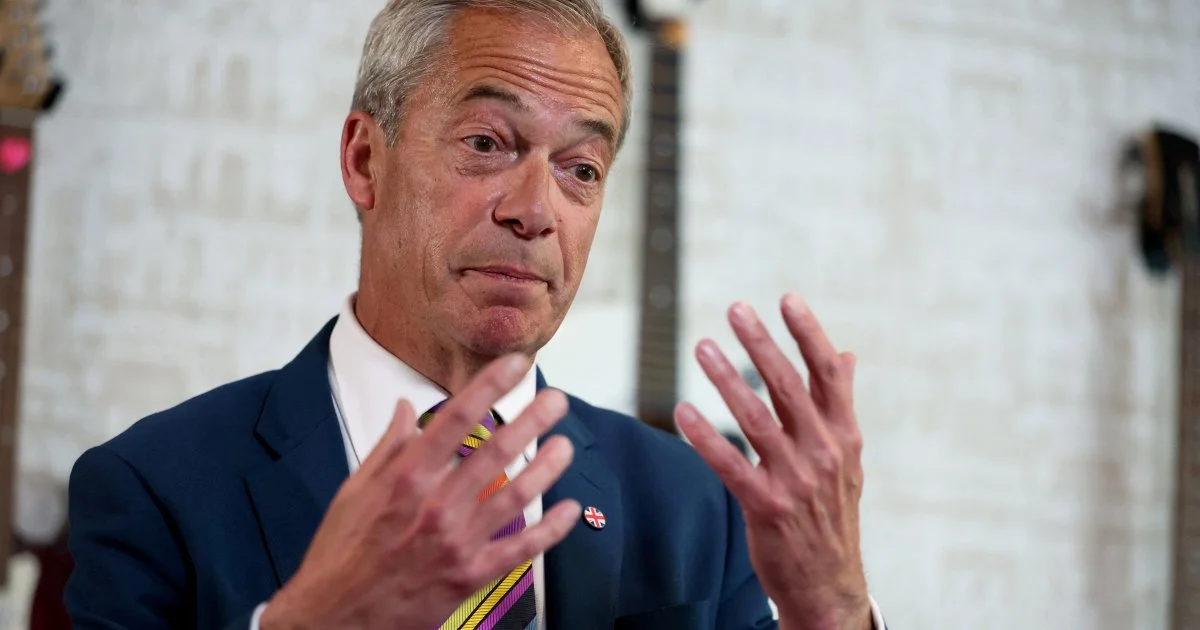
Controversial British politician Nigel Farage confronted a new storm of accusations on Sunday regarding the inadequate reporting of financial gifts and benefits, following media revelations that a person with a criminal conviction for fraud had underwritten significant expenses including security arrangements and staff wages before his election to Parliament.
The allegations strike at the heart of parliamentary integrity standards and disclosure requirements that Members of Parliament must observe. In Britain's Westminster system, elected representatives face stringent rules governing the declaration of gifts, donations, and financial support that could potentially create conflicts of interest or grant undue influence over their political decision-making. Farage's apparent failure to properly document such arrangements adds another chapter to his contentious political history.
The reported involvement of a convicted fraudster in funding operations around Farage introduces additional dimensions to the controversy. Beyond questions of simple non-disclosure, the arrangement raises concerns about the character and trustworthiness of those financing his political activities. The decision by someone with a fraud conviction to bankroll security and personnel costs suggests either a desire to remain behind the scenes while exerting influence, or alternatively, a deliberate attempt to circumvent standard disclosure mechanisms that would normally flag such relationships to the public and parliamentary authorities.
Farage's ascendancy in British politics has been marked by consistent controversy regarding financial transparency and undisclosed backing. His various political vehicles and campaigns have faced persistent scrutiny from media investigators and parliamentary regulators seeking to establish the original sources of funding and the true beneficiaries of these financial arrangements. The pattern suggests systemic challenges in how his political operations manage donor relationships and financial accountability.
The timing of these revelations matters significantly for understanding their political impact in Britain. Farage's influence on UK politics has waxed and waned across different electoral cycles and political formations, yet his ability to capture media attention and maintain relevance in the political conversation has remained largely constant. Fresh allegations of financial impropriety during periods when he wielded substantial informal power over mainstream political discourse could reshape public perceptions of his credibility and suitability for high office.
For Malaysian and Southeast Asian observers, the Farage controversy illustrates broader challenges that democracies face in maintaining rigorous standards for political finance transparency. Across the region, similar questions about undisclosed financial relationships, the involvement of questionable intermediaries in political funding, and inadequate declaration mechanisms remain subjects of ongoing debate. The British case demonstrates that even established democracies with long institutional traditions can struggle to enforce meaningful accountability over how politicians fund their operations and themselves.
The distinction between legal technicalities and ethical governance becomes particularly salient in this context. While Farage might argue that he operated within whatever grey areas exist in parliamentary rules, the substance of accepting support from someone convicted of fraud raises fundamental questions about judgment and character that transcend narrow legal interpretations. This gap between technical compliance and genuine propriety represents a vulnerability in many political systems where wealthy individuals or those with criminal histories can still exert influence through carefully structured financial arrangements.
Parliamentary authorities in Britain face pressure to examine not only whether Farage violated specific written rules but whether current regulatory frameworks adequately address the realities of modern political financing. The involvement of a fraudster in funding security and staff suggests the need for enhanced vetting procedures and more comprehensive disclosure requirements that capture the full network of individuals providing financial support to politicians and their operations.
Farage's political trajectory has consistently illustrated his ability to navigate controversy and maintain influence despite accumulated scandals. Whether these fresh allegations regarding gift non-disclosure prove consequential depends partly on how aggressively parliamentary regulators pursue investigation and enforcement, and partly on whether media attention crystallizes into sustained public pressure. In British politics, where institutional norms and political judgment play important roles alongside formal rules, reputational damage can prove as significant as legal consequences.
The broader significance of this episode extends to questions about how democracies can strengthen safeguards against financial misconduct while maintaining the openness necessary for diverse voices in the political marketplace. Southeast Asian countries, many of which have grappled with similar issues in their own political contexts, can observe whether Britain's established institutions prove adequate to enforce standards of transparency and integrity, or whether systemic reforms become necessary to close loopholes that allow questionable financial relationships to develop unchecked.
For Farage himself, the accumulation of such controversies creates a historical record that will likely define how his legacy is ultimately assessed. His political impact on British politics remains undeniable, particularly regarding immigration and Brexit, yet the repeated pattern of questions about financial transparency compounds a broader narrative about the trustworthiness and integrity of his political project.

