Britain's government is convening an urgent crisis meeting on Wednesday to coordinate the national response to an unprecedented combination of extreme weather events that have stretched emergency services and public health systems to their limits. The emergency Cobra meeting, chaired by Andy Burnham, brings together senior officials to address cascading challenges posed by sustained high temperatures, spreading wildfires, and critical water shortages across the United Kingdom. The decision to activate the government's highest-level emergency response mechanism reflects the scale of the crisis now gripping the nation during what is shaping up to be its most severe summer in living memory.
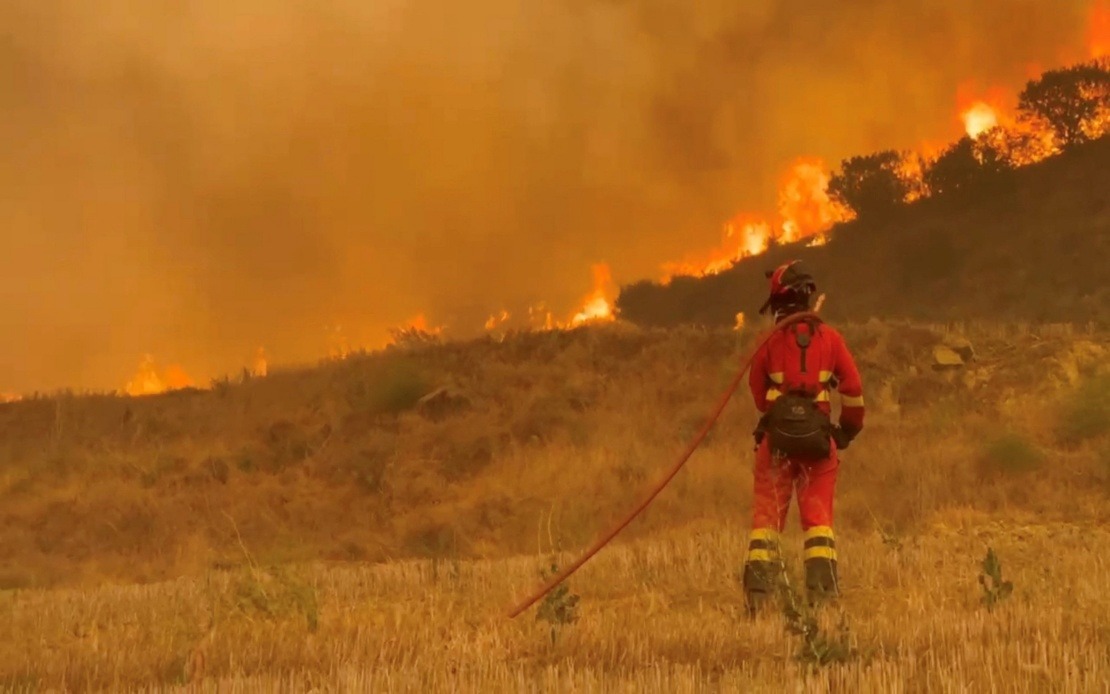
The convening of such a high-level meeting underscores the breadth of the crisis facing multiple sectors simultaneously. Firefighters across England continue battling significant blazes, most notably a major wildfire consuming vast areas of the New Forest in Hampshire, whilst the agricultural sector faces severe strain from prolonged drought conditions that have devastated crops and livestock operations nationwide. The National Health Service, already operating under considerable pressure, finds itself managing a surge in heat-related health emergencies, with hospital admissions and mortality rates climbing steadily as vulnerable populations struggle with dangerous temperatures.
Meteorological warnings have reached alarming levels, with the UK Met Office issuing a rare amber extreme heat alert for Thursday. This classification represents one of the most serious weather advisories the agency can issue, reserved for conditions that pose genuine threat to public safety. Meanwhile, government meteorologists have confirmed that the UK is tracking toward recording its highest average summer temperature since records began, surpassing previous benchmarks and suggesting this is not merely a bad year but potentially indicative of shifting climate patterns affecting the British Isles.
The drought emergency has already reached critical proportions across multiple regions. Wales declared an official drought across the entire nation on July 30 as water reserves depleted at alarming rates following weeks of near-zero rainfall and oppressive heat. England has experienced similarly severe conditions, with drought declarations extended across half the country last month following record-low precipitation combined with sustained temperatures far exceeding seasonal norms. The combination has created cascading impacts throughout both urban and rural communities, from water supply pressures affecting households to agricultural devastation threatening food production and rural livelihoods.
Public health officials have sounded particularly stark warnings about mortality impacts. The UK Health Security Agency released sobering figures showing that Britain recorded 2,877 excess deaths during the May and June heat waves alone—nearly double the 1,504 excess deaths documented during the entire summer of 2025. These figures suggest that the current heat episode represents a potentially catastrophic public health event, with elderly citizens, those with pre-existing conditions, and economically disadvantaged populations bearing disproportionate mortality risks. The scale of excess deaths highlights how unprepared much of British society remains for extreme heat events that other nations routinely manage.
The political response has been swift, with opposition parties deploying the crisis as a platform for climate action demands. Green Party leader Zack Polanski has argued the moment demands decisive climate policy measures rather than mere crisis management. He has called for taxation on fossil fuel corporations to fund emergency services including firefighting helicopter operations, establishment of community cooling centers to protect vulnerable populations during heat waves, legislation imposing maximum working temperatures to protect workers, and crucially, an end to new oil and gas extraction projects in the North Sea. Polanski's interventions frame the crisis not as a discrete weather event but as a symptom of inadequate climate policy and the need for transformative economic restructuring.
For Malaysian observers and Southeast Asian readers more broadly, the British experience offers instructive lessons about climate adaptation challenges facing wealthy, developed nations with sophisticated infrastructure and healthcare systems. If advanced economies like the UK struggle to manage heat extremes and drought conditions, the implications for developing nations and island states in tropical and subtropical regions—already experiencing higher baseline temperatures and more variable rainfall patterns—demand serious consideration. Malaysia, with its equatorial climate, dense tropical forest resources vulnerable to wildfire, and coastal populations at risk from climate-driven sea-level changes, faces compounding vulnerabilities that mirror Britain's crisis but at potentially greater scale.
The emergency meeting convocation reflects acknowledgment that siloed departmental responses prove insufficient when weather extremes create simultaneous shocks across multiple systems. Coordinated approaches involving fire services, health authorities, water utilities, agricultural regulators, and civil protection agencies represent the minimum necessary response. Yet many observers question whether emergency meetings, however well-intentioned, can substitute for long-term policy shifts toward renewable energy transition, building stock modernization for thermal efficiency, urban cooling infrastructure development, and agricultural system adaptation.
The timing of these crises during summer months—traditionally Britain's most predictable season—has unsettled public confidence in seasonal forecasting and long-term planning assumptions. Climate scientists have documented that such compound events, where multiple environmental stressors interact simultaneously, are becoming more frequent and severe as global temperatures rise. The probability that Britain will experience consecutive years of similar intensity remains contested, but preparedness frameworks designed for historical weather patterns increasingly appear inadequate for emerging climate realities.

