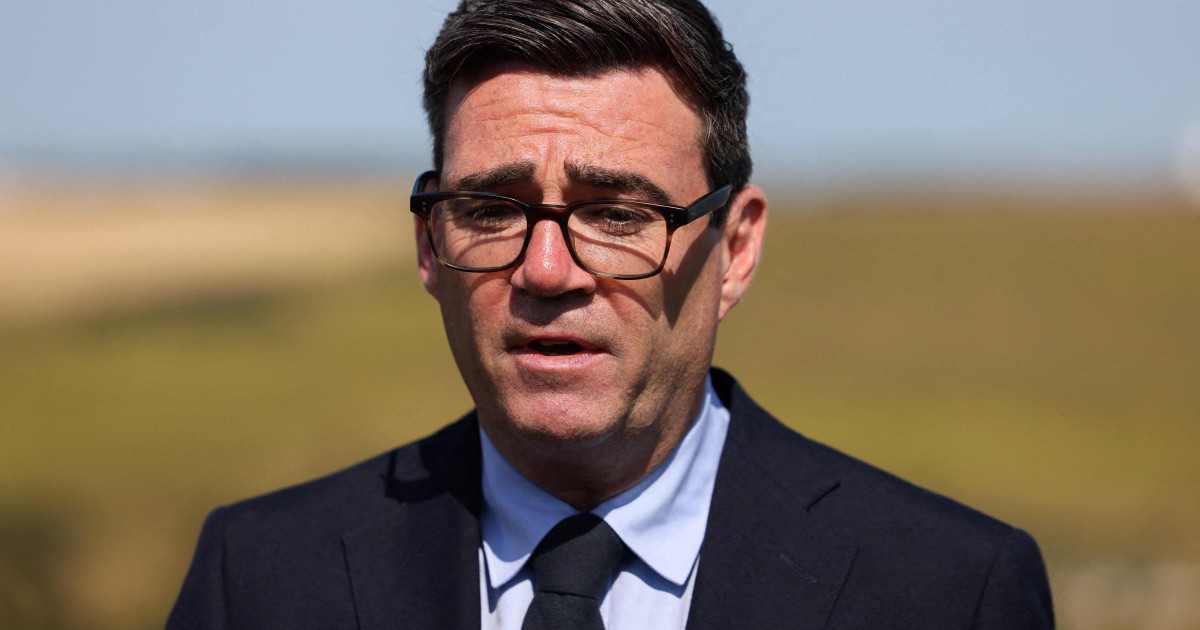
British Prime Minister Andy Burnham is examining the possibility of establishing a public inquiry to investigate the full extent of Jeffrey Epstein's operations and conduct within the United Kingdom, according to Alex Davies-Jones, the government's victims minister, who disclosed the consideration during an interview with the BBC. The potential move signals a willingness by the current government to confront historical allegations and institutional failures that may have enabled the convicted sex offender's activities on British soil.
The prospect of a formal public inquiry reflects growing international pressure to comprehensively document Epstein's connections and movements across multiple jurisdictions. Such inquiries typically invite public testimony, examine documentary evidence, and issue findings about whether institutions failed to investigate or report suspicious activities. For victims and survivors, a public inquiry would provide an official forum to air their experiences and seek accountability from any UK-based figures or organizations that may have facilitated or overlooked his alleged misconduct.
Epstein's death in custody in 2019 closed the criminal chapter in the United States, but it did not resolve questions about the scope of his international operations or the identities and roles of associates who may have benefited from or participated in his criminal enterprise. A British inquiry would need to establish what Epstein did in the UK, whom he associated with, and whether any British institutions—including educational establishments, social venues, or public figures—had knowledge of or involvement in his activities.
The announcement by Davies-Jones carries particular weight given her portfolio overseeing victims' interests. Her public acknowledgment that such an inquiry is under consideration suggests the government recognizes both the moral imperative to support survivors and the need to restore public confidence in state institutions. Victims of high-profile criminal cases often report that official inquiries, regardless of criminal proceedings, provide psychological closure and validation that their suffering was taken seriously.
Public inquiries in the United Kingdom can examine systemic issues that criminal trials typically cannot address. They can investigate whether regulatory agencies, law enforcement, or private institutions failed in their duties of care or due diligence. For Epstein's case specifically, an inquiry could examine whether UK authorities exchanged intelligence with American counterparts, whether any financial institutions processed suspicious transactions, or whether any British citizens played enabling roles.
The timing of this consideration is significant given changing political and cultural attitudes toward historical abuse cases. In recent years, public inquiries into institutional failures—including those into the NHS, care homes, and schools—have become more common and more willing to assign institutional responsibility. The Burnham government appears to be signalling that it will not shy away from uncomfortable questions about how Epstein operated undetected or with insufficient scrutiny in British settings.
For Malaysian readers and Southeast Asian observers, this development illustrates how wealthy and well-connected individuals sometimes exploit weak coordination between national legal systems and how transnational crime requires coordinated investigative responses. Several wealthy fugitives and alleged abusers have operated across Asia-Pacific jurisdictions, and the British approach to retrospective inquiry could provide a model for how regional governments might address historical institutional failures related to trafficking, exploitation, and abuse.
The distinction between a criminal investigation and a public inquiry is important. Criminal trials require proof beyond reasonable doubt for conviction; inquiries need only establish facts on the balance of probabilities. This lower threshold allows inquiries to examine a broader range of evidence and to draw conclusions about systemic weakness even when criminal liability cannot be established. For Epstein's case, this means an inquiry could document aspects of his UK presence and activities that may never result in prosecutions but deserve public accountability.
Implementing such an inquiry would require deciding on its scope, timeline, and powers. Would it focus solely on Epstein himself, or would it also examine the conduct of those who associated with him? Would it have the power to compel testimony from willing witnesses? Would it protect the anonymity of victims who testify? These procedural questions have profound implications for what the inquiry can achieve and what justice it can deliver to survivors.
The victims minister's disclosure also reflects the reality that high-profile abuse cases generate sustained public attention and democratic pressure. Citizens in democracies increasingly expect their governments to investigate not just individual wrongdoers but also the institutional and social structures that permitted harm. By publicly considering an inquiry, the Burnham government is responding to this expectation and positioning itself as responsive to victims' needs.
Whether the government ultimately proceeds with a public inquiry remains uncertain. Davies-Jones's comments indicate active consideration rather than a final decision, suggesting internal deliberation is ongoing. Nevertheless, her willingness to discuss the possibility publicly signals that political barriers to such an inquiry are lower than they might have been in previous years. The decision will ultimately reflect the government's assessment of its administrative capacity, the availability of relevant evidence, and the broader implications for UK-US relations and institutional accountability in an era when transnational abuse and exploitation demand more sophisticated governance responses.

