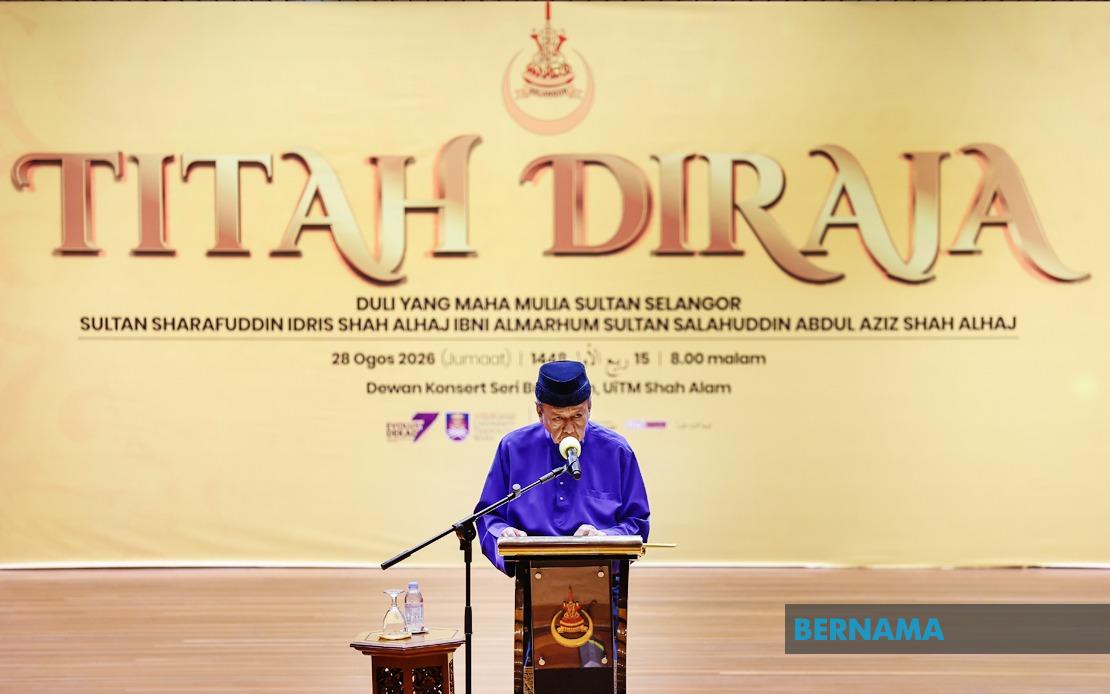
Sultan Sharafuddin Idris Shah has renewed his call for Universiti Teknologi MARA to function as a transformative gateway for economically disadvantaged Malay and Bumiputera youth, particularly those from rural communities and low-income households. Speaking at the UiTM 2026 Royal Address at Dewan Konsert Seri Budiman in Shah Alam, the Selangor monarch emphasised that as the institution continues to expand its reach and prestige, it must not abandon the foundational purpose for which it was established over five decades ago.
The Sultan articulated a pointed message about UiTM's responsibilities, stressing that children of farmers, fishermen, transport workers, factory labourers, and impoverished rural communities must retain confidence that academic potential and determination will be rewarded with genuine educational opportunity. This concern reflects broader anxieties within Malaysian society about whether flagship institutions serving designated groups risk gradually shifting upmarket, inadvertently creating barriers for the very populations they were designed to serve. The emphasis underscores a fundamental principle that underpins Malaysia's social contract regarding education and opportunity for indigenous communities.
Historical context strengthens the Sultan's argument. The institution, which traces its origins to 1965, began modestly with approximately 219 students and merely 11 lecturers. Within a single decade, enrolment had grown to nearly 7,000 students supported by approximately 1,000 teaching staff members, while the institution had already expanded its academic offerings to around 60 programmes and begun establishing satellite campuses across multiple states. This trajectory demonstrates UiTM's capacity for meaningful expansion whilst maintaining accessibility.
Today, the university occupies a markedly different position within Malaysia's higher education landscape. The institution now produces over 40,000 graduates annually and boasts an alumni network exceeding one million individuals. This transformation represents extraordinary institutional success and national impact, yet raises legitimate questions about whether such growth has been accompanied by pricing pressures, admission standards, or programme composition that might inadvertently exclude the target demographic.
Recognising the alumni network as an untapped resource, Sultan Sharafuddin proposed an innovative funding mechanism that could fundamentally reshape UiTM's financial sustainability and social mission. The proposal asks each graduate to contribute RM10 monthly or RM100 annually to their alma mater as acknowledgment of the institution's role in their education and career advancement. This modest threshold reflects careful calibration—the Sultan acknowledged that such contributions should not burden even modestly-earning professionals while remaining meaningful at scale.
The financial implications are substantial. Should the alumni body achieve meaningful participation rates, this voluntary contribution scheme could generate up to RM100 million annually for institutional development and student financial assistance. In the Malaysian higher education context, where public university funding faces persistent pressures, this represents a significant potential revenue stream dedicated specifically to maintaining accessibility for disadvantaged students. The approach cleverly transforms alumni success into direct reinvestment in institutional mission.
The Sultan invoked UiTM's unofficial motto, "UiTM Dihatiku," which circulates among students, academic staff, and alumni as an expression of emotional connection and institutional pride. By connecting this sentiment to concrete financial contribution, the Sultan reframed affection for the institution into measurable commitment to perpetuating its foundational values. This rhetorical move positions alumni giving not as abstract philanthropy but as essential stewardship of the institution's original purpose.
Beyond financial mechanisms, Sultan Sharafuddin articulated a compelling measure of institutional success that extends far beyond conventional metrics. Rather than evaluating UiTM primarily through student enrolment figures, graduate numbers, or alumni size, the Sultan proposed that the institution's true achievement should be measured by the lives transformed and the cumulative contribution to national development. This reframing challenges conventional university rankings and mission statements by foregrounding social impact and equity outcomes.
The Sultan's observations about UiTM's graduate distribution across sectors reflect remarkable professional penetration. Alumni occupy positions as accountants, engineers, medical doctors, legal practitioners, architects, academics, entrepreneurs, civil servants, corporate executives, cultural practitioners, and media professionals. Some have ascended to leadership roles in major organisations, established successful enterprises generating employment, and contributed directly to Malaysia's economic and social development. This diversity of achievement across income and sector lines demonstrates that accessibility and excellence need not conflict.
The institutional challenge posed by the Sultan's remarks resonates beyond UiTM specifically, engaging broader questions about Malaysia's commitment to social mobility through higher education. As university systems mature and international rankings become increasingly important to institutional reputation and resource allocation, maintaining genuine accessibility for disadvantaged cohorts requires deliberate institutional choices. Fee structures, admission criteria, programme offerings, and campus location decisions all carry implications for who can realistically benefit from higher education opportunities.
For Malaysian policymakers and university leaders observing these remarks, the Sultan's intervention carries implicit warning about the tension between institutional advancement and social mission. The higher education landscape increasingly includes world-class Malaysian institutions competing for international recognition, research productivity, and prestige. Without conscious prioritisation and resource commitment to equity, universities can inadvertently become increasingly stratified institutions serving primarily upper-middle-class populations.
The proposed alumni contribution system offers a model that other Malaysian institutions might adapt. By leveraging graduate success into direct funding for accessibility initiatives, universities create sustainable mechanisms for maintaining social mission whilst reducing dependence on government budgets. This approach distributes responsibility for institutional stewardship across the entire alumni community rather than concentrating burden on current governments or student populations.
Sultan Sharafuddin's remarks ultimately constitute both a celebration of UiTM's remarkable growth and a pointed reminder that expansion unaccompanied by commitment to original mission represents institutional drift rather than progress. The combination of renewed emphasis on accessibility, specific proposals for funding mechanisms, and articulation of alternative success metrics provides a comprehensive framework for institutional renewal that prioritises equity within excellence. As Malaysian universities navigate contemporary pressures and opportunities, these principles merit serious consideration across the sector.

