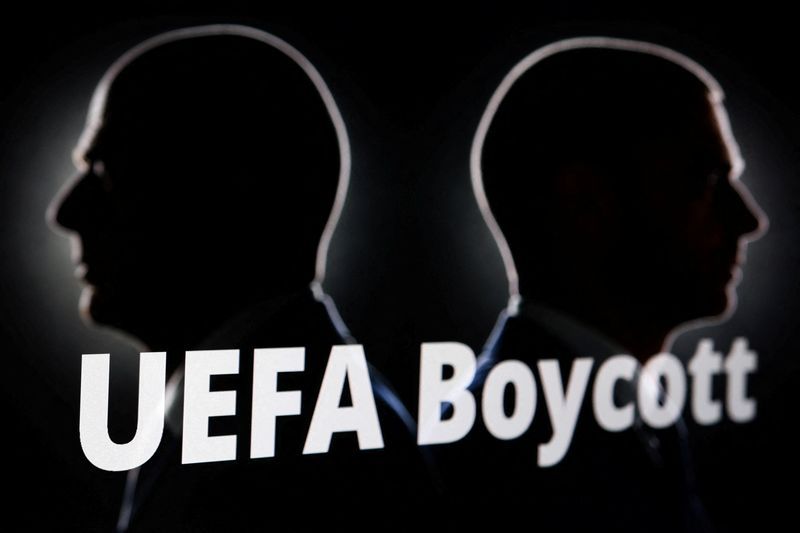
European football's governing body and its 55 constituent nations have taken the dramatic step of voting to boycott every FIFA tournament on the calendar, mounting a direct challenge to the global body's intention to bring private investors into ownership of the World Cup. The vote, conducted on Thursday, represents an unprecedented unified stand by UEFA and reflects deep institutional anxiety about the proposed commercialisation of football's flagship competition and the process through which it has been pursued at FIFA headquarters.
The decision to boycott reflects widespread concern across the continent that FIFA has fundamentally departed from its mandate as a regulatory and tournament-organising body, instead pursuing what critics characterise as a profit-maximisation agenda that threatens the foundational principles of the sport. The scale of opposition—involving dozens of national associations spanning diverse footballing cultures from Scandinavia to the Mediterranean—underscores how controversial FIFA President Gianni Infantino's modernisation plans have become within traditional football governance circles. For Malaysian and Southeast Asian readers, this European rebellion carries implications for how global football administration may evolve, potentially influencing AFC governance models and tournament structures in the coming years.
Scottish Football Association officials articulated a core grievance shared across UEFA's membership: the accelerated timeline and absence of meaningful consultation before such a consequential decision. Board members emphasised that proposals with consequences this significant demand transparent processes and proper governance protocols, suggesting that FIFA's approach has breached fundamental standards expected of international sports bodies. This procedural complaint strikes at the heart of sporting legitimacy—the notion that governing organisations must respect democratic principles and involve stakeholders when making transformative decisions.
Danish FA Chairman Jesper Moeller characterised the proposal as fundamentally incompatible with FIFA's proper role, declaring that inviting private capital into the organisation's core structures represents a line that cannot be crossed. His position reflects a broader European philosophy that certain institutions—particularly those governing major sports—ought to maintain independence from commercial imperatives that could compromise their integrity. This perspective has particular resonance in Nordic and Central European football cultures, where supporter ownership models and institutional autonomy remain highly valued.
Alexander Wehrle, representing German football interests through his position at VfB Stuttgart, questioned whether FIFA's leadership possesses sufficient grounding in football's authentic values and culture to guide such momentous decisions. His remarks, whilst pointed, articulate a common concern among long-established football figures: that contemporary FIFA administration may have lost touch with the sport's grassroots character and its role as a unifying social force rather than merely a commercial enterprise. German football's particular emphasis on supporter culture and institutional tradition clearly informs this scepticism about external investor involvement.
Norwegian FA Chief Lise Klaveness delivered perhaps the most comprehensive critique, attacking both the substance of the proposal and the clandestine manner of its development. She highlighted the fundamental problem that transformative changes affecting international football's basic structures were hatched outside elected bodies and presented as fait accompli, bypassing consultation mechanisms entirely. Norway's position—a nation with strong democratic traditions and transparent governance expectations—reflects discomfort with what leadership perceived as a unilateral power grab by FIFA's executive apparatus.
Swedish Football Association officials similarly emphasised that changes with such far-reaching consequences demand open, transparent, and properly anchored decision-making processes. The Swedish position underscores a consensus across Northern European football that stakeholder engagement and transparency represent non-negotiable governance principles. The fact that multiple Scandinavian nations independently reached this conclusion suggests the opposition reflects genuine institutional conviction rather than coordinated political theatre.
The threat of withdrawal from FIFA competitions carries genuine weight, as UEFA nations generate enormous revenue through World Cup qualification and tournament participation. The prospect of UEFA members boycotting World Cup qualifiers or threatening absence from the tournament itself would create a genuine crisis for FIFA, potentially rendering the competition unviable in its current form. This leverage explains why FIFA leadership must take the boycott threat seriously, even if the organisation initially dismissed European concerns.
British political figures from across the spectrum lent weight to the footballing institutions' position, with Culture Secretary Lisa Nandy and others framing the issue as fundamentally about whether football should serve fans and communities or be restructured primarily for billionaire investors' benefit. This cross-party political backing suggests the controversy has transcended sporting governance to touch broader questions about commercialisation and democratic control of public institutions. The involvement of figures like Nigel Farage—hardly a typical guardian of football traditionalism—indicates the issue's salience in contemporary British public discourse.
For Asian football stakeholders and Malaysian readers following international football governance, this European rebellion illuminates fault lines within FIFA that could reshape global competition structures. Should UEFA members actually withdraw from FIFA competitions, the ramifications would reverberate through AFC planning, qualification formats, and tournament scheduling. Additionally, if European concerns about privatisation and governance gain traction among other continental confederations, FIFA may face pressure to abandon the stake-sale proposal or fundamentally restructure how it operates.
The boycott vote reflects accumulated frustration with FIFA's trajectory under Infantino's leadership, extending beyond this particular proposal to broader questions about transparency, accountability, and whether the organisation serves football or financial interests. European football's institutional memory—shaped by decades of grassroots development, supporter culture, and governance traditions—makes it particularly resistant to the kind of radical commercialisation FIFA appears to be pursuing. This clash between traditional football values and contemporary capital-accumulation imperatives will likely define FIFA's trajectory in coming years.
The outcome remains uncertain, as FIFA has not immediately capitulated to European pressure. However, the unanimity of the UEFA vote and the cross-national, cross-party nature of the opposition suggest that any World Cup privatisation plan would face unprecedented institutional resistance. For global football, this moment may represent a genuine inflection point where entrenched stakeholders successfully challenged an international sports body's unilateral exercise of power—a rare occurrence in an era of accelerating commercialisation.

