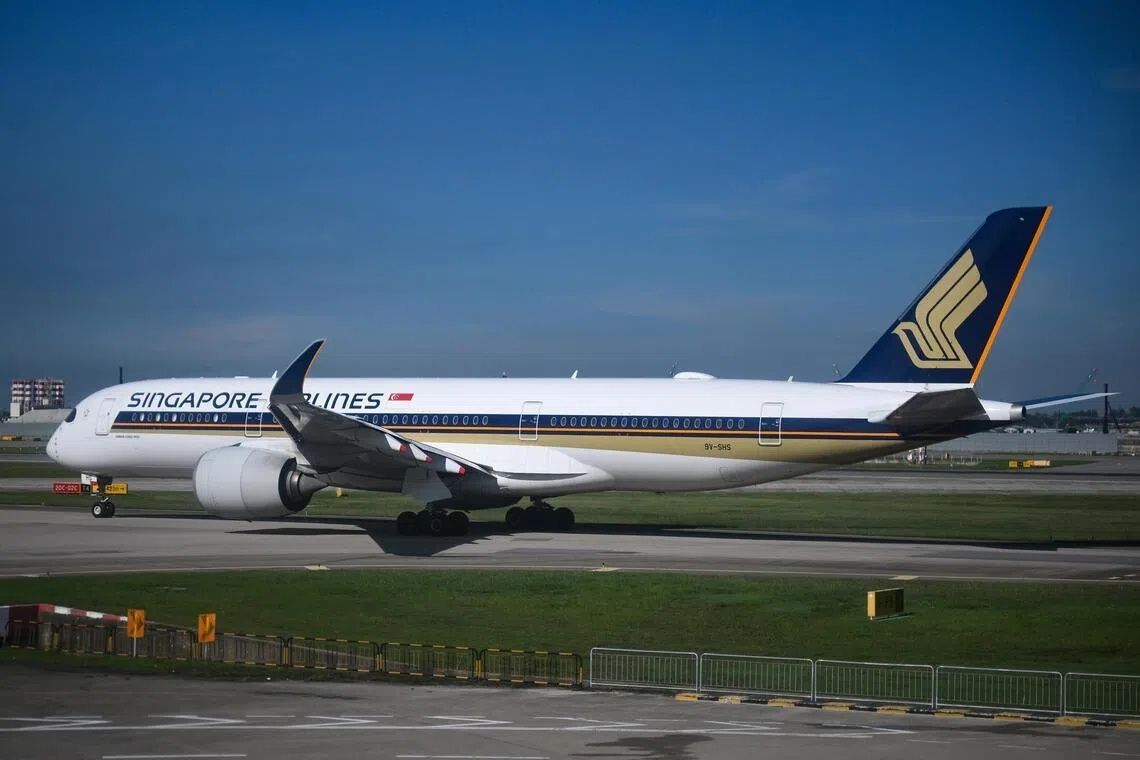
The approaching Typhoon Noul is disrupting regional air travel significantly, with Singapore Airlines announcing the cancellation of three key routes on Saturday and Sunday as meteorological conditions deteriorate across the South China Sea corridor. The cancellations affect direct services between the city-state and two major Chinese economic hubs—Shenzhen and Hong Kong—highlighting how severe weather in the region can rapidly ripple through Southeast Asia's critical transportation networks. For Malaysian travellers and businesses with connections through these hub cities, the disruptions underscore the vulnerability of regional aviation to tropical cyclonic systems that intensify quickly during peak summer months.
Singapore Airlines disclosed its operational adjustments through a formal advisory issued at 4.45pm on July 25, detailing the removal of flight SQ856 from Singapore bound for Shenzhen on that same day, followed by the cancellation of the return service SQ855 from Shenzhen to Singapore scheduled for July 26. The carrier also suspended its Hong Kong-Singapore service, flight SQ899, on July 26. These routes represent core commercial links within the broader Asia-Pacific air network, and their interruption affects corporate travel, tourism flows, and supply chain movements that are crucial to the region's interconnected economies. The airline's decision to ground these services reflects the serious threat posed by the typhoon to aircraft operations and passenger safety.
The national carrier urged affected passengers to monitor its official flight status portal continuously, emphasizing that further schedule changes remain possible as the weather system evolves. Singapore Airlines extended a full refund option for the unused segments of impacted tickets, a gesture aimed at mitigating financial losses for stranded passengers. Travellers who had arranged bookings through intermediary travel agents or code-share partners were instructed to pursue compensation and rebooking assistance directly through their booking channels, distributing the administrative burden across multiple service providers operating within the region's complex aviation ecosystem.
Hong Kong's flagship carrier Cathay Pacific implemented even more sweeping restrictions, cancelling all flights scheduled to arrive at or depart from Hong Kong International Airport during a critical nine-hour window spanning from 1.15am through 6pm on July 26. This wholesale suspension reflects the intensity of the weather threat expected to strike the territory during the cited period. Beyond the outright cancellations, Cathay Pacific warned that additional services would experience delays, and the airline committed to rebooking all displaced passengers on alternative flights as soon as revised schedules could be finalized and communicated. The scale of Cathay Pacific's response indicates that aviation authorities had issued binding directives to suspend operations, or that the airline assessed conditions as fundamentally incompatible with safe flight operations.
The meteorological foundation for these operational decisions centres on the anticipated trajectory and intensity of Typhoon Noul. China's National Meteorological Center forecasted that the storm would make landfall within the coastal band encompassing Hong Kong through Guangdong province during the evening of July 25 extending into the morning of July 26. The system was expected to deliver torrential precipitation and gale-force winds capable of overwhelming airport infrastructure, compromising visibility, and creating dangerous conditions for aircraft manoeuvring during approach and departure phases. Such meteorological phenomena create genuine hazards that justify the suspension of commercial operations, as aviation safety regulations prohibit flights in conditions where wind speeds, precipitation intensity, or visibility fall below established minimums.
The human toll of the typhoon underscores why airlines and Chinese authorities have acted decisively. Guangdong province, China's economic powerhouse and a manufacturing hub integral to global supply chains, had already seen more than 20,000 residents evacuated from vulnerable areas by late July 24, according to reports from CCTV, the country's state broadcaster. These evacuations indicate that provincial officials assessed significant risk to life and property, suggesting wind speeds and flooding potential that extended well beyond aviation safety concerns. The evacuation scale provides context for the breadth of flight cancellations—the storm's severity justified extraordinary measures across multiple sectors and regions.
For Malaysia specifically, the disruptions carry implications for companies reliant on express routes through Hong Kong and Shenzhen, two pivotal junctions within the Malaysian business diaspora's operational networks. These cities serve as gateways for Malaysian traders accessing mainland Chinese markets and for international companies conducting business with Malaysian counterparts. Interruptions to air services during critical business periods can cascade through supply chains, delay negotiations, and complicate project timelines. The incident also reminds Malaysian travellers of the necessity of purchasing comprehensive travel insurance that covers weather-related cancellations and of maintaining flexibility in itinerary planning during typhoon season in the region.
The broader Southeast Asian context reveals how typhoons traverse an interconnected transportation ecosystem where disruptions in one location rapidly affect multiple nations. Hong Kong and Shenzhen function as regional hubs processing massive passenger and cargo volumes that redistribute throughout Southeast Asia. When typhoons compel carriers to ground aircraft across major hub airports, the effects amplify throughout the network—flights from Kuala Lumpur, Bangkok, and other regional capitals experience knock-on delays and cancellations as downstream connections vanish. This structural vulnerability has prompted discussions within ASEAN aviation circles about developing more redundant routing options and accelerating infrastructure improvements at secondary airports to distribute traffic during weather disruptions.
The operational response from Singapore Airlines and Cathay Pacific also reflects the maturing sophistication of regional carriers in managing severe weather. Rather than attempting to continue abbreviated schedules or diverting significant portions of flights to alternative airports, both carriers chose transparent, decisive action—announcing cancellations with sufficient advance notice to allow passengers to adjust plans and seeking to minimize compounded disruptions. This approach contrasts with historical typhoon responses where carriers attempted to maintain skeleton operations, resulting in cascading delays, fuel-induced diversions, and passenger safety risks. The July 2024 response represents institutional learning about the long-term reputational and operational costs of weather brinkmanship.

