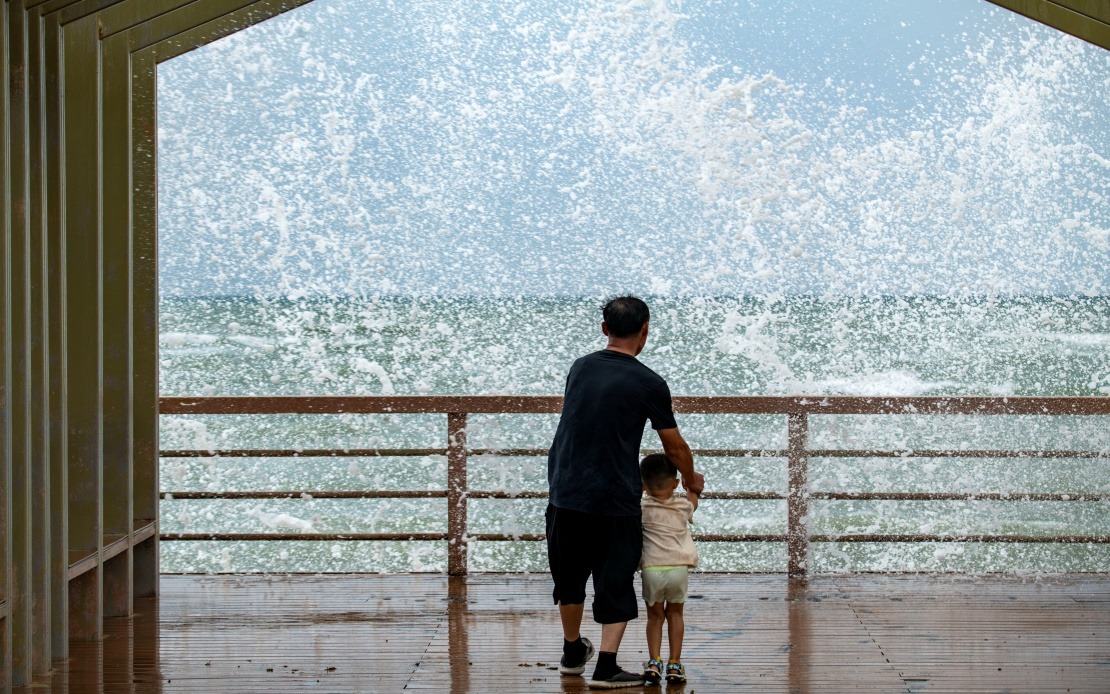
Typhoon Maysak made a dramatic arrival on the shores of Hainan Province on Friday evening, marking the year's tenth tropical storm system to reach land in South China. The cyclone came ashore at approximately 6.20 pm local time in Yelin Township of Lingshui Li Autonomous County, bringing with it powerful winds clocked at 23 metres per second near its centre. The impact was immediate and comprehensive, triggering a cascade of disruptions across the island's critical infrastructure and daily operations that left residents scrambling to adjust their plans.
The scale of the typhoon's disruption became evident within hours of landfall. Railway authorities took the precautionary step of suspending all train services connecting Hainan to the mainland, a suspension that was scheduled to last through both Friday and Saturday. This decision effectively isolated the island's rail network, preventing both inbound and outbound passenger movement during the most critical period of the storm. For travellers who had booked rail tickets, the disruption meant sudden cancellations and the need for immediate rebooking or refunds, compounding the chaos that typically accompanies severe weather events in major transport hubs.
Airport operations ground to a halt as meteorological forecasts indicated intensifying conditions. Sanya Phoenix International Airport, Hainan's largest aviation gateway and a crucial hub for both domestic and international traffic, ceased all flight operations from 5 pm Friday onwards. This closure effectively suspended the island's primary link to other parts of China and international destinations, stranding thousands of passengers and forcing airlines to implement emergency contingency measures. The timing of the typhoon during what could be peak travel season heightened the economic impact on the aviation sector.
Maritime transport also fell victim to the storm's severity. Ferry services operating across the Qiongzhou Strait, which separates Hainan from Guangdong Province and serves as a crucial transport corridor for both passengers and vehicles, were halted from 2 am Friday. Authorities estimated that normal service would not resume for one to two days, contingent on how weather conditions evolved. This interruption effectively severed one of southern China's most important sea lanes, disrupting supply chains and passenger movement between the island and the mainland.
The impact on daily life extended beyond transport networks into education. Schools and child-care facilities in Sanya and Ledong Li Autonomous County, two major population centres in Hainan, were ordered closed in response to the severe conditions. These closures reflected the genuine danger posed by the typhoon, which could transform outdoor areas into hazardous environments with flying debris, flooded streets, and unstable structures. Parents had to make emergency childcare arrangements while bracing for the storm's passage.
Meteorological forecasters projected that Typhoon Maysak would maintain a northwesterly trajectory across Hainan, sweeping through several populated areas including Baoting, Wuzhishan, Baisha and Danzhou before moving into the Beibu Gulf. This predicted path meant that the typhoon would traverse densely inhabited regions, exposing millions of people to its effects. The progression of the storm system appeared likely to prolong disruptions across multiple provinces as the system continued its journey through the region.
For Malaysia and Southeast Asia more broadly, the incident underscores the annual challenge that tropical storm systems present to regional stability. Typhoons similar to Maysak can affect shipping routes, trade corridors, and economic activity across East and Southeast Asia, creating ripple effects far beyond their initial landfall zones. The rapid response by Chinese authorities—suspending transport networks and closing educational institutions—represents a pragmatic approach to managing the immediate crisis, though the economic costs accumulate quickly.
The classification of Maysak as the 10th typhoon of the year indicates a typical pace for the Pacific typhoon season, which runs from May through November. Hainan's exposed location along major storm tracks makes it particularly vulnerable to regular typhoon strikes, a reality reflected in local building codes and emergency response protocols. The island's economy, heavily dependent on tourism and trade, bears significant costs from each major typhoon that passes through its territory.
Transport sector professionals across the region will be watching closely to understand how quickly services resume after Typhoon Maysak passes. The coordination between railway, aviation, and maritime authorities demonstrates the integrated approach required to manage crisis situations affecting multiple transport modes simultaneously. However, the economic disruption from a single major typhoon highlights vulnerabilities in supply chains and passenger connectivity that persist despite advanced warning systems and preparation measures.

