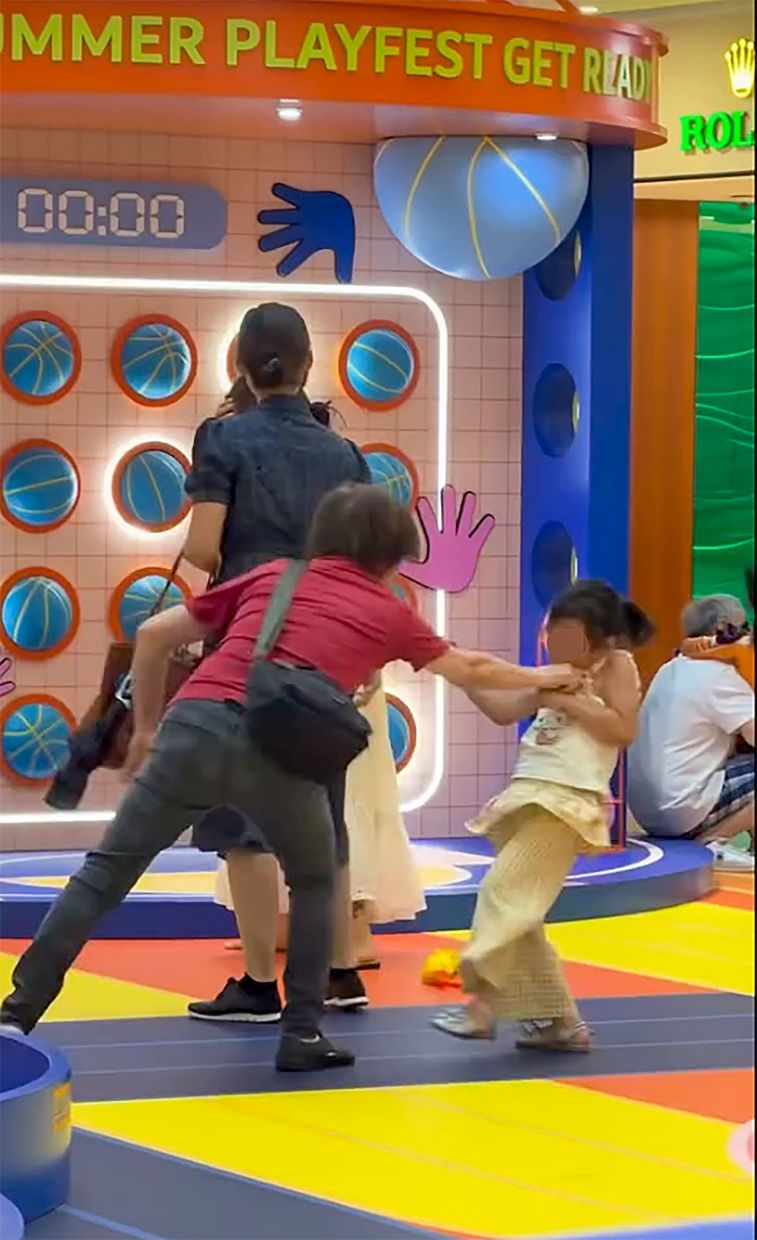
A confrontation at a Hong Kong shopping centre has resulted in two arrests and raised fresh concerns about public conduct and child safety in crowded retail spaces. Hong Kong police have detained two women on assault charges following an incident at the APM shopping centre in Kwun Tong on Wednesday afternoon. The altercation, which unfolded around 4.45pm near a children's play area within the atrium of the mall, quickly escalated from a minor dispute between children into physical violence involving multiple adults—an encounter captured on video that subsequently circulated widely online.
The sequence of events began when a dispute erupted between a young boy and a five-year-old girl over access to a play installation at the shopping centre's designated children's area. A gathering of parents and young children witnessed the unfolding tension, which might ordinarily have been resolved through parental mediation or the intervention of mall staff. However, the boy's grandmother—a 68-year-old woman who was at the play area alongside her daughter and grandson—chose to intervene directly on behalf of her family member. Rather than engaging in dialogue with the other child's supervising adult, she escalated the confrontation through physical action.
Footage of the incident shows the elderly woman forcefully pushing the five-year-old girl before striking her across the face, a action that caused the child to lose her footing and fall to the ground. The violence captured immediate attention from bystanders, with another adult woman rushing forward to confront the elderly woman and respond with her own striking blow. The clip also reveals heated verbal exchanges, with one mother confronting another and demanding that she remain at the scene. At separate moments during the scuffle, two men attempted to restore order, with one man directly challenging the boy's grandmother by asking whether she had struck a child, stating that he had witnessed her actions firsthand.
The incident reflects a troubling pattern of public disputes in densely populated urban spaces like Hong Kong, where shared facilities and recreational areas occasionally become flashpoints for adult conflict. The involvement of elderly individuals in physical confrontations at children's play areas presents particular concerns, given the vulnerability of young children and the potential for serious injury when power dynamics are so unequal. The fact that this episode took place in a commercial retail environment also raises questions about mall management's responsibility to prevent and de-escalate such incidents before they reach the point of violence.
When Hong Kong police arrived at the APM shopping centre, they arrested both the 68-year-old woman and the girl's mother—identified as being 34 years old—on suspicion of assault or assault occasioning actual bodily harm. The decision to charge both women reflects the complex nature of the confrontation, in which multiple parties engaged in physical contact. The police investigation does not appear to have distinguished significantly between the initial striking of the child and the subsequent defensive response from the girl's mother, treating both as criminal conduct warranting arrest.
Medical attention was provided to those injured in the altercation. The five-year-old girl who was struck, along with the two younger women involved in the subsequent scuffling, were transported to the nearby United Christian Hospital for treatment of minor facial injuries. Hospital officials reported that the injuries sustained by all three individuals were relatively minor in nature, though the psychological impact of public violence on young children present at the scene remains a consideration often overlooked in incident reports.
The Kwun Tong district investigation team of the Hong Kong Police Force has taken responsibility for progressing the case. The formal investigation will need to establish the precise sequence of events, verify accounts from witnesses, and determine whether the charges brought reflect the severity and proportionality of each party's actions. The availability of video evidence should assist investigators in reconstructing the incident and understanding the context in which adults made the decision to resort to physical confrontation in front of children.
This incident resonates beyond Hong Kong's borders within the Southeast Asian context. Mall culture is equally important across the region, with shopping centres serving as primary recreational destinations for families across Malaysia, Singapore, and other ASEAN nations. The question of how adults should respond when children clash in shared recreational spaces reflects broader cultural attitudes toward parenting, authority, and conflict resolution that vary significantly across the region.
For Malaysian readers and parents, the incident underscores the importance of establishing clear social norms around intervention in disputes involving children who are not one's own. The escalation from a children's disagreement to adult violence happened remarkably quickly, suggesting that communication and restraint failed at critical moments. Shopping centre management and security personnel play increasingly important roles in preventing such incidents, requiring both training in de-escalation and clear policies regarding intervention in disputes.

