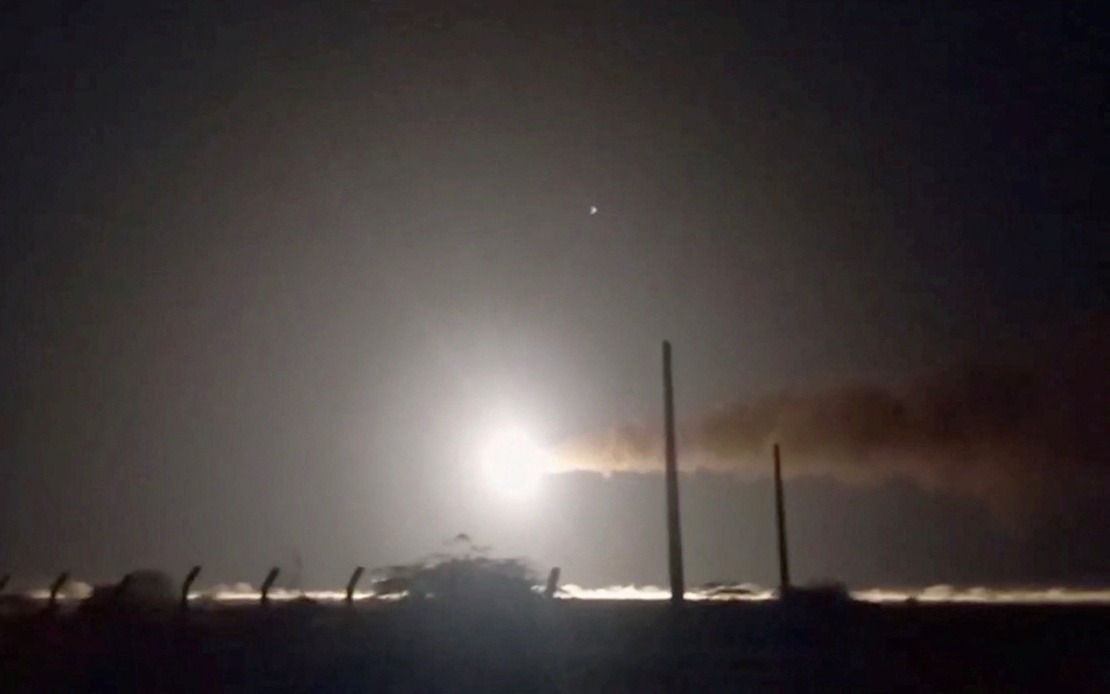
The US Central Command announced on Saturday that two American military personnel lost their lives when Iranian forces unleashed a barrage of ballistic missiles and unmanned drones against a location in Jordan. The attack, which occurred on July 17, also left at least one service member unaccounted for, according to statements released by CENTCOM in the immediate aftermath of the strike. The incident marks a significant escalation in regional tensions and represents a direct confrontation between American and Iranian military forces in one of the Middle East's most strategically important zones.
The assault unfolded as US Central Command and allied forces were actively defending against the incoming Iranian weaponry, indicating that American military assets in the region were placed on high alert and positioned to intercept or respond to threats. The circumstances surrounding the attack suggest a coordinated and sustained offensive operation rather than an isolated incident, with multiple weapon systems deployed simultaneously across what appears to have been a concentrated target zone. This pattern reflects Iran's demonstrated capability to conduct complex multi-platform strikes, combining different classes of weapons to overwhelm air defence systems.
Beyond the two service members killed in action, the human toll extended further when four additional personnel required medical evacuation to medical facilities within Jordan itself. All four of these evacuated service members have since been released from hospital care, indicating their injuries were treatable and non-life-threatening. Furthermore, other military personnel who sustained minor injuries during the attack have returned to active duty, suggesting that while the strike achieved some tactical impact, defensive measures and dispersion of forces prevented what could have been far more catastrophic casualties.
CENTCOM emphasized its commitment to proper military protocol and respect for the bereaved families by withholding public disclosure of the fallen service members' names and identifying details. The command stated that such information would remain restricted until at least 24 hours after next of kin notifications have been completed, a standard practice designed to ensure that families receive official notification before personal details become public knowledge through media channels. This measured approach reflects the operational sensitivity surrounding the incident and the gravity with which the military treats casualty management.
For Malaysia and broader Southeast Asian stakeholders, this incident carries significant implications. The region's strategic interests in Middle Eastern stability are substantial, given the importance of Gulf waterways for international commerce and the interdependency of global energy markets. Any escalation in US-Iran tensions threatens to disrupt shipping lanes, elevate insurance costs for maritime operations, and create broader economic ripple effects that extend into Asia-Pacific supply chains. Malaysian businesses with Middle Eastern exposure, particularly in petroleum, petrochemicals, and maritime sectors, face increased operational and financial uncertainty.
The attack also underscores the fragility of military deterrence frameworks in the region. Iran's willingness to directly strike American positions demonstrates either a calculated shift in strategic posture or a response to perceived threats that it views as justifying immediate military action. For regional actors, including those in Southeast Asia engaged in diplomatic relations with both the United States and Iran, the incident complicates the already delicate balancing act required to maintain productive relationships with multiple powers while avoiding alignment in their conflicts.
The presence of substantial American military infrastructure in Jordan reflects the long-standing US strategic commitment to the Levant and broader Middle Eastern security architecture. Jordan's role as a stabilizing force in a volatile region, combined with its geographic proximity to Israel, Syria, Iraq, and Saudi Arabia, makes it a crucial anchor for American military operations. Attacks on such positions challenge the assumption of US force protection and raise questions about the sustainability of current deployment strategies in an era of increasingly sophisticated long-range weapons.
From a military technology perspective, the Iranian strike demonstrates the operational maturity of Tehran's ballistic missile and drone programs. The ability to coordinate multiple weapon systems in a single operation against a defended position suggests either improved Iranian targeting intelligence or a deliberate acceptance of losses in exchange for demonstrating capability. Both interpretations have concerning implications for regional stability and the calculations that adversaries may undertake when contemplating military action.
The incident occurs within a broader context of deteriorating diplomatic channels and failed attempts at de-escalation in the Middle East. Efforts to rebuild the nuclear accord, regional proxy conflicts in Yemen and Iraq, and unresolved tensions over Iranian nuclear development have created an environment where direct military confrontation appears increasingly plausible. For Southeast Asian policymakers seeking to navigate these geopolitical currents while protecting national interests, the July 17 attack serves as a stark reminder of how quickly regional conflicts can escalate into direct great power confrontations.
Moving forward, the response from the United States and potential counter-measures will shape the trajectory of tensions in the region. Any escalation cycle could further destabilize already fragile Middle Eastern states, trigger humanitarian crises, and disrupt global trade patterns in ways that reverberate across Southeast Asia. The incident also highlights the vulnerability of military personnel deployed in forward positions and may prompt reassessment of force positioning and protection protocols across American military installations throughout the region. For Malaysian observers and policymakers, sustained attention to developments in the Middle East remains essential, as instability there translates directly into challenges for regional economies, maritime security, and broader strategic stability in the Indo-Pacific.

