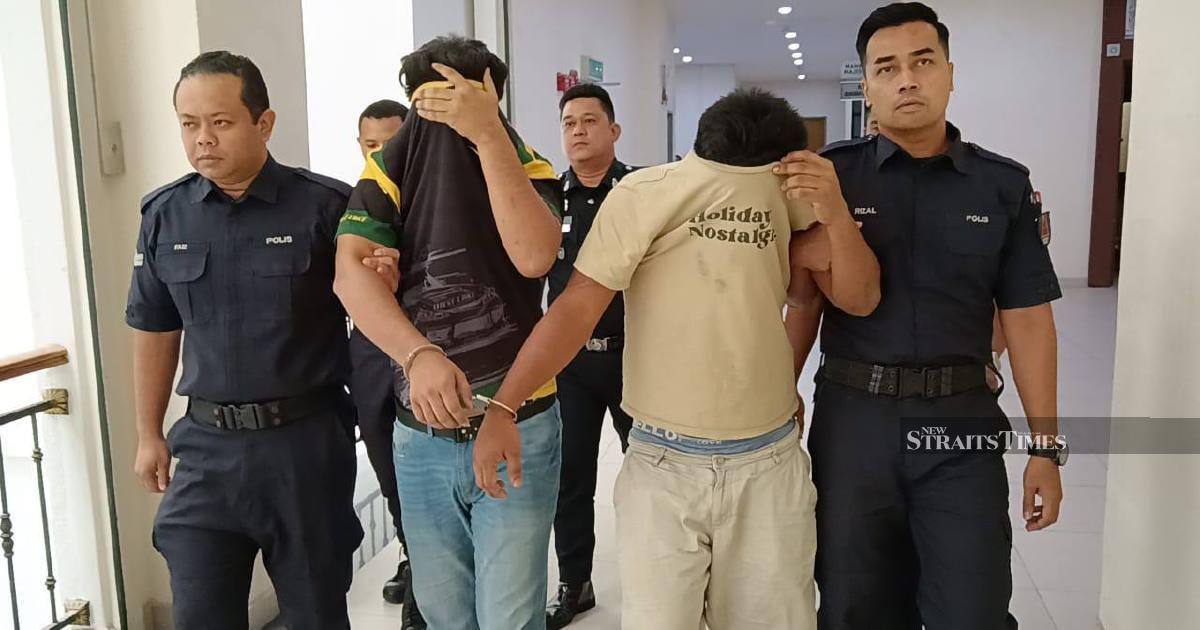
Two Rohingya men who hold UNHCR identification documents appeared before the Magistrate's Court in Muar today to face charges stemming from a coordinated series of residential burglaries that have plagued the district. The cases represent a significant development in ongoing efforts to address property crime in the area and raise complex questions about security, documentation, and integration within host communities across Malaysia.
The charged individuals are linked to multiple break-ins affecting properties across Muar, according to court records presented at today's proceedings. The specific allegations connect them to a pattern of intrusions into private residences, marking a concerning escalation in organised property theft that has prompted heightened police activity and neighbourhood vigilance throughout the district.
Muar, located in Johor state, has experienced notable demographic shifts in recent years with the presence of refugee populations registered through international humanitarian channels. The UNHCR, which manages protection and documentation for displaced persons including Rohingya from Myanmar, issues identity cards that facilitate access to basic services and administrative processes within host countries. However, the involvement of cardholders in criminal activity creates friction between refugee communities and local residents, potentially complicating integration efforts.
The Rohingya crisis, ongoing since large-scale displacement from Myanmar's Rakhine State in 2017, has resulted in significant populations across Southeast Asia. Malaysia hosts one of the largest Rohingya communities in the region, though official government policy does not formally recognise refugee status. The presence of UNHCR-documented individuals underscores Malaysia's de facto role as a temporary asylum destination, even as formal legal frameworks remain ambiguous.
Criminal charges against registered refugee claimants present substantial policy complications for host nations. While individual criminal accountability must be applied uniformly regardless of immigration status, such cases often generate negative perceptions affecting broader refugee populations who remain law-abiding and struggle daily with precarious living conditions. The Muar incidents may intensify existing tensions between refugee advocacy groups emphasising humanitarian obligations and community safety advocates calling for stricter enforcement and enhanced screening.
The connection between refugee populations and petty crime remains statistically complex across Southeast Asia. Research from various humanitarian and academic sources suggests criminal rates among refugee communities broadly track population demographics rather than showing significant elevation. Nevertheless, high-profile cases create disproportionate media attention and public anxiety, influencing political discourse around migration and security policy regardless of underlying statistical realities.
Malaysia's approach to Rohingya management has evolved considerably since the 2015 maritime crisis brought thousands to its shores. Successive governments have pursued varied strategies ranging from temporary humanitarian allowances to periodic enforcement crackdowns addressing undocumented populations. The current administration has signalled commitment to principles of refugee protection while simultaneously prioritising national security concerns and social stability within host communities.
The Magistrate's Court proceedings represent routine criminal justice processes, yet carry symbolic weight within the charged political environment surrounding refugee issues. Court verdicts in such cases shape public perception of how effectively authorities balance humanitarian obligations against security imperatives. The outcomes will likely influence government messaging regarding both refugee management and public safety priorities heading into future policy deliberations.
For Malaysian residents and regional observers, the Muar cases exemplify broader tensions emerging across Southeast Asia as refugee populations stabilise within host nations experiencing economic pressures and evolving social dynamics. The region's countries collectively host millions of displaced persons while lacking comprehensive international burden-sharing frameworks. Individual criminal cases thus acquire disproportionate significance in shaping policy responses and public attitudes toward populations already vulnerable to discrimination and economic marginalisation.
Local authorities in Johor and beyond face considerable pressure to demonstrate effective law enforcement responses while avoiding characterisations that unfairly stigmatise entire refugee communities. The balance between security priorities and humanitarian principles remains delicate, particularly when media narratives risk oversimplifying complex situations involving vulnerable populations and individual criminal conduct. The Muar burglary investigations underscore these ongoing policy challenges facing Malaysian authorities and regional governments navigating protection obligations alongside citizen security expectations.
The magistrate's assessment of evidence and determination of appropriate legal consequences will contribute to established precedent governing refugee involvement in criminal proceedings. Such judicial outcomes inform subsequent policy development around security protocols affecting registered displaced persons and shape public discourse regarding refugee integration success or failure in Malaysian contexts. Forthcoming court determinations may therefore extend influence beyond individual defendant circumstances to broader national conversations about asylum, belonging, and community safety.

