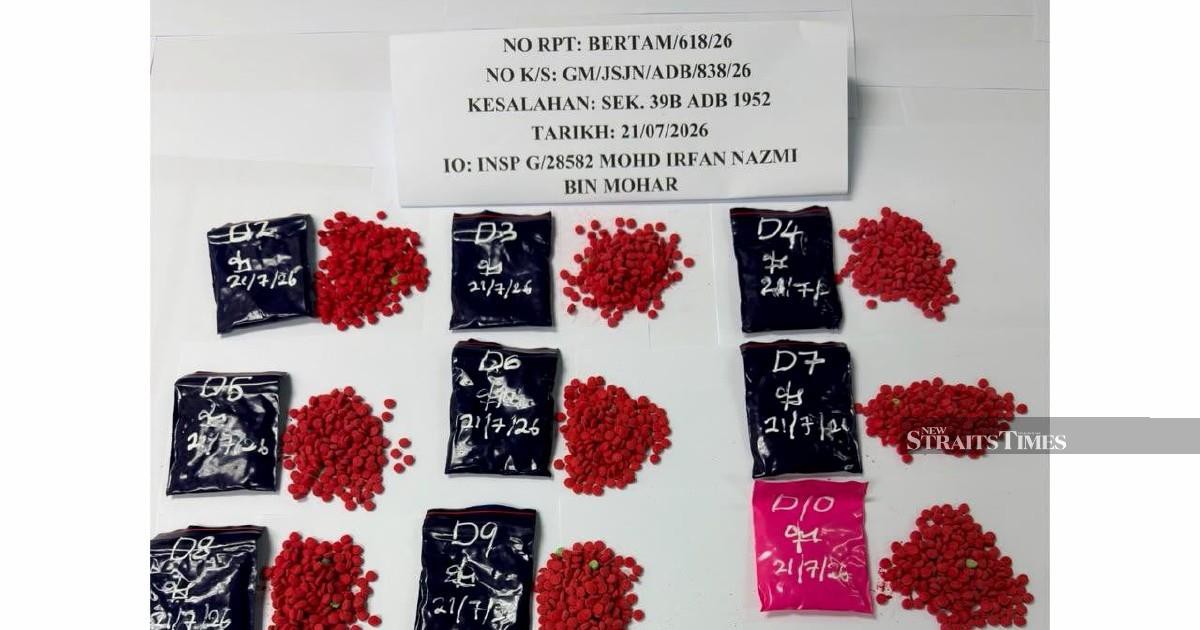
Law enforcement in Kelantan have successfully apprehended two nationals from Myanmar after intercepting them during a vehicle pursuit that unfolded in Gua Musang. The operation concluded with the recovery of 6,000 yaba tablets, a potent form of methamphetamine, with an estimated street value of RM60,000, marking a significant seizure in the region's ongoing battle against illicit drug trafficking.
The incident occurred as officers conducted surveillance operations in the district, where they spotted a suspicious vehicle behaving erratically. When police signalled the vehicle to stop for a routine inspection, the occupants instead accelerated, prompting officers to initiate a pursuit. The chase, though brief in duration, demonstrated the typical evasion tactics employed by drug couriers operating across Malaysia's porous borders with Thailand and the Golden Triangle region, where the manufacture of methamphetamine remains endemic.
Police successfully intercepted the fleeing vehicle and detained the two occupants, both identified as Myanmar nationals. The subsequent search of the vehicle yielded the substantial quantity of yaba pills concealed within the vehicle's interior. These tablets, commonly known as "crazy medicine" or "madness pills" in Southeast Asia due to their potent stimulant effects, represent one of the region's most problematic synthetic drugs, particularly among younger demographics and nightlife communities.
The RM60,000 valuation reflects current market rates for yaba in Malaysia's illegal drug trade. A single tablet typically retails for RM10 to RM15 on the streets, making bulk quantities like this particularly valuable to trafficking networks. The seizure represents a disruption to supply chains that funnel these pills southward from clandestine laboratories in Myanmar and Thailand, where production remains difficult for authorities to curtail despite international cooperation efforts.
Gua Musang and the broader Kelantan region occupy a critical geographical position in Malaysia's drug enforcement landscape. The district sits near major highways connecting Thailand with more densely populated Malaysian territories, making it a natural transit corridor for traffickers. The proximity to Thailand's drug-producing regions means that Kelantan consistently experiences higher incidences of drug-related arrests compared with other Malaysian states, reflecting its position as a frontline zone in the nation's war on narcotics.
Yaba's prevalence in Malaysia has intensified dramatically over the past decade, with seizures doubling multiple times as production capacity in Myanmar expanded. Unlike heroin, which traditionally dominated Southeast Asian drug markets, methamphetamine requires no poppy cultivation and leaves fewer environmental traces, making it more attractive to organised trafficking syndicates. The drug's stimulant properties, alongside its affordability relative to cocaine or MDMA, have cemented its position as the second most-seized drug category in Malaysia after heroin, though some years the trend reverses.
The arrest of the two Myanmar nationals points to the persistence of foreign trafficking networks utilising the region as a transshipment point. Intelligence suggests that many courier operations are conducted by citizens of Myanmar and Thailand, who face lower perceived risks of extended imprisonment in Malaysia compared with local operatives. These international syndicates maintain sophisticated supply chain networks, often operating vehicles registered across borders and employing rotating personnel to minimise detection patterns.
From a law enforcement perspective, this operation underscores the ongoing effectiveness of intelligence-led policing in high-risk districts. The interception required officers to identify behavioural anomalies and respond swiftly, demonstrating that despite resource constraints, proactive enforcement remains viable. However, the continued volume of seizures suggests that trafficking operations possess sufficient redundancy and financial capacity to sustain supply despite regular law enforcement interventions.
For Malaysian policymakers and regional observers, this case exemplifies the transnational dimensions of the drug problem. Synthetic drugs manufactured in Myanmar constitute an existential challenge that cannot be resolved through domestic enforcement alone. Cooperation with Thai and Myanmar authorities remains inconsistent, complicated by governance challenges and the economic significance of drug production in border regions. Malaysia must balance its domestic enforcement capabilities with diplomatic pressure for upstream supply reduction.
The detained Myanmar nationals now face serious drug trafficking charges under Malaysia's Dangerous Drugs Act, which carries mandatory minimum sentences. If prosecuted and convicted, they face extended imprisonment, though sentencing variations depend on whether they are deemed couriers or principal traffickers. The outcome of this case will contribute to case law surrounding foreign nationals involved in drug trafficking, an increasingly important legal frontier as cross-border operations proliferate.
This seizure arrives amid broader concerns about yaba availability across Southeast Asia. Authorities in Thailand, Laos, and Cambodia report similar disruptions, yet the aggregate volume reaching markets continues climbing. The operation represents one component of a regional containment strategy that remains substantially behind the expansion of production and distribution infrastructure in the Golden Triangle. Sustained investment in border security, intelligence cooperation, and alternative livelihood programmes in drug-producing regions remains essential to stemming the tide.

