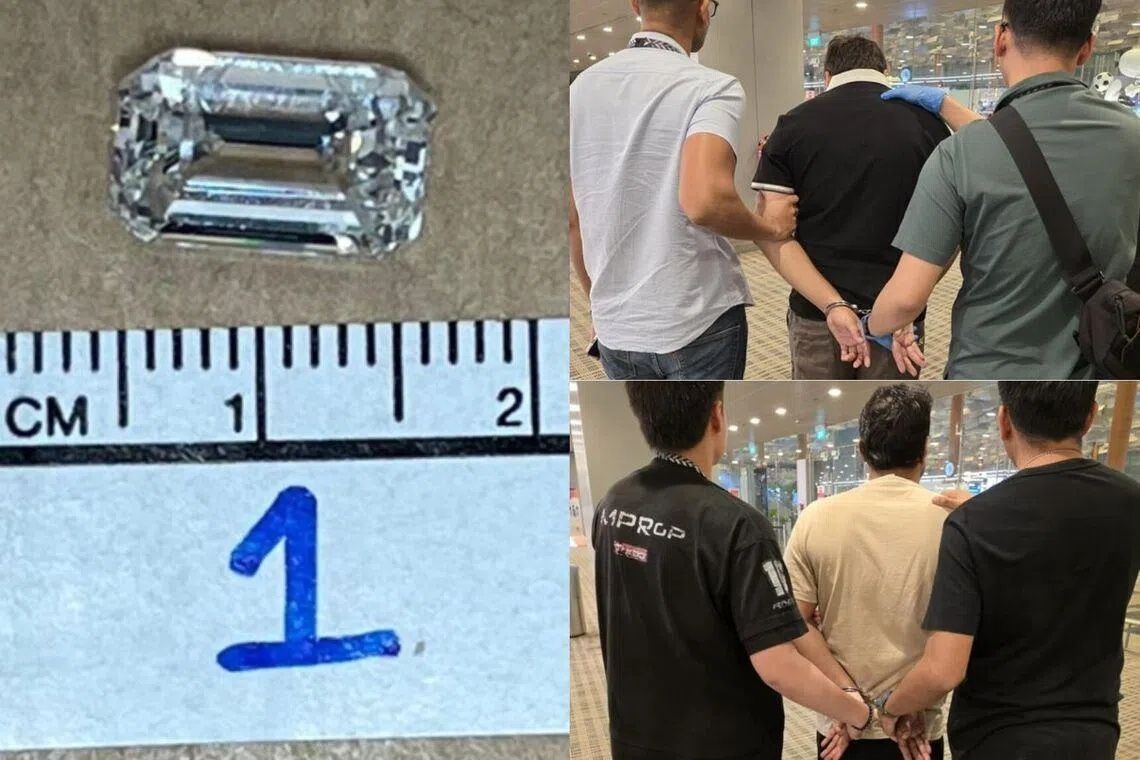
Two men have been arrested at Changi Airport Terminal 3 following an audacious jewellery heist in Singapore's Chinatown that has prompted police to issue fresh warnings to retailers of luxury goods. The pair, aged 30 and 42, were detained on Friday 19 June after allegedly stealing a diamond valued at more than S$235,000 from a store on Kreta Ayer Road. Officers from the Central Police Division and Police Operations Command Centre tracked them down through systematic investigation work, including analysis of closed-circuit television footage and camera data from multiple locations.
The theft itself was executed with calculated precision. While posing as potential buyers, the two men asked to examine the precious stone at the jewellery counter. Seizing what appeared to be an opportune moment, they deftly swapped the genuine diamond for a counterfeit replica. Their composure held as they concluded the interaction without making a purchase, and they departed the premises with their sleight of hand apparently undetected. However, their escape proved short-lived when a shop assistant conducted a routine verification check and immediately discovered the switch, triggering an urgent call for police assistance at 3.40 pm on the afternoon of the theft.
The discovery of the substitution marked the beginning of an intensive police operation. Officers moved quickly, utilizing CCTV recordings from the jewellery store and surrounding businesses, alongside footage from police camera networks positioned throughout the district. This technical surveillance, combined with conventional ground enquiries and follow-up investigations, enabled detectives to construct a profile of the suspects and identify their location. The decision to apprehend them at the airport terminal suggests that authorities had identified them attempting to leave Singapore, possibly with the intent to flee the jurisdiction before formal charges could be laid.
The recovery of the stolen diamond within hours of the theft represents a significant success for Singapore's law enforcement response to high-value property crimes. The gem was secured as a case exhibit, preserving both the evidence and the asset itself, which stands to be returned to its rightful owner pending completion of legal proceedings. The swift arrest and recovery underscore the capabilities of Singapore's integrated policing infrastructure, where technological resources and traditional investigative methods work in tandem.
The two suspects are scheduled to be charged with theft in dwelling with common intention, a provision that carries substantial penalties under Singapore law. Each man faces a maximum sentence of seven years' imprisonment, plus the possibility of a fine, should they be found guilty. The serious nature of the charge reflects both the monetary value at stake and the deliberate, coordinated nature of the alleged theft. The charge of common intention indicates that prosecutors view this as a premeditated conspiracy rather than a spontaneous act of opportunity.
This incident exposes a persistent vulnerability in the luxury retail sector across Southeast Asia, where high-value jewellery and gemstones remain attractive targets for organized theft rings. The modus operandi employed here—building rapport with staff through feigned customer interest, then executing a sleight-of-hand substitution—is a technique that has been documented in retail thefts across the region. Such operations rely on quick reflexes, composure under pressure, and an intimate knowledge of how jewellery stores conduct their transactions and security protocols. The fact that the perpetrators were apprehended before exiting Singapore's borders suggests they may have been part of a wider criminal network with international reach.
In their official statement, Singapore Police Force authorities emphasized their uncompromising stance against such crimes, declaring zero tolerance and pledging to pursue offenders relentlessly through the criminal justice system. They have simultaneously recognized the need to mobilize the business community as a front-line defense. Police issued a specific advisory to all retailers selling high-value items, urging heightened vigilance against precisely this category of theft technique. The guidance particularly highlighted the dangers of sleight-of-hand methods, encouraging shop owners to implement protective measures such as limiting the time customers can handle valuable items unattended, using display cases that restrict direct access, and employing multiple staff members to monitor high-value transactions.
For Malaysian business owners in the jewellery sector, this incident carries immediate relevance. While Singapore's retail security standards are generally considered stringent, the success of this theft demonstrates that even well-established stores can be vulnerable to sophisticated theft techniques. The implications extend to shopping malls and retail districts across Malaysia, where similar vulnerabilities may exist. Local retailers should examine whether their current protocols adequately protect against the switch-and-swap technique, which requires minimal time and no use of weapons or force—factors that make it attractive to those seeking to minimize their exposure to serious charges.
The broader regional context matters here as well. Southeast Asia's position as a hub for legitimate jewellery trading, combined with porous land and maritime borders in some areas, makes the region attractive to criminal networks engaged in theft-and-resale operations. Stolen jewellery from one country can quickly move across borders where it may be melted down, recut, or sold through informal channels. Singapore's swift response in this case—combining immediate arrest with international alert systems—helps disrupt these networks, but the challenge requires cooperation across all regional law enforcement agencies. Malaysian authorities continue to strengthen their own protocols for monitoring suspected stolen goods and cooperating with neighboring countries on border security.
The incident also raises questions about authentication and verification practices in retail settings. While the shop assistant in this case did eventually detect the switch, the fact that a convincing counterfeit was produced and deployed suggests that sophisticated fakes are in circulation. This has implications for both retailers and consumers across the region. Legitimate buyers should seek certification and documentation from reputable sources, particularly for high-value purchases. Retailers, meanwhile, must balance customer convenience with security needs—a challenge that extends beyond Singapore to every jewellery merchant operating in Southeast Asia's competitive retail environment.
%22%2F%3E%3C%2Fpattern%3E%3C%2Fdefs%3E%3Crect%20width%3D%22100%25%22%20height%3D%22100%25%22%20fill%3D%22url(%23ph27o3tg)%22%2F%3E%3Crect%20width%3D%22100%25%22%20height%3D%22100%25%22%20fill%3D%22url(%23ph27o3tp)%22%2F%3E%3Ctext%20x%3D%2250%25%22%20y%3D%2250%25%22%20text-anchor%3D%22middle%22%20dominant-baseline%3D%22central%22%20fill%3D%22rgba(255%2C255%2C255%2C0.95)%22%20font-family%3D%22Georgia%2C%20'Times%20New%20Roman'%2C%20serif%22%20font-weight%3D%22700%22%20font-size%3D%22151%22%20letter-spacing%3D%22-0.02em%22%3ESingapore%3C%2Ftext%3E%3C%2Fsvg%3E)