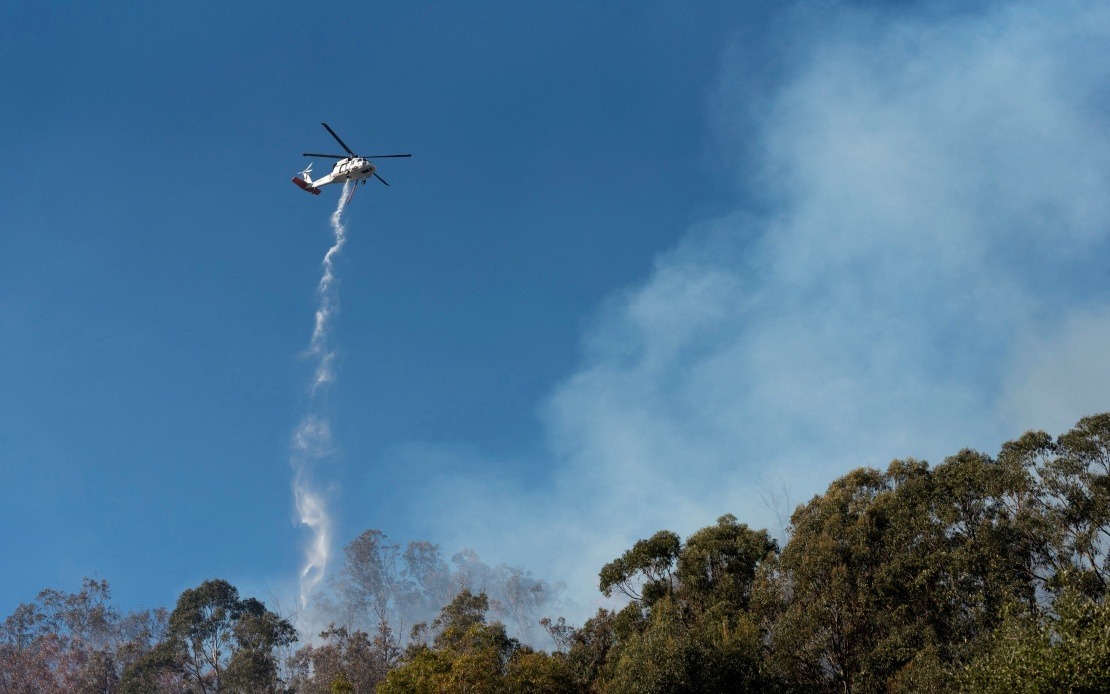
A contracted helicopter assisting with firefighting operations in central Utah crashed on Friday, claiming the lives of two crew members including the pilot. The accident occurred near Richfield at approximately 10 am local time as the aircraft, a Sikorsky S-64 under contract with the US Forest Service, was engaged in active firefighting on the Widemouth 2 Fire. Authorities have withheld the names of the deceased pending family notification, though the US National Interagency Fire Centre confirmed both the pilot and one additional crew member perished in the incident.
The Federal Aviation Administration has identified the aircraft type involved, while the National Transportation Safety Board has assumed leadership of the investigation into what authorities describe as an accident occurring under unknown circumstances. Preliminary accounts indicate the helicopter descended in rugged, isolated terrain during active firefighting operations, though investigators have not yet determined the precise cause of the crash. The location presented immediate challenges for emergency responders attempting to access the wreckage and begin recovery operations.
The crash site's inaccessibility was compounded by active fire conditions and challenging topography that initially prevented rescue teams from reaching the area. More problematically, the helicopter impact itself ignited additional flames in the surrounding vegetation, creating a secondary fire hazard that further complicated both recovery efforts and safety considerations for ground personnel. Fire officials expressed concern that the new flames generated by the crash would delay access to the wreckage and pose risks to any rescue personnel attempting to approach the site.
Utah Governor Spencer Cox released a statement acknowledging the tragedy and its significance within the broader context of wildland firefighting operations. The Governor characterised wildland firefighting as among the world's most hazardous occupations, describing the crash as a sobering reminder of the substantial risks undertaken daily by firefighting personnel. Cox's remarks reflected the state's recognition of the dangers inherent in aerial firefighting operations, particularly in remote and challenging terrain where weather conditions and visibility present additional complications.
The Widemouth 2 Fire itself represents a significant challenge for Utah firefighting authorities. The blaze initiated on July 27 following a lightning strike that ignited dry timber, brush, and grass within the Fishlake National Forest near Kanosh, a small community situated in central Utah. Favourable conditions for rapid fire spread—including an extended period of dry weather, elevated temperatures, and unpredictable wind patterns—enabled the fire to expand quickly across the landscape, necessitating civilian evacuations and resulting in property destruction throughout the affected region.
As of the crash date, the Widemouth 2 Fire had consumed more than 114,000 acres, equivalent to approximately 461 square kilometres of forest and grassland. Fire management personnel had achieved only 24 percent containment of the perimeter, according to Utah Fire Info, the interagency information resource coordinating public updates on the state's wildfire situation. At minimum, six structures lay destroyed by the advancing flames, with officials indicating the potential for additional property loss as firefighting efforts continued.
The incident carries particular relevance for Southeast Asian readers given the region's experience with helicopter-based wildfire and disaster response operations. Several Southeast Asian nations, including Indonesia and Malaysia, similarly deploy aerial assets for combating wildfires and supporting emergency operations in challenging terrain. The accident underscores the technical and operational risks associated with helicopter firefighting, especially in mountainous or remote regions where weather instability and difficult topography complicate both flight operations and emergency response coordination.
The crash also highlights the importance of robust safety protocols and investigation mechanisms surrounding aerial emergency operations. The involvement of the National Transportation Safety Board in determining causation will provide valuable insights into potential systemic issues affecting helicopter firefighting programmes, with findings potentially influencing operational procedures and aircraft maintenance standards across multiple jurisdictions and agencies. Such investigations contribute to continuous improvement in emergency response capabilities, ensuring that lessons learned from accidents inform future safety enhancements.
For Malaysian observers, the incident demonstrates the inherent hazards faced by professional firefighting personnel engaged in aerial operations during natural disasters. As climate patterns influence wildfire frequency and severity across North America and potentially affect transboundary haze conditions affecting Southeast Asia, understanding the operational challenges and safety considerations surrounding firefighting operations becomes increasingly relevant. The crash serves as a solemn reminder that protecting communities from natural disasters requires personnel to accept substantial personal risks, often with tragic consequences.
Authorities have requested public cooperation with investigators and emergency responders as operations continue at the crash site and across the broader Widemouth 2 Fire footprint. The dual challenge of managing an active, expanding wildfire whilst simultaneously responding to an aviation accident in remote terrain illustrates the complex logistical and safety considerations confronting modern emergency management agencies. As recovery and investigation operations proceed, fire suppression efforts on the Widemouth 2 Fire continue, with containment remaining a significant challenge given the scale and ongoing activity of the blaze.

