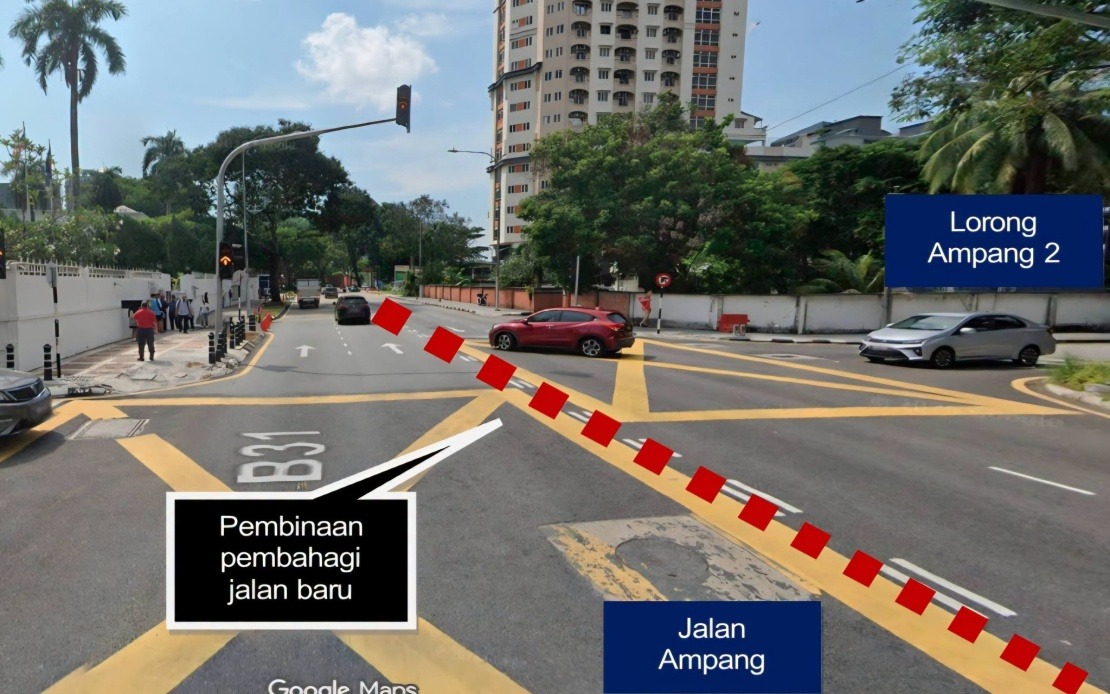
Kuala Lumpur City Hall (DBKL) has begun the permanent closure of two traffic light intersections on Jalan Ampang starting July 1, with authorities now directing motorists through alternative routes to minimise disruption to the capital's traffic network. The shuttered intersections—one fronting the Royal Thai Embassy and the other at Lorong Ampang 2—form a critical part of the broader Jalan Ampang upgrade initiative that will reshape a 3.2-kilometre stretch of this important arterial road.
The upgrade project encompasses the entire segment running from Jalan Tun Razak intersection eastward to Middle Ring Road 2 (MRR2), representing one of the most significant infrastructure interventions in this area in recent years. By closing these intersections rather than merely restricting turning movements, DBKL is adopting a more comprehensive approach to traffic management that planners believe will yield substantial efficiency gains throughout the corridor. The decision reflects a shift towards minimising the operational complexity that arises when multiple intersections compete for traffic management resources.
At the heart of this upgrade lies a fundamental redesign of the road's physical infrastructure. DBKL has committed to implementing a systematic suite of improvements including the installation of road dividers that will physically separate directional traffic flows, the expansion of existing lanes to create a two-way four-lane configuration, and enhanced pedestrian facilities designed to improve safety and comfort for non-vehicular users. Street lighting infrastructure will also undergo significant improvements, addressing longstanding concerns about visibility and security along the corridor during evening hours.
The road dividers, in particular, represent a strategic intervention aimed at reducing what traffic engineers refer to as weaving conflicts—situations where vehicles changing lanes or turning across traffic create bottlenecks and safety hazards. By eliminating these conflict points through permanent physical separation, the upgrade should substantially reduce intersection delays and create more predictable traffic patterns that benefit commuters and delivery services alike. For a city of Kuala Lumpur's complexity, such targeted improvements to major corridors can have cascading positive effects throughout the broader road network.
Moturists navigating the affected area will need to adapt to new routing patterns during the transition period. DBKL has established alternative pathways to accommodate traffic previously using the closed intersections. Those travelling from the Ampang side seeking access towards Jalan Tun Razak can execute U-turns at the Jalan Tun Razak intersection itself, creating a modified loop that redirects traffic around the closure. For those heading towards the city centre, U-turn opportunities have been designated at Jalan Ampang Hilir, providing an eastern bypass option for inbound traffic.
The implementation of these closures underscores a broader philosophy within DBKL's traffic management strategy: sometimes eliminating choice points and enforcing specific routing patterns through infrastructure design can produce superior outcomes compared to attempting to manage multiple intersection options. This approach represents a departure from traditional Malaysian traffic management practices that often attempted to accommodate all possible turning movements simultaneously, frequently resulting in congestion and safety concerns.
The timing of the permanent closure carries implications for local businesses and residents in the immediate vicinity, particularly the diplomatic community given the Royal Thai Embassy's proximity to one closure point. While authorities have emphasised the long-term benefits of improved traffic efficiency, the short-term adjustment period will inevitably create navigation challenges for regular users of the corridor. The effectiveness of DBKL's alternative routing recommendations will largely determine public acceptance of these closures during the project's execution phase.
For the broader Southeast Asian context, this upgrade reflects the region's ongoing struggle to balance rapid urbanisation with functional transport infrastructure. Malaysian cities have increasingly adopted international best practices in road design, moving away from intersection-heavy models towards more rationalised network configurations. However, implementation of such changes requires sustained public cooperation and clear communication, areas where Malaysian authorities have historically experienced mixed results.
The project timeline remains unclear from official announcements, but the permanent nature of these closures suggests DBKL anticipates an extended construction period that could extend months or even longer. This protracted disruption will test the patience of regular commuters and the viability of the prescribed alternative routes. The success of this phase will influence whether DBKL pursues similar closure strategies on other congested arterial roads throughout the Klang Valley.
Public compliance with the new traffic sign installations and routing guidance will prove essential to achieving the projected benefits. DBKL's appeal for motorists to follow designated signage reflects awareness that voluntary cooperation cannot be assumed, particularly among commuters accustomed to established routines. The closure represents not merely a construction constraint but a deliberate reengineering of driver behaviour patterns that have accumulated over decades.
The broader implications of this project extend beyond immediate traffic flow improvements. By modernising a section of Jalan Ampang, DBKL is incrementally upgrading the physical fabric of Kuala Lumpur's transport network, an essential component of the city's competitiveness and livability. When completed, the enhanced corridor should provide a more dignified and efficient experience for the thousands of daily users while potentially enhancing property values and commercial viability along the upgraded stretch. The challenge now lies in executing this vision while maintaining public support during the necessarily disruptive construction phase.

