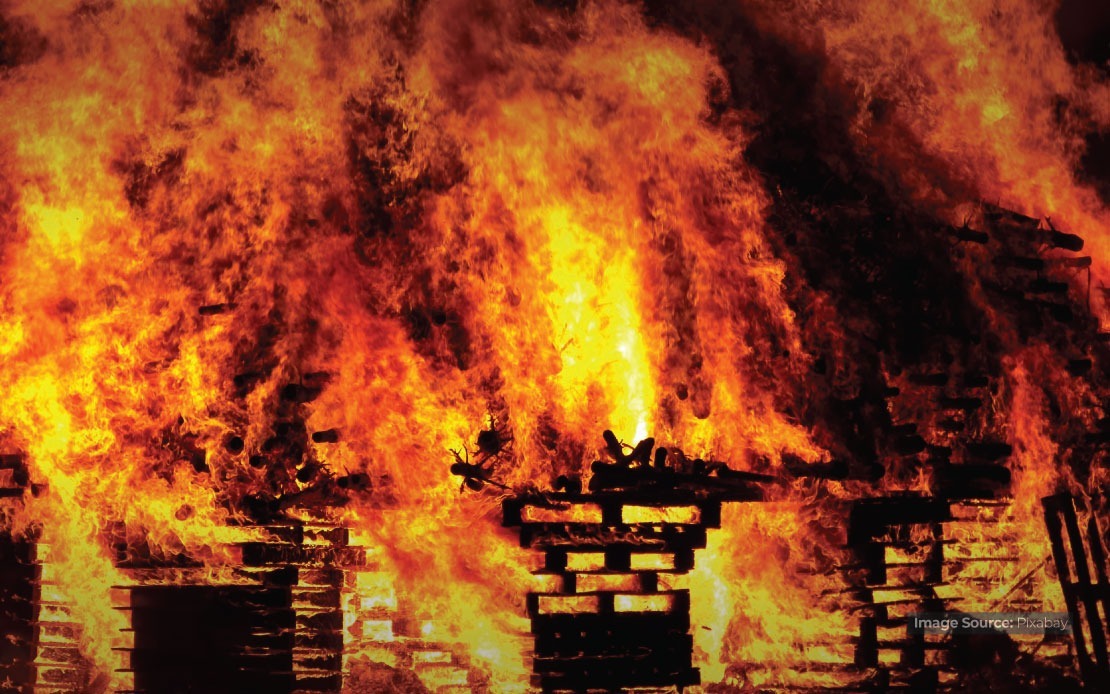
France mourned the loss of two firefighting personnel on Tuesday after they were killed while tackling a fire that erupted near Bordeaux Airport in the country's southwestern region. French Interior Minister Laurent Nuñez confirmed the fatalities during a parliamentary address in Paris, revealing that both deaths occurred while the crews were combating flames that had engulfed two structures in the vicinity of the airport.
According to regional media outlet Sud Ouest, the fire originated on terrain bordering the airport's extended vehicle storage facility. The blaze rapidly escalated, eventually drawing resources from multiple emergency response agencies. The intensity of the situation underscored the dangerous conditions firefighters face during periods of elevated fire risk across the region.
The Gironde department, which encompasses Bordeaux as its principal city, has been operating under maximum-level red alert status due to exceptionally elevated dangers stemming from anticipated forest fire activity. Such warnings reflect meteorological forecasts and environmental conditions that create ideal circumstances for rapid fire propagation across vegetation and built structures. During these heightened alert periods, emergency services across France adopt enhanced protocols and maintain elevated staffing levels in anticipation of potential incidents.
The conflagration caused substantial disruption to airport operations, particularly affecting departure schedules. Airport authorities implemented temporary restrictions on outbound flights while permitting aircraft arriving from other destinations to continue normal landing procedures. Notably, evening service connections remained largely unaffected, with scheduled operations to Munich proceeding according to plan despite the proximity of the emergency situation to active runway facilities.
Emergency response efforts involved coordination between municipal firefighting teams and the airport's internal fire suppression unit, pooling specialised equipment and trained personnel. The collaborative approach reflected standard protocols for major incidents occurring within airport boundaries, where airfield management agencies maintain their own rapid-response capacity supplementing public emergency services.
Aerial firefighting assets were mobilised to enhance ground-based containment efforts. Aircraft equipped with water-dropping or fire-retardant capabilities joined the struggle against the advancing flames, targeting concentrated efforts at critical points to prevent further spread. Such airborne support proves particularly valuable when terrain characteristics or structural complexity hamper ground-level approaches.
The visual impact of the emergency became evident across Bordeaux city itself, where towering plumes of smoke pierced the afternoon sky as personnel laboured to suppress the advancing fire. The dramatic scene served as a reminder of the unforgiving nature of large-scale combustion incidents and the hazards confronting trained responders who confront such emergencies directly.
For Southeast Asian observers, particularly Malaysian officials and emergency management personnel, the incident carries relevant implications regarding airport fire preparedness and interagency coordination protocols. Malaysian airports and their surrounding regions, while facing distinct environmental challenges compared to southwestern France, nonetheless require similarly robust firefighting infrastructure and cross-agency coordination mechanisms. The tragedy emphasises the critical importance of maintaining well-equipped emergency services and ensuring adequate training and resource allocation for personnel operating in high-risk environments.
The deaths also underscore broader challenges within firefighting professions across developed nations, where operational demands increasingly intersect with climate-related environmental pressures. As extreme weather patterns become more pronounced globally, emergency services worldwide confront intensifying workloads and heightened occupational hazards. Malaysia's own fire services, operating within a tropical climate prone to distinct seasonal and environmental pressures, continuously refine operational strategies and personnel protection measures informed by international incident patterns and best-practice developments.
The incident occurred during summer months when European fire seasons typically peak, creating sustained pressure on national and regional emergency response capabilities. France has historically invested significantly in integrated wildfire management systems spanning aerial reconnaissance, ground-based suppression resources, and coordinated inter-regional mutual assistance frameworks. The cooperation between Bordeaux Airport's internal firefighting capacity and municipal services reflects this systematic approach to comprehensive fire risk management.
Investigations into the specific circumstances surrounding the two firefighters' deaths would typically be conducted by French labour authorities and regional fire service leadership, examining operational decisions, equipment functionality, and environmental factors that contributed to the tragic outcome. Such post-incident reviews generate institutional knowledge and inform procedural refinements aimed at reducing similar occurrences.

