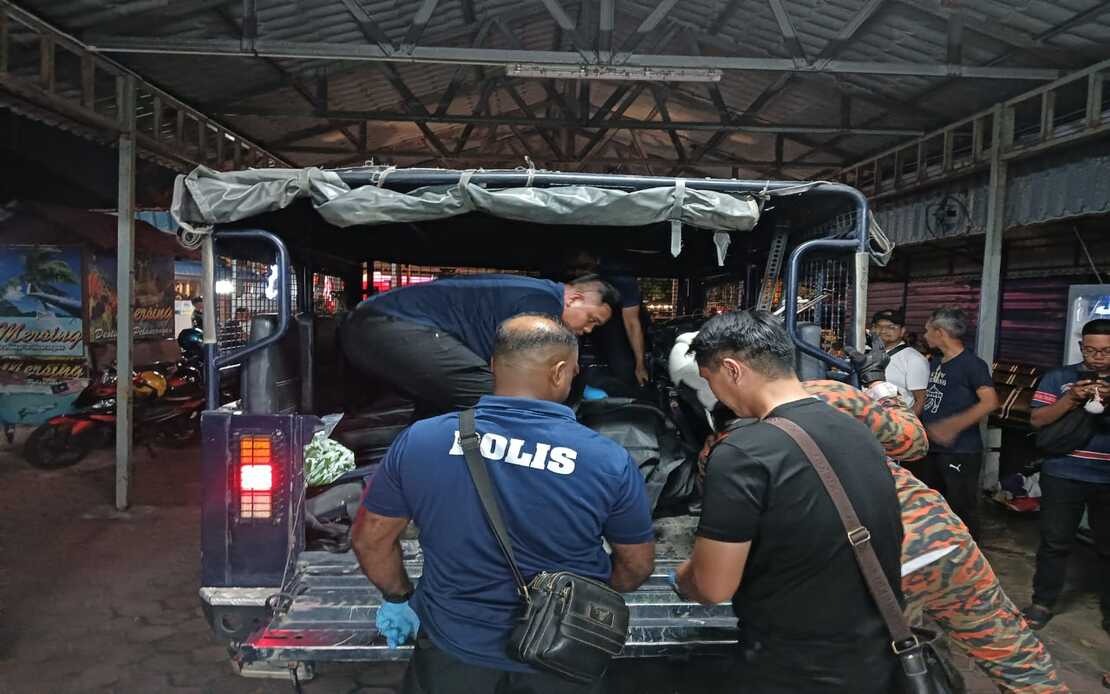
A tragic maritime incident unfolded near Mersing on Saturday night when two boats collided at the Sungai Mersing estuary, resulting in two confirmed fatalities and leaving four others with injuries requiring medical attention. The Fire and Rescue Department received notification of the emergency at 9:04 pm, triggering a rapid response from the Mersing station with personnel equipped to handle water-based rescues.
The collision prompted the immediate deployment of firefighting and rescue assets to the Mersing Jetty, where a team of nine personnel from the Mersing Fire and Rescue Station arrived to assess and manage the situation. Upon their arrival at the scene, emergency responders confirmed that the two vessels had indeed collided, initiating emergency medical protocols for those on board. The severity of the incident became apparent as medical personnel examined the casualties, with two individuals pronounced dead at the scene.
Those who did not survive the collision were subsequently handed over to police authorities for formal processing and investigation procedures, which form a standard part of maritime accident protocols in Malaysia. The deceased remain under police custody pending identification and family notification procedures. Meanwhile, the four survivors who sustained injuries from the impact are receiving ongoing medical treatment, with fire authorities continuing operational efforts at the scene to ensure all necessary assistance is provided.
Mersing District Police Chief Supt Abdul Razak Abdullah Sani acknowledged the incident and confirmed that law enforcement has opened a formal investigation into the circumstances surrounding the collision. The police chief indicated that a comprehensive media statement would be released once the preliminary investigation phase reaches appropriate stages, suggesting that authorities are gathering evidence and witness testimony to determine the precise cause of the accident. Such investigations typically examine factors including vessel speed, visibility conditions, navigation protocols, and adherence to maritime safety regulations.
Boat collisions in Malaysian waters, particularly around busy estuaries and jetty areas, underscore ongoing concerns about maritime safety and vessel management in these regions. The Sungai Mersing estuary, being a significant waterway in Johor's fishing and tourism sectors, handles considerable traffic from both commercial and recreational vessels. Incidents of this nature raise questions about proper vessel registration, operator licensing, navigation equipment functionality, and whether appropriate safety briefings are conducted for passengers on board these vessels.
The response by the Mersing Fire and Rescue Station demonstrates the importance of maintaining adequate emergency service resources in coastal communities. The rapid mobilization of rescue teams within minutes of the emergency call reflects established protocols and coordination between emergency communication centers and field units, though the tragic outcome highlights how quickly water-based emergencies can overwhelm even well-prepared response systems. Maritime accidents often occur with minimal warning, leaving little time for preventive action once a collision becomes inevitable.
For residents and regular travelers in the Mersing area, the incident serves as a sobering reminder of the inherent risks associated with water transportation. Whether used for fishing, tourism, or commuting, boats operating in estuarine waters face unique hazards including strong currents, changing tidal conditions, and limited visibility during evening hours. Safety equipment such as life jackets, navigation lights, and communication devices become critical when operating during low-light conditions, as were present at the time of this collision.
The broader maritime community in Southeast Asia continues to grapple with maintaining consistent safety standards across diverse vessel types and operators. While major international shipping routes maintain rigorous oversight, smaller commercial operations and recreational vessels sometimes operate with less stringent regulation. Malaysia's maritime authorities have implemented various initiatives to improve safety awareness, though incidents like the Sungai Mersing collision suggest that enforcement and compliance remain ongoing challenges requiring continuous attention and resources.
As the investigation proceeds, authorities will likely examine whether the vessels involved carried appropriate safety equipment, whether operators held valid licenses, and whether navigation lights and communication systems were functioning properly. Weather conditions, water visibility, and vessel lighting all potentially contributed to the collision occurring without sufficient warning for evasive action. The outcome of this investigation may inform recommendations for enhanced safety measures at busy estuaries throughout the region, contributing to the incremental improvements in maritime safety that arise from incident analysis.

