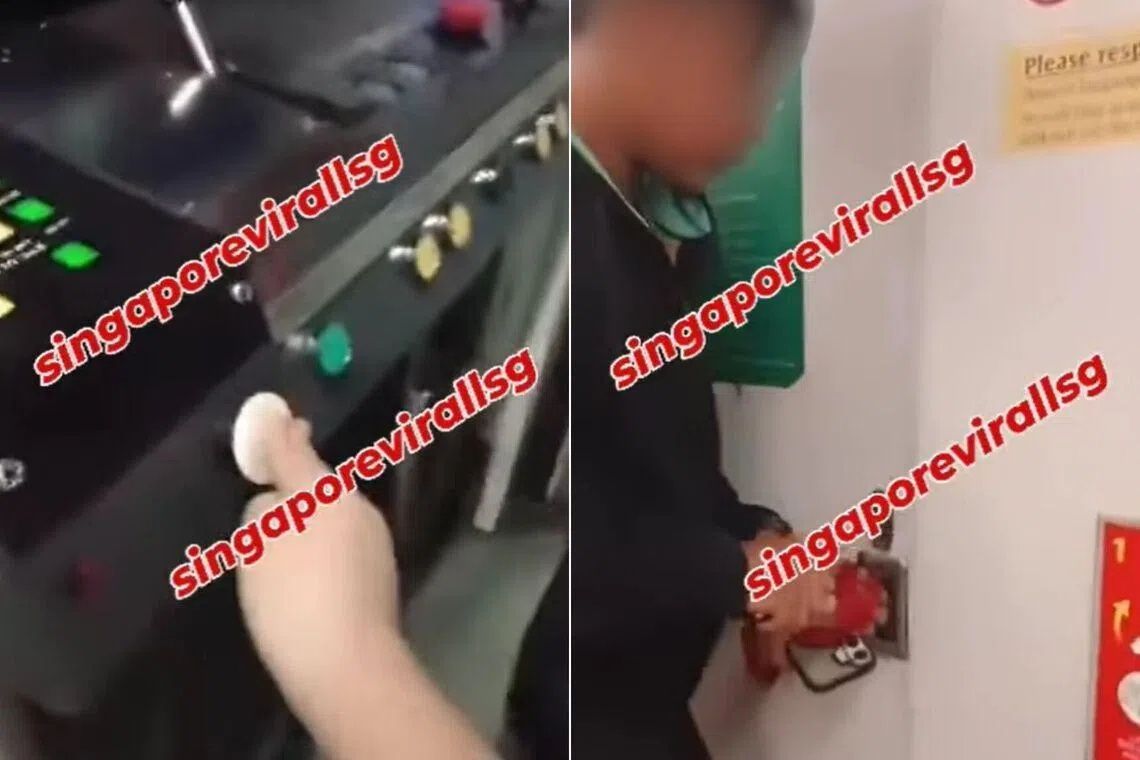
Two young boys in Singapore have received conditional warnings after forcibly entering a restricted cabin aboard a North-South Line MRT train in late February, an incident that gained widespread attention when video footage circulated across social media platforms in recent weeks. The boys, aged 11 and 12, managed to prise open the cabin partition door using a tool before entering the off-limits area and repeatedly pressing what appeared to be a white control button. The actions immediately triggered an on-board alarm, alerting the train captain to the breach.
The incident occurred aboard a train on Singapore's busy North-South Line on February 21, as confirmed by SMRT Trains president Lam Sheau Kai in a media statement released on June 30. Once the train captain detected the alarm, they immediately notified SMRT's Operations Control Centre, the coordinating hub responsible for overseeing all daily operations across the rapid transit network. Staff stationed at the subsequent station were directed to investigate the disturbance, and the train captain documented the breach through CCTV surveillance as the two boys exited at the next stop.
The viral nature of the incident underscores growing concerns about security and safety culture within public transit systems. A video clip posted on the singaporevirallsg Instagram account accumulated more than 281,000 views alongside nearly 140 direct comments within days of circulation, with the footage being reposted over 200 occasions across various platforms. The audio in the clip captured the distinct sound of the train's horn, amplifying the disruption caused by the unauthorised access. Such rapid social media dissemination highlights how public transit incidents can quickly gain traction and potentially influence public perception of rail system security.
Police confirmed that a report was lodged on the same day as the incident, February 21. Following a thorough investigation conducted in close consultation with Singapore's Attorney-General's Chambers, the two minors were issued conditional warnings under the Rapid Transit System Regulations rather than face prosecution. The decision reflected a careful assessment of the facts, circumstances, and the age of the individuals involved, though authorities emphasised that such conduct remains a serious matter warranting formal intervention.
The regulatory framework governing such incidents reveals the balancing act between accountability and age-appropriate justice outcomes. The conditional warning serves as an official caution recorded against the boys, with potential consequences should similar behaviour occur in future. This approach suggests authorities were treating the incident seriously while recognising the developmental context of children aged 11 and 12, a consideration that became central to the final enforcement decision made by law enforcement in coordination with legal counsel.
From the perspective of transit operators, such breaches pose tangible operational and safety risks that demand immediate attention. Lam emphasised that SMRT takes unauthorised access to train cabins with considerable gravity, noting that restricted areas exist specifically to protect both passengers and critical operational infrastructure. The cabin partition separates commuter zones from sensitive equipment and controls that, if tampered with by untrained individuals, could potentially compromise train safety, disrupt service schedules, or cause injuries. The incident demonstrated how curious minors could inadvertently create hazardous situations despite lacking any apparent malicious intent.
The operational disruption caused by such breaches extends beyond the immediate incident itself. When on-board alarms trigger and staff must divert resources to investigate security concerns, the knock-on effects ripple through an entire transit network already managing high passenger volumes during peak periods. Singapore's MRT system serves millions of commuters daily, and any disruption compounds delays across multiple train services and connected routes. This operational reality illustrates why transit authorities must respond decisively to cabin breaches, even when perpetrators are young and seemingly acting out of curiosity rather than deliberate sabotage.
The incident also highlights emerging challenges facing modern transit systems in the digital age, where smartphone videos can transform local incidents into viral content within hours. The rapid amplification of the footage across social media networks raises questions about whether such visibility might inadvertently encourage copycat behaviour among other young people seeking online attention. Transit security officials across Southeast Asia increasingly grapple with this dynamic, where enforcement decisions and public communication strategies must account for the potential influence of viral content on passenger behaviour and public confidence in system safety.
For Malaysian readers familiar with public transit systems like the KL Monorail, LRT, and MRT networks, this incident offers relevant lessons about the importance of respecting restricted access zones and understanding that apparently harmless exploration can trigger serious safety protocols. Transit authorities across the region maintain similar security measures and regulatory frameworks precisely because unauthorised access, regardless of intent, can create genuine operational and safety consequences. The Singapore case demonstrates how even youth-driven curiosity can prompt formal police involvement and legal consequences, suggesting that transit security remains a priority issue throughout major Southeast Asian urban centres.
The decision to issue conditional warnings rather than formal charges reflects evolving thinking about youth accountability in urban Asia, where societies increasingly distinguish between criminal intent and youthful recklessness. However, the very fact that authorities made a police report and involved the Attorney-General's Chambers signals that such incidents cannot be dismissed as mere mischief. The conditional warning creates a formal record and carries implicit warnings about future conduct, serving as a potential deterrent both for the individuals involved and for their peers who might view such actions as harmless adventure.
Moving forward, the incident underscores the need for enhanced public education around transit safety, particularly targeting younger passengers who may not fully appreciate the consequences of entering restricted areas. SMRT's emphasis on the seriousness of unauthorised access reflects a broader regional commitment to maintaining safe, reliable transit systems as cities across Southeast Asia continue rapid urbanisation and infrastructure expansion. Security protocols exist not to create obstacles for passengers but to protect everyone using these critical community resources, a message that resonates particularly strongly for young people still developing their understanding of public responsibility.

