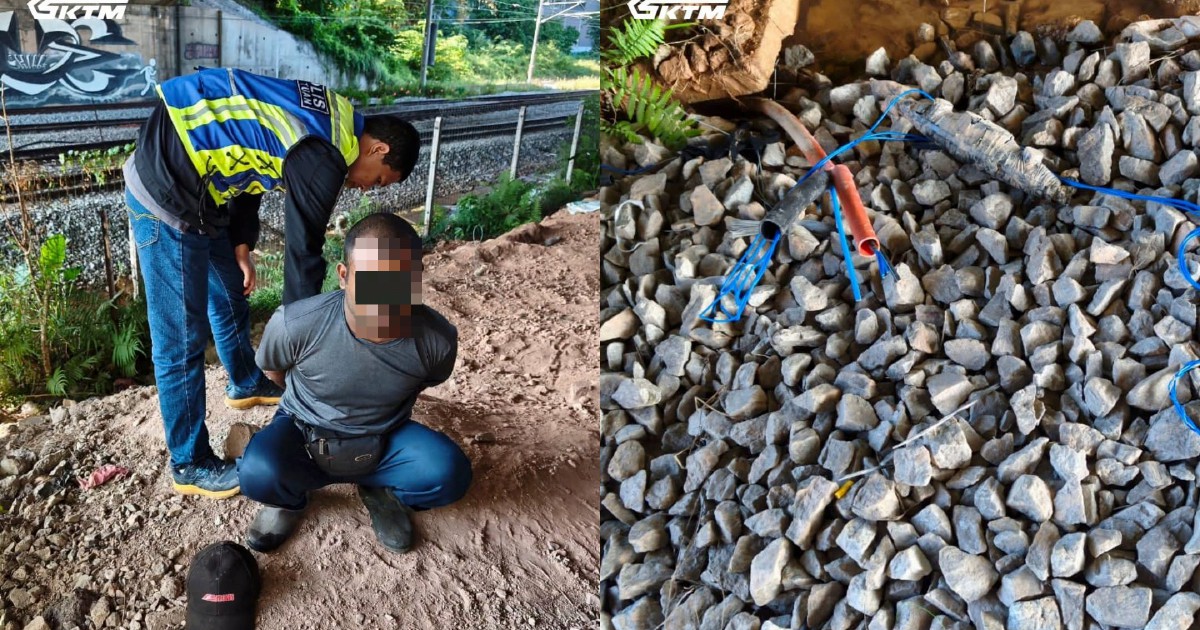
Keretapi Tanah Melayu Bhd (KTMB) auxiliary policemen have arrested two people in Shah Alam after catching them red-handed attempting to steal railway cables, marking another incident in a troubling pattern of infrastructure theft affecting the national rail operator. The apprehension underscores the escalating challenges KTMB faces in protecting its assets across the Klang Valley and beyond, where organised cable theft rings have increasingly targeted the network's copper and aluminium components.
Railway cable theft represents a significant operational and financial problem for Malaysia's rail network. These cables carry crucial electrical and communication signals that keep trains running safely and on schedule. When thieves remove sections of track-side cabling, they disrupt not only immediate services but can compromise the entire signalling and power distribution systems that modern rail operations depend upon. For commuters relying on KTMB services daily, such thefts translate into service interruptions, delays, and reduced reliability of one of the country's primary public transport arteries.
The economic impact extends beyond simple replacement costs. KTMB must divert resources toward emergency repairs, increase security patrols, and invest in additional protective infrastructure. These mounting expenses inevitably affect the operator's ability to fund other critical improvements, modernisation initiatives, and maintenance programmes. Given KTMB's ongoing efforts to enhance service quality and expand capacity across the Selangor and Kuala Lumpur regions, asset theft creates a significant drain on already stretched budgets.
The Shah Alam location is particularly significant, as the area sits within one of Malaysia's most densely populated metropolitan zones and serves as a crucial junction for multiple KTMB routes. The corridor carries thousands of daily passengers travelling between residential areas, industrial zones, and the city centre. A disruption here cascades across the broader transport network, affecting connection points and downstream services. The frequency of incidents in this region suggests either coordinated theft operations targeting high-value sections or a persistent security gap that criminals have learned to exploit.
Auxiliary police forces deployed by KTMB have become essential frontline responders to such crimes. These officers operate alongside regular police, providing dedicated surveillance and rapid response capabilities specific to railway corridors and stations. Their presence has deterred many opportunistic thieves, but organised gangs operating at night or during low-visibility periods continue to pose challenges. The successful apprehension in this case demonstrates that these security measures can be effective when properly resourced and coordinated.
The motivations driving cable theft reflect broader economic and social conditions in Malaysia. Scrap metal traders operating in urban and semi-urban areas provide ready markets for stolen copper and aluminium, creating financial incentives for thieves. The materials extracted from railway cables command reasonable prices in informal recycling channels, particularly during periods of economic uncertainty when individuals seek quick cash. Addressing this problem requires not merely enforcement but tackling the downstream market that converts stolen materials into profit.
Cooperative efforts between KTMB, federal and state police, and municipal authorities have intensified in recent years. Information sharing about theft patterns, suspect networks, and high-risk locations has improved response times and prosecution rates. However, the continuing frequency of incidents suggests that preventive measures and deterrence remain inadequate. Installing additional lighting, erecting barriers around vulnerable cable sections, and increasing ground patrols represent some approaches, though comprehensive solutions demand sustained investment and coordination.
For Malaysian commuters and businesses dependent on reliable rail services, these security challenges represent an ongoing frustration. The railway system forms a backbone of the region's transport infrastructure, connecting residential communities to employment centres, facilitating freight movement, and reducing road congestion. When service disruptions occur due to criminal activity rather than operational factors, public confidence in the system's reliability diminishes. This perception can gradually shift modal choices, with more people opting for private vehicles or ride-hailing services, ultimately exacerbating traffic congestion across the Klang Valley.
The incident also highlights the vulnerability of critical infrastructure in Malaysia's rapidly urbanising regions. As the nation develops, protecting essential systems from theft and sabotage becomes increasingly important. Railway networks represent strategic assets that underpin economic productivity and social mobility. The authorities' commitment to prosecuting those caught damaging these systems sends an important message about the seriousness with which such crimes are treated.
Moving forward, KTMB will likely continue strengthening its auxiliary police force capabilities, implementing more sophisticated monitoring systems, and collaborating with law enforcement partners. Community engagement initiatives that discourage involvement with stolen materials and reward information about theft rings may also prove effective. The arrests in Shah Alam demonstrate that detection and prosecution remain viable, but sustained effort is essential to reduce the frequency of such incidents and protect the services that millions of Malaysians depend upon daily.

