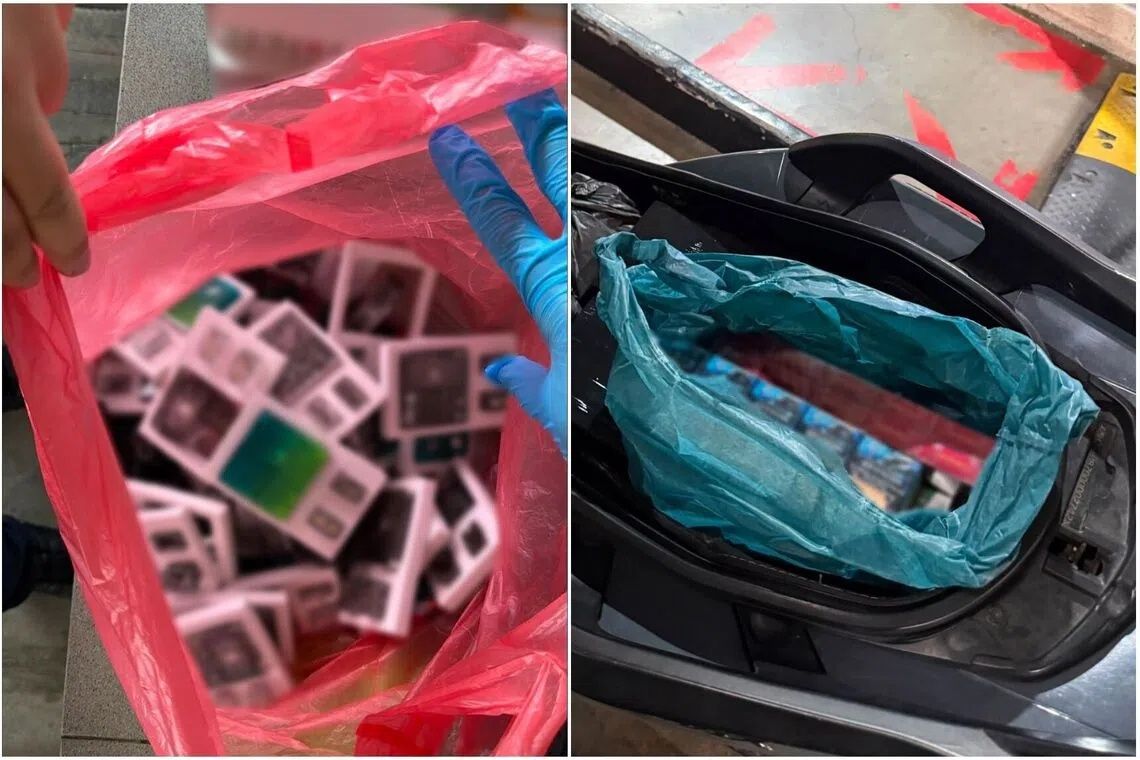
Authorities at Singapore's Woodlands Checkpoint have apprehended two men for their involvement in separate smuggling attempts involving contraband cigarettes and vaping devices, highlighting ongoing enforcement challenges at one of Southeast Asia's busiest border crossing points. The Immigration and Checkpoints Authority announced the arrests on Thursday following incidents that occurred on August 3 and 4, with a 46-year-old Malaysian national and a 51-year-old Singaporean citizen taken into custody.
The first incident unfolded when ICA officers conducting routine enhanced inspections flagged a Malaysia-registered motorcycle for closer examination on August 3. Upon searching the vehicle, officers discovered a substantial cache of contraband hidden within the storage compartment, including more than 30 packets of cigarettes that had not been subject to Singapore's excise duties, alongside over 60 individual vaping devices and accompanying components. The coordinated concealment strategy suggests a degree of planning in the smuggling operation, with offenders utilizing the compact nature of motorcycles to move contraband across the border.
The following day produced another significant interception when officers stopped a Singapore-registered motorcycle and conducted a thorough search of its contents. This second operation uncovered 25 cartons alongside 30 individual packets of duty-unpaid cigarettes, along with more than 60 vaping devices distributed between the seat area and storage compartment. The similar quantity and composition of goods in both seizures suggests potential coordination between the two incidents, though investigators have not yet disclosed details regarding any suspected connection.
The arrests underscore the persistent challenge of nicotine product smuggling across the Malaysia-Singapore border, a route that remains attractive to traffickers owing to significant price differentials and regulatory disparities between the two nations. Malaysia's more lenient tax regime on cigarettes and permissive stance toward vaping products create financial incentives for cross-border trafficking, particularly among individuals with motorcycles who can navigate checkpoint procedures more quickly than larger commercial vehicles. The Woodlands Checkpoint, which processes thousands of vehicles daily, presents both opportunities and obstacles for enforcement authorities attempting to intercept contraband.
Singapore's regulatory framework treats vaping with particular severity compared to many regional peers. The city-state maintains an outright prohibition on vaping products, classifying them as illegal devices rather than merely regulated consumer goods. This stance reflects public health policy prioritizing youth protection and smoking cessation over harm reduction approaches adopted elsewhere. Consequently, the presence of vapes in smuggling operations carries heightened legal consequences relative to traditional cigarettes.
The suspects now face investigations by Singapore Customs and the Health Sciences Authority, which will determine appropriate prosecutorial pathways. Individuals convicted of purchasing, selling, transporting, or possessing duty-unpaid cigarettes encounter formidable penalties including fines calculated at up to 40 times the evaded duties and taxes, imprisonment extending to six years, or both sanctions applied concurrently. Additionally, any vehicles utilized in committing such offences face mandatory forfeiture, creating a significant deterrent effect on commercial smuggling networks that depend on specific vehicles for regular operations.
Vaping-related offences carry proportionately more severe consequences within Singapore's legal framework. Consumers apprehended using vapes face maximum fines of $10,000, while commercial retailers distributing such products confront substantially higher penalties including fines reaching $200,000 coupled with imprisonment up to six years. Smugglers operating at scale encounter the most stringent punishments, with potential fines of $300,000 and imprisonment terms extending to nine years. For foreign nationals, repeated vaping-related offences trigger additional immigration consequences including pass revocation and permanent re-entry bans, effectively ending legal access to Singapore for individuals convicted multiple times.
These enforcement actions reflect broader regional trends in cigarette and vaping regulation, where governments increasingly implement aggressive border controls and criminal penalties targeting trafficking networks. Malaysia's status as a transit point and source market for contraband destined for Singapore and other highly-regulated jurisdictions has prompted periodic crackdowns, though enforcement remains inconsistent across different state authorities and checkpoints. The financial incentives driving such smuggling operations persist despite augmented penalties, suggesting that deterrence strategies alone may prove insufficient without addressing underlying price disparities.
For Malaysian readers, these arrests highlight the substantial legal risks associated with cross-border smuggling, even for individuals operating at relatively small scales. The treatment of motorcycle-based smuggling as a serious criminal matter, rather than a minor customs violation, reflects intensifying regional commitments to disrupting nicotine product trafficking. As both countries strengthen border enforcement and coordinate information-sharing mechanisms, individuals involved in or contemplating such activities should recognize the escalating consequences, including potential forfeiture of vehicles and lengthy prison sentences alongside substantial financial penalties.
The incidents also demonstrate that enforcement authorities maintain active surveillance and inspection protocols across all vehicle categories, not merely commercial trucks or larger vehicles typically associated with large-scale smuggling operations. The randomized nature of enhanced checkpoint inspections means that even single-instance smuggling attempts face meaningful apprehension risks. As Singapore continues developing its border security capabilities and Malaysia potentially implements complementary enforcement measures, the operational environment for nicotine product smugglers has demonstrably become more challenging and legally perilous than in previous periods.

