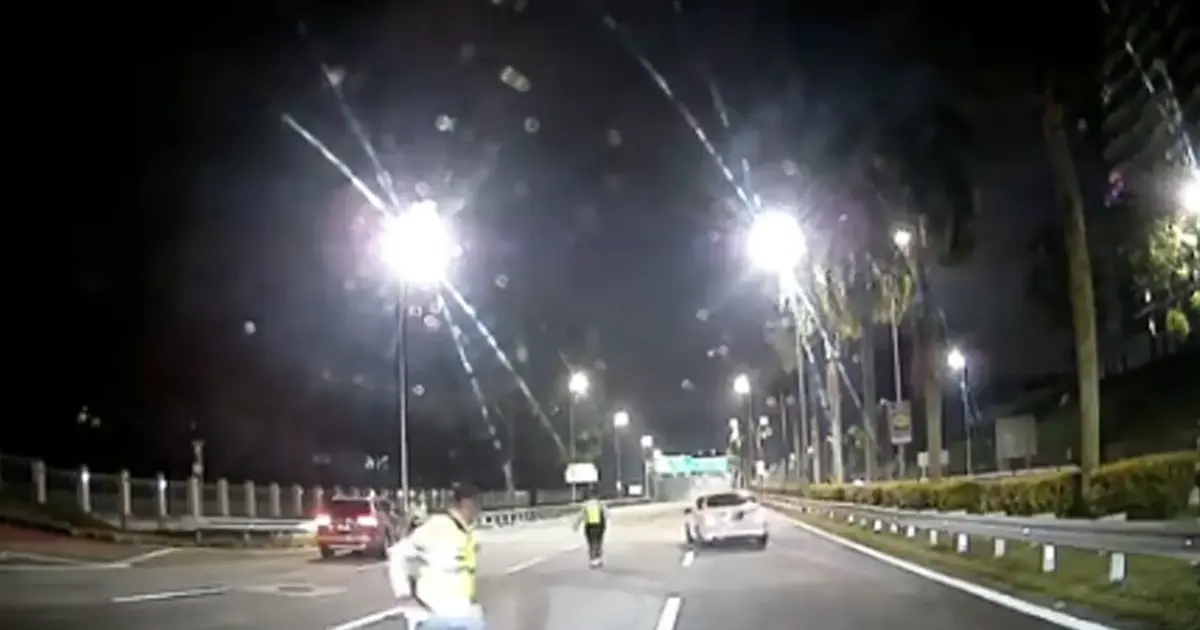
Authorities have apprehended a 20-year-old motorist who forced his way through a police roadblock in his Mercedes-Benz, disregarding officers' instructions to halt. The arrest took place during a routine enforcement operation, highlighting ongoing concerns about driver compliance at checkpoints across Malaysian roads.
The incident underscores a persistent challenge facing law enforcement agencies nationwide, as an increasing number of motorists either attempt to bypass police checkpoints or accelerate through them despite visible warning signals. Such behaviour not only endangers the lives of officers stationed at these roadblocks but also puts other road users and the drivers themselves at considerable risk.
According to the arresting officers, the driver appeared visibly anxious when he realised the checkpoint ahead, exhibiting nervous body language as he approached the control point. Rather than slowing down or pulling over as required, he chose to navigate around the checkpoint and continue driving. This decision to evade the roadblock brought immediate police attention, leading to his subsequent pursuit and detention.
Investigating officers stated that the driver's behaviour during the initial approach suggested deliberate evasion rather than mere inattention. The nervous demeanour displayed by the motorist prior to the attempted passage, coupled with his swift manoeuvre to circumvent the checkpoint, pointed to a conscious decision to avoid the stop. Such actions are treated seriously under Malaysian traffic and criminal law frameworks.
The 20-year-old has been charged with failing to comply with a police officer's lawful orders, a violation that carries significant legal consequences. This charge reflects the gravity with which authorities regard incidents where drivers deliberately disregard police instructions, particularly at checkpoints established for public safety purposes. Roadblocks serve multiple enforcement functions, including detection of traffic violations, impaired driving, document verification, and prevention of more serious criminal activity.
Police roadblocks remain a critical tool in Malaysia's road safety infrastructure. They enable officers to conduct immediate vehicle inspections, verify driving credentials, and identify vehicles linked to criminal investigations. When drivers bypass these checkpoints, they undermine the effectiveness of these safety measures and create hazardous situations that can result in accidents or collisions with enforcement personnel.
The incident also reflects broader traffic enforcement challenges in Southeast Asia, where compliance with police instructions varies significantly across different regions and demographic groups. Malaysia's Royal Police Force has intensified efforts in recent years to improve checkpoint effectiveness and driver awareness campaigns, yet incidents of evasion continue to occur with troubling frequency, particularly among younger drivers.
Officers involved in roadblock duty face considerable occupational hazards. When vehicles attempt to force through checkpoints, officers may be struck by vehicles, forced to leap aside, or find themselves in dangerous positions as traffic continues to flow around them. The safety of enforcement personnel depends significantly on public cooperation and driver compliance with basic traffic regulations.
The Mercedes driver's case adds to a growing body of enforcement actions targeting checkpoint evasion. Authorities have made clear that such infractions will be prosecuted, and courts have consistently imposed penalties on offenders. Beyond legal consequences, drivers who attempt to breach roadblocks face potential charges under multiple statutes, depending on whether the behaviour is deemed reckless endangerment or deliberate evasion.
This incident serves as a reminder to Malaysian motorists about the importance of complying with traffic police at checkpoints. Drivers should recognise that roadblocks are temporary inconveniences designed to enhance overall road safety and public security. Cooperation takes merely seconds but can prevent serious accidents, injuries, or more serious legal entanglements.
The arresting officers will compile their investigation report for prosecution purposes. Depending on the evidence gathered and witness statements, the Crown may pursue additional charges if circumstances warrant escalation. The case highlights the ongoing tension between individual convenience and collective public safety in Malaysia's evolving road safety environment.
As enforcement operations continue across the country, police departments remain committed to improving checkpoint procedures and driver education initiatives. Enhanced public awareness campaigns aim to reduce incidents like this one by emphasising the legal and safety imperatives of compliance. Drivers who encounter roadblocks should remain calm, reduce speed, and prepare their documents for quick verification.

