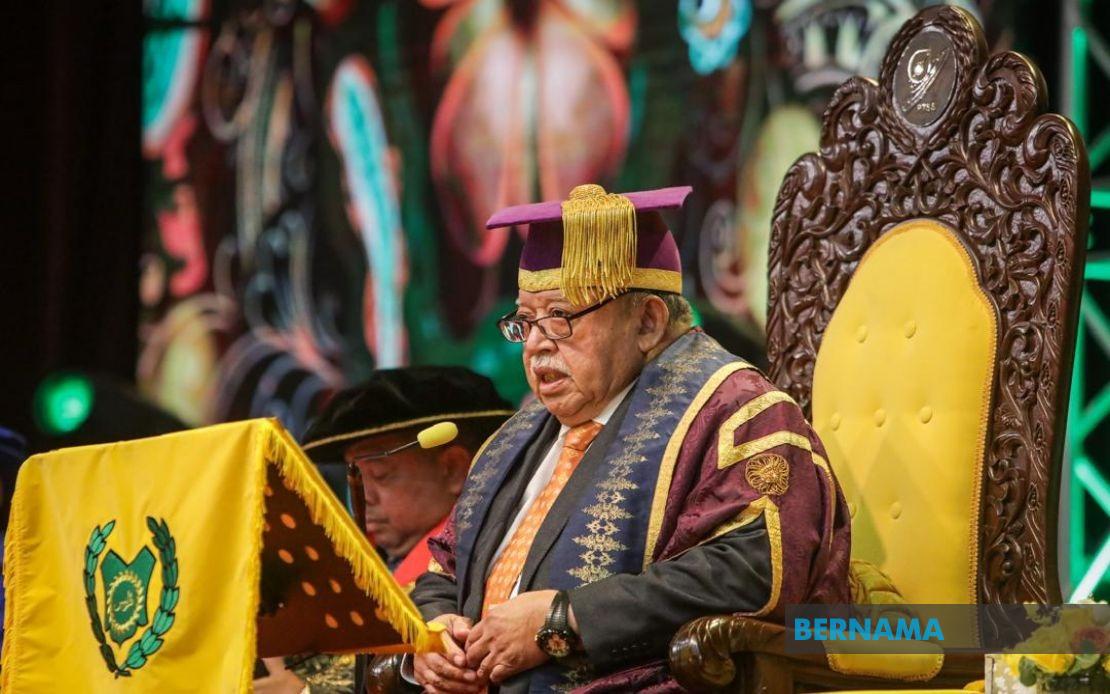
During the convocation ceremony for over 6,100 graduates at Politeknik Tuanku Syed Sirajuddin in Arau on August 3, the Raja of Perlis, Tuanku Syed Sirajuddin Jamalullail, underscored the indispensable contribution of technical and vocational education and training to building a capable and creative workforce. The Ruler's remarks highlighted a critical recognition at the highest levels of Malaysian leadership that TVET institutions are not peripheral to national development but central to it, particularly as the country navigates a rapidly transforming global economic landscape.
The technological shift now underway across industries demands a different calibre of skilled workforce than previous decades required. Tuanku Syed Sirajuddin specifically identified artificial intelligence, automation, robotics and digitalisation as the transformative forces reshaping employment patterns and industrial operations. These technologies are not merely tools for efficiency; they fundamentally alter which skills remain valuable and which new competencies become essential. For countries like Malaysia seeking to maintain economic competitiveness in the region, the ability to rapidly train workers in these emerging fields becomes a strategic imperative rather than an educational preference.
What distinguished the Ruler's address was his framing of innovation not as an optional pursuit but as foundational to national progress. In contemporary discourse, innovation has become almost a cliché, invoked in policy documents and corporate statements with often limited concrete meaning. Yet the Raja's articulation positioned innovation as the very basis upon which Malaysia's future prosperity depends. This perspective aligns with regional and global economic realities where countries that fail to innovate risk being displaced by more adaptive competitors. For TVET institutions and their graduates, this expectation means moving beyond the traditional role of skills transmission to becoming incubators of creative problem-solving and adaptive thinking.
The distinction the Ruler drew between innovation as idea generation versus innovation as practical implementation deserves particular attention for Malaysian policymakers and educators. Generating novel concepts is relatively straightforward; translating those ideas into tangible solutions that benefit society and advance national development requires different capacities entirely. This suggests that TVET curricula should not only teach technical competencies but also cultivate the business acumen, project management skills, and entrepreneurial mindset necessary to transform ideas into viable products and services. Such an approach would better position Malaysia's vocational graduates to become job creators rather than merely job seekers.
Beyond technical competence, the convocation ceremony also reflected concern about ethical and moral dimensions of professional development. The Raja explicitly cautioned graduates against divorcing their technical expertise from foundational values of integrity, honesty and patriotism. This emphasis on character-building alongside skills development addresses a gap sometimes overlooked in vocational training, where the focus can narrow to immediate employment utility. The Ruler's perspective suggests that Malaysia's competitive advantage will ultimately depend not just on what its workforce knows and can do, but on the moral frameworks guiding their work. In an era when ethical lapses in business, governance and technology can rapidly undermine public trust, graduates grounded in strong moral principles represent a significant national asset.
The 2026 Northern Zone Polytechnic and Community College Convocation brought together 6,104 graduates from across Perlis, Kedah and Penang, representing the cumulative output of institutions serving Malaysia's northern region. This concentration of vocational and technical talent across multiple states creates both opportunity and responsibility. The scale suggests that regional economies increasingly depend on TVET graduates to fill mid-to-upper skill positions across manufacturing, services, technology and trade sectors. For the northern states, whose economies include significant manufacturing and agricultural components, a steady pipeline of technically proficient workers educated in modern practices becomes essential for maintaining competitiveness against other regions and against overseas competitors.
Among the graduating cohort, recognition was extended to Teerti Ganapathi Rao, 22, a digital technology diploma holder from Politeknik Tuanku Syed Sirajuddin's Department of Information and Communication Technology, who received the Director-General of Polytechnic and Community College Education Award. The selection of a digital technology graduate for this honour underscores institutional recognition of information technology's growing centrality to Malaysia's economic future. The prominence given to this field within the TVET system reflects broader national efforts to increase digital literacy and capability across the workforce, addressing the skills shortage that often constrains Malaysia's digital transformation initiatives.
The convocation ceremony itself represents a formal institutional moment when society formally recognises and celebrates the transition of trainees into qualified professionals. For TVET graduates, many of whom come from backgrounds where tertiary education was not previously accessible, this ceremony carries particular significance. It validates their educational achievement while officially conferring credibility upon their qualifications in the eyes of employers and society. Such recognition matters psychologically and practically, as it affirms that vocational pathways carry equivalent dignity and opportunity as academic routes.
The northern region's role in Malaysia's vocational training landscape has grown more significant in recent years as the federal government has invested in polytechnic expansion and modernisation. Politeknik Tuanku Syed Sirajuddin serves as the flagship institution in this expansion, operating programmes aligned with both current industrial needs and anticipated future demands. The institution's growth and the scale of its graduate output suggest that federal policy increasingly recognises vocational training as a lever for more equitable regional development, offering pathways to skilled employment beyond those available through traditional university routes.
For Malaysian readers and policymakers, the Raja of Perlis's intervention in the TVET discourse carries weight beyond ceremonial remarks. As a state ruler and institutional patron, his public endorsement of vocational education's strategic importance helps counter lingering social perceptions that TVET represents a second-choice educational pathway. In Malaysian society, where university degrees have historically carried greater prestige, changing attitudes towards vocational qualifications remains an ongoing cultural negotiation. When senior leaders articulate TVET's value, they help reshape these perceptions among families making educational choices for their children.
The emphasis on producing graduates who combine technical proficiency with innovation capacity and moral grounding presents an ambitious vision for Malaysia's vocational education system. Implementation of this vision requires continued investment in instructor training, curriculum development aligned with industry evolution, and institutional partnerships that expose students to real-world problem-solving. It also requires employers to recognise and reward these attributes when hiring, creating incentive structures that reinforce the values TVET institutions seek to instil. The convocation ceremony marks an endpoint for the graduating cohort but represents a beginning point for the nation's engagement with these newly qualified professionals. Their capacity to innovate ethically, adapt to technological change, and contribute meaningfully to their communities and workplaces will ultimately validate or challenge the aspirations articulated by their Ruler.

