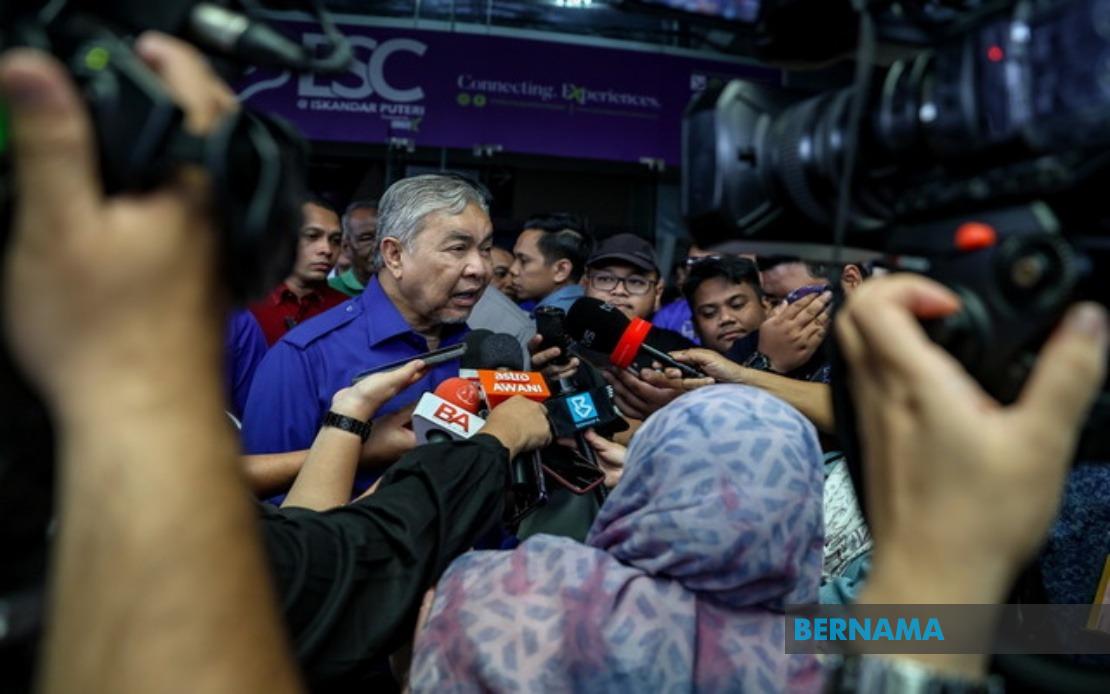
The Malaysian government is moving ahead with plans to establish a dedicated Technical and Vocational Education and Training Commission by the close of 2024, with Deputy Prime Minister Datuk Seri Dr Ahmad Zahid Hamidi confirming the timeline during an event in Johor this week. The new body will supersede the existing National TVET Council and is designed to provide a more robust institutional framework for overseeing the nation's vocational education sector, aligning Malaysia's approach with established models used by advanced economies.
Ahmad Zahid, speaking at the Johor Darul Ta'zim TVET MARA Roadshow in Iskandar Puteri, outlined the regulatory pathway ahead. While the government has secured initial policy clearance, the formal approval to table legislation in both chambers of Parliament remains under review. Senior officials are currently conducting comprehensive consultation sessions with stakeholders across the education and industry sectors to refine the proposal before cabinet endorsement is sought. This deliberative approach reflects the complexity of restructuring governance frameworks that touch on multiple policy domains and institutional interests.
The Deputy Prime Minister emphasised that the new commission will operate differently from its predecessor. Rather than limiting itself to policy design, the commission is envisioned as an integrated body capable of formulating, implementing, and enforcing technical and vocational education policies. This expanded mandate mirrors arrangements in developed nations where vocational education bodies function as both custodians of educational standards and active administrators of programmes. The shift represents a recognition that effective TVET systems require unified governance rather than fragmented oversight across multiple agencies.
The establishment of this commission forms part of a broader government initiative to elevate the status and effectiveness of Malaysia's vocational education pathway. The TVET sector has long been positioned as an alternative to traditional academic routes, yet it has faced challenges including inadequate funding, skills misalignment with industry needs, and variable quality across institutions. A more authoritative and operationally empowered commission could help address these structural weaknesses by ensuring greater consistency in programme standards, curriculum relevance, and graduate outcomes across the country's vocational institutions.
Ahmad Zahid, who also holds the Rural and Regional Development portfolio and chairs the National TVET Council, highlighted that international best practice demonstrates the value of dedicated governance structures. Countries with strong vocational education systems typically employ dedicated commissions or equivalent bodies with clear statutory authority and operational independence. Malaysia's adoption of this model suggests policymakers recognise that TVET excellence requires institutional credibility and autonomous decision-making capacity, rather than remaining a peripheral concern within broader education bureaucracies.
The timing of this initiative is significant given Southeast Asia's demographic and economic trajectory. As regional economies undergo digital transformation and skill requirements evolve rapidly, countries across the region are prioritising vocational education as a mechanism for developing workforce capabilities aligned with future job markets. Malaysia's formalisation of TVET governance could position the country as a regional leader in this space and potentially enhance the international competitiveness of Malaysian graduates in technical fields.
During the same event, Ahmad Zahid shifted focus to Johor's electoral landscape, noting that voters aged 40 and below now constitute approximately 52 per cent of the state's electorate. This demographic reality underscores how the Undi18 constitutional amendment, which lowered the voting age from 21 to 18, has fundamentally altered political calculations in major states. Young voters represent a decisive bloc whose preferences could determine electoral outcomes, and political parties are correspondingly investing in youth engagement strategies and policy platforms aimed at this constituency.
The Deputy Prime Minister and Barisan Nasional chairman expressed confidence that younger Johor voters maintain strong affinity with current Menteri Besar Datuk Onn Hafiz Ghazi, positioning the incumbent as a generational bridge between established governance and emerging political preferences. Ahmad Zahid's remarks suggest BN intends to campaign for continuity in Johor's leadership, banking on the Menteri Besar's relatively youthful profile and perceived alignment with youth aspirations. This framing attempts to counter opposition narratives that established coalitions are disconnected from younger demographics' priorities.
The expansion of Johor's youth electorate reflects national trends following the Undi18 implementation. Across Malaysia, lowering the voting age has introduced approximately two million additional voters into the electoral process, predominantly concentrated in urban and semi-urban constituencies. This demographic shift has prompted all political coalitions to recalibrate campaign strategies, policy messaging, and candidate selection processes to appeal to voters with distinct concerns around education quality, employment prospects, environmental sustainability, and digital economy participation.
For Malaysian education policymakers, the TVET Commission initiative carries implications beyond institutional restructuring. A more empowered vocational education body could facilitate closer coordination between skills training providers and employers, enabling curriculum adjustments that respond to emerging industry demands. In an era of rapid technological change, such flexibility is essential for ensuring TVET graduates possess competencies valued by contemporary labour markets rather than training aligned with yesterday's occupational landscape.
The commission's establishment also addresses longstanding calls from within the education sector for greater professional autonomy and evidence-based policymaking in vocational education. TVET practitioners have frequently noted that policies developed by generalist education bureaucrats lack sufficient input from technical specialists and industry representatives. A dedicated commission with explicit authority to engage experts and conduct policy research could improve the knowledge foundation underlying vocational education decisions.
From a regional perspective, Malaysia's investment in formalising TVET governance sends signals to other Southeast Asian nations about the strategic importance of vocational pathways. As the region competes for high-value manufacturing and technology sectors, countries prioritising workforce development through robust vocational systems may gain competitive advantages. Malaysia's move could inspire similar institutional reforms across the region and contribute to regional efforts to establish consistent TVET quality standards.
The timeline for completing stakeholder engagement and securing parliamentary approval before year-end suggests the government views this initiative as a priority within its legislative agenda. Successfully establishing the commission would represent a significant structural reform to Malaysia's education governance architecture, potentially unlocking improvements in vocational programme quality, graduate employment outcomes, and industry-education alignment that have eluded previous attempts at sectoral transformation.

