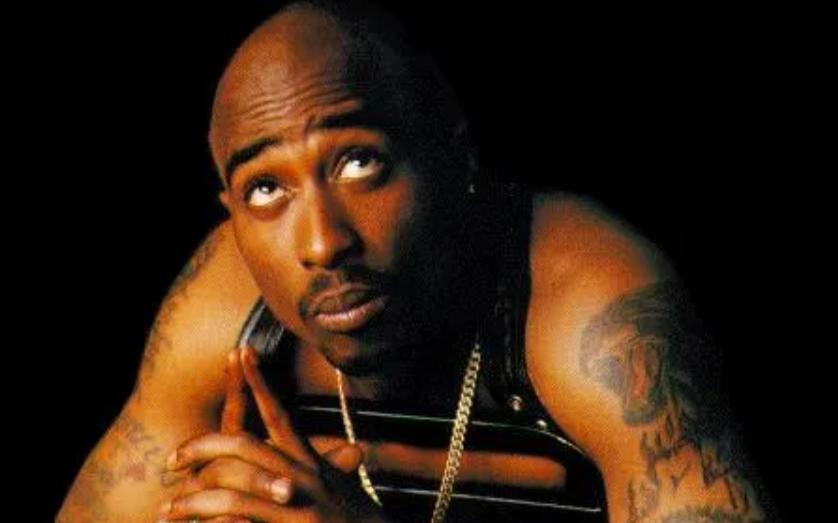
The long-awaited trial of Duane "Keffe D" Davis commenced on Monday with jury selection, marking a watershed moment in one of American pop culture's most enduring mysteries. The proceedings center on the September 7, 1996 death of California rapper Tupac Shakur, who was gunned down in a Las Vegas drive-by shooting while attending a Mike Tyson boxing match at the MGM Grand. Three decades of speculation, conspiracy theories, and false leads have finally given way to courtroom testimony, with prosecutors preparing to argue that the 63-year-old defendant, once a prominent leader of the South Side Compton Crips gang, not only ordered the killing but also supplied the firearm used in the attack.
The month-long trial represents a breakthrough in a case that had grown cold under the weight of its own notoriety. Shakur's killing became intertwined with the broader East Coast-West Coast hip-hop rivalry of the 1990s, a conflict that claimed multiple lives and fundamentally altered the landscape of American music. The shooting occurred amid escalating tensions between Death Row Records, the West Coast powerhouse founded by Marion "Suge" Knight, and Bad Boy Records, the East Coast juggernaut built by Sean "Diddy" Combs and anchored by star artist Christopher "The Notorious B.I.G." Wallace, who himself would be murdered six months later in March 1997. Understanding these institutional rivalries and the gang affiliations that underpinned them is essential to grasping the alleged motive behind Shakur's death.
According to prosecutors, the fatal confrontation resulted directly from a violent altercation earlier that evening. Following the Tyson boxing match, Shakur and Knight, accompanied by associates, encountered Orlando "Baby Lane" Anderson in a casino hallway. Anderson, the nephew of Davis and a member of the South Side Compton Crips, was allegedly beaten by Shakur and Knight in retaliation for an earlier assault on a Death Row Records employee. This escalation provided Davis with both the motivation and opportunity to strike back against his rival gang's most valuable asset. Hours later, a white Cadillac pulled alongside Shakur's vehicle on a Las Vegas street, and gunfire erupted from the Cadillac's windows, mortally wounding the 25-year-old rapper. The ballistic evidence, eyewitness accounts, and gang dynamics all allegedly trace back to Davis's directive and the weapon he provided to those in the vehicle.
What makes this prosecution possible after three decades is the extraordinary confession Davis provided in his 2019 memoir. In those published pages, Davis revealed that he occupied the front passenger seat of the Cadillac on the night of the killing and explicitly stated that he handed a pistol to occupants in the rear of the vehicle. While Davis stopped short of naming who actually pulled the trigger, his admission placed him at the scene with guilty knowledge and direct involvement in acquiring and distributing the murder weapon. Such a detailed, first-person account from the accused would normally be invaluable to prosecutors. However, Davis later undermined his own narrative by claiming he had not actually read his memoirs and that his co-author had embellished details for commercial purposes, a defence strategy that the trial will inevitably scrutinise.
The decades-long investigation into Shakur's death had languished due to insufficient evidence and the apparent unwillingness of witnesses to cooperate with law enforcement. The gang culture surrounding the crime, combined with the code of silence that governed those involved, meant that even as suspects were identified, prosecuting them remained virtually impossible. This investigative paralysis ended when Davis's memoir surfaced, offering what amounted to a semi-confession that authorities could use as a springboard for renewed investigation and eventual charges. Davis was arrested in September 2023, more than a quarter-century after the crime, making this one of the most significant cold case breakthroughs in recent American history.
Defense lawyers have mounted vigorous efforts to undermine the prosecution's case by attempting to exclude both Davis's memoir and his 2008 statement to police from trial evidence. These legal maneuvers reflect the central tension in the defence strategy: the contradictions between Davis's own words and his current plea of not guilty. In a March 2025 interview conducted from jail with ABC News, Davis flatly denied any involvement, claiming he was in Los Angeles at the time of the shooting and asserting that law enforcement cannot even place him in Las Vegas on the night in question. He blamed his co-author for manufacturing an exaggerated memoir based on vague personal recollections, a narrative that will require credible corroboration to convince jurors.
The criminal trial unfolds against the backdrop of a parallel civil lawsuit filed by Maurice Shakur, the late rapper's stepbrother, in May 2025. This wrongful death action alleges that multiple perpetrators remain unpunished and unaccountable after 30 years, with particular focus on individuals who have evaded justice despite their knowledge of or involvement in the crime. The civil suit reflects the frustration felt by Shakur's family, who have watched the case stall for decades while other gang-related homicides received greater investigative attention. For Malaysian and Southeast Asian observers, this case exemplifies how institutional gang structures and personal honour codes can prevent justice from functioning effectively, even in a developed legal system with substantial resources.
The significance of this trial extends beyond mere criminal prosecution. It speaks to the power of unexpected disclosure and archival evidence in reopening historical cases. Davis's memoir, written ostensibly as a personal narrative rather than as a confession, inadvertently provided investigators with the documentary foundation necessary to construct a prosecutable theory. This phenomenon has implications for how law enforcement agencies worldwide approach cold cases, particularly those involving gang violence or organised crime where traditional witness testimony remains unavailable or unreliable.
Jurors selected during this week will determine whether the circumstantial evidence, Davis's own published statements, and the reconstructed timeline of events that night suffice to prove guilt beyond a reasonable doubt. Even if Davis is convicted, the verdict may not provide complete resolution to the central question of who physically discharged the weapon that killed Shakur. All other occupants of the white Cadillac have since died, meaning the identity of the actual shooter may never be definitively established. This partial resolution of a three-decade mystery underscores both the power and limitations of the legal system to address historical injustices.
For the hip-hop community worldwide, including artists and fans across Southeast Asia, this trial represents a delayed but significant acknowledgment that even unsolved murders of cultural icons do not necessarily remain beyond the reach of law. The case has evolved from a source of endless speculation and debate into a concrete legal proceeding with documented evidence and specific defendants. Whether the outcome satisfies those who loved and admired Shakur, however, remains uncertain. The trial will consume the next month, potentially providing answers to questions that have haunted the music industry and popular culture for 30 years, yet it may simultaneously leave some mysteries unresolved.

