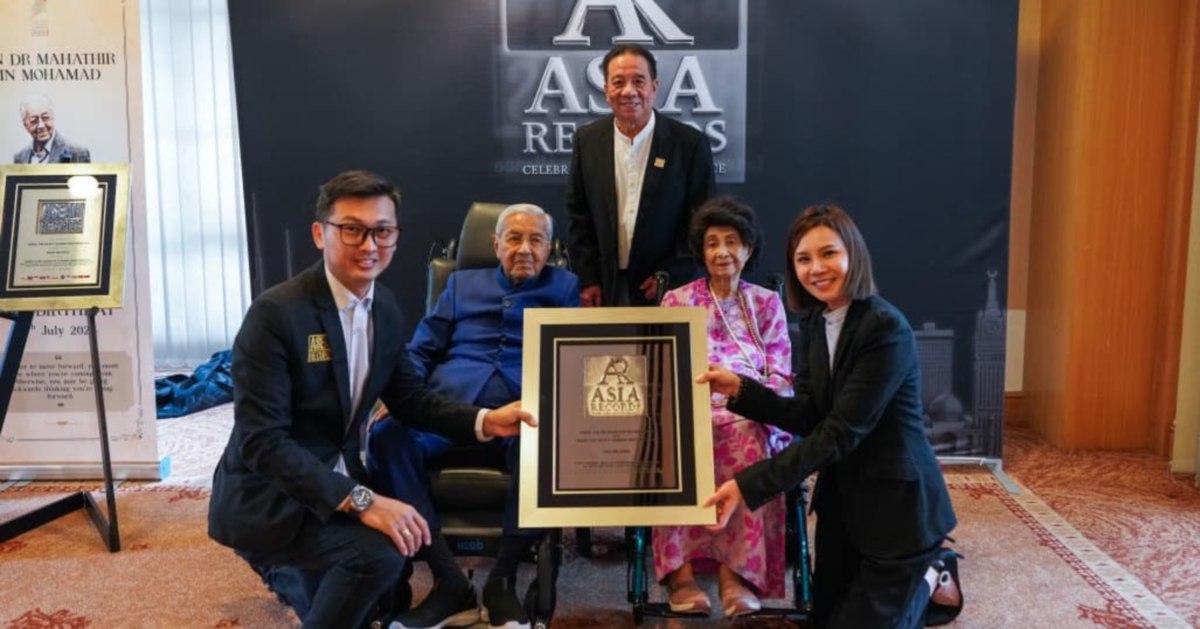
Former Prime Minister Tun Dr Mahathir Mohamad and his wife, Tun Dr Siti Hasmah Mohd Ali, have etched their names into Malaysia's history books by becoming an officially recognised record-breaking centenarian couple. The pair, who have spent decades at the forefront of national life, recently received three official records acknowledging their extraordinary longevity and the unprecedented nature of their joint achievements. This recognition places them among an exceptionally rare global cohort of couples who have both reached the century mark while maintaining public prominence throughout their lives.
The significance of this milestone extends beyond mere numerical longevity. Both individuals have contributed substantially to Malaysian public life across multiple decades, with Tun Dr Mahathir's tenure as prime minister spanning 22 years during Malaysia's rapid modernisation and transformation. Tun Dr Siti Hasmah has been equally influential, pioneering work in healthcare, particularly in family planning and women's health initiatives, while maintaining a prominent social advocacy role throughout her marriage and beyond. Their combined experience spans the entirety of Malaysia's modern democratic period, making them living witnesses to the nation's evolution from post-colonial state to middle-income economy.
The formal recognition of their status as a record-breaking couple carries particular resonance in Asian societies, where longevity is deeply valued and respected within cultural frameworks. Both individuals have become symbolic figures representing not only personal wellbeing but also the potential for meaningful contribution to society across an extended lifespan. Their presence in contemporary Malaysia challenges stereotypes about aging and demonstrates that reaching advanced age need not mean withdrawal from public life or intellectual engagement. Instead, their continued visibility and occasional public appearances have kept them relevant to national discourse.
Tun Dr Mahathir's health and continued activity have been subjects of considerable public interest throughout his later years. His return to political office in 2018 and subsequent involvement in governance demonstrated that professional capacity need not necessarily decline with advancing age. Similarly, Tun Dr Siti Hasmah has remained involved in various charitable and social enterprises, maintaining interests in healthcare advancement and community welfare. Their sustained engagement with public affairs has provided inspiring examples for Malaysian citizens contemplating their own aging journeys.
The recognition also underscores changing demographic patterns across Southeast Asia and Malaysia specifically. As healthcare standards improve and living conditions advance, more Malaysians are achieving longevity that previous generations might not have experienced. The emergence of centenarian populations represents a significant demographic shift with implications for healthcare systems, pension schemes, and social care infrastructure. Tun Dr Mahathir and Tun Dr Siti Hasmah's milestone becomes a data point in understanding how Malaysian society is aging and what quality of life extension might entail.
From a healthcare perspective, both individuals represent interesting case studies in longevity factors. Tun Dr Mahathir's continued vitality despite his age has been attributed to disciplined lifestyle choices, regular physical activity, and mental engagement. Tun Dr Siti Hasmah's medical background has likely informed her approach to personal health management throughout her life. While genetics certainly play a role, their example highlights how preventative healthcare, consistent physical activity, and purposeful living contribute to successful aging. For Malaysian healthcare professionals and gerontologists, studying factors contributing to their longevity offers practical insights for promoting healthier aging across the broader population.
The cultural implications of this recognition should not be overlooked. In Malaysian society, respect for elders constitutes a fundamental value within traditional frameworks. The formal acknowledgement of Tun Dr Mahathir and Tun Dr Siti Hasmah as record holders elevates their status as elders worthy of national celebration. This recognition reinforces cultural narratives that position advancing age not as decline but as accumulation of wisdom, experience, and national heritage. Their status as centenarians who continue to command respect and attention reaffirms the place of elder statesmen and women within Malaysian national consciousness.
The records received by the couple likely encompass various categories, from individual longevity achievements to joint milestones as married partners. Reaching the centenary mark individually is itself extraordinarily rare, affecting fewer than one in 100,000 people globally. For both members of a married couple to achieve this distinction simultaneously places them in an extraordinarily exclusive category. The recognition of their joint achievement speaks to the rarity and historical significance of their simultaneous longevity, particularly given their public profiles and the detailed documentation of their lives throughout Malaysia's modern era.
This milestone also prompts reflection on legacy and the long shadow that prominent figures cast across national history. Tun Dr Mahathir's decades of leadership shaped Malaysia's development trajectory, infrastructure investments, and regional relationships during critical periods. Tun Dr Siti Hasmah's advocacy work influenced healthcare policy and social attitudes toward women's wellbeing. Their continued presence as living figures rather than historical references keeps these legacies active and subject to ongoing evaluation and discussion. Younger Malaysians can encounter them as real individuals rather than merely textbook figures, creating connections across generational divides.
Looking forward, the recognition of this couple as record-breaking centenarians positions them as ambassadors for healthy aging and sustained contribution to society. Their example provides valuable data points for Malaysian and Southeast Asian discussions about demographic change, healthcare priorities, and social policies supporting extended lifespans. As Malaysia and the region experience rapid aging of their populations, the visibility of accomplished centenarians like Tun Dr Mahathir and Tun Dr Siti Hasmah offers both inspiration and practical lessons for policymakers grappling with the challenges and opportunities presented by increasingly long-lived populations.

