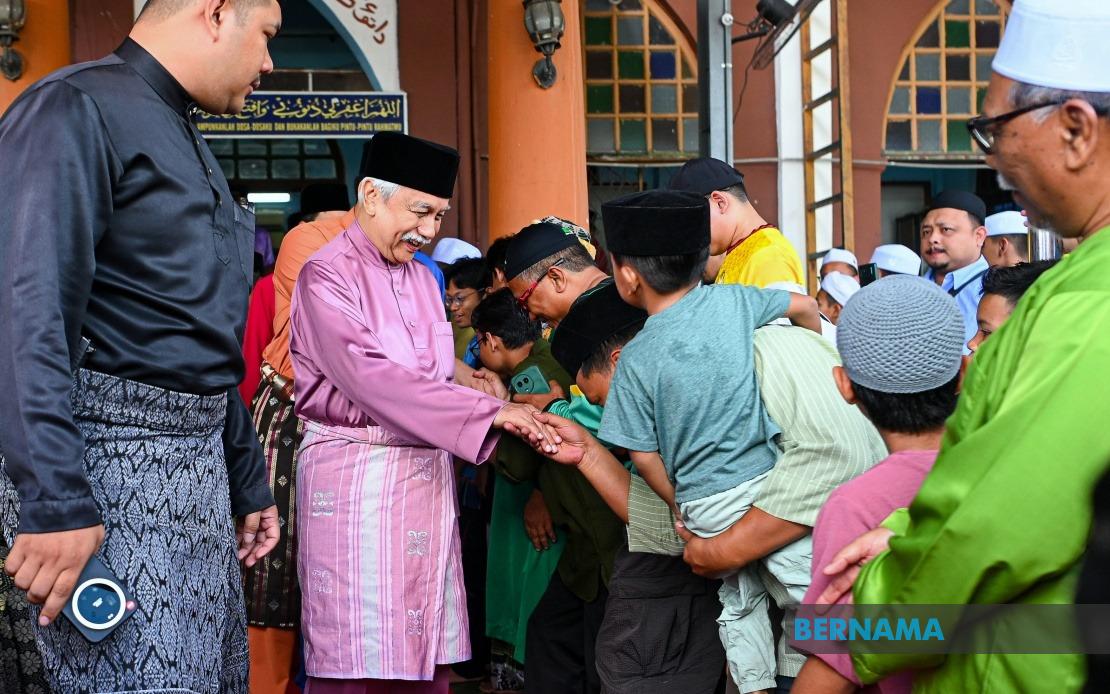
Yang Dipertuan Besar Negeri Sembilan, Tuanku Muhriz Tuanku Munawir, joined a congregation of more than 500 worshippers during Friday prayers at Masjid Kariah Pantai in Seremban on 17 July. The religious observance brought together the state's paramount ruler with members of the local community, reflecting the continuing significance of mosque-based spiritual gatherings across Malaysia's diverse landscape. The attendance underscored the role of Friday congregational prayers as a unifying practice that transcends social hierarchy and administrative boundaries.
The royal visit included Tuanku Muhriz's two sons, Tunku Besar Seri Menanti Tunku Ali Redhauddin and Tunku Zain Al-'Abidin, whose presence highlighted the family's commitment to participating in communal religious practice. The inclusion of the heirs to the Negeri Sembilan throne in such public religious observances carries symbolic weight, as it demonstrates the royal household's engagement with the spiritual and cultural values that remain central to Malaysian society. Their participation also sets an example for younger generations regarding the importance of regular mosque attendance and faith-based community involvement.
The gathering attracted several high-ranking state officials and traditional leaders. Datuk Klana Petra Muhammad Faris Johari, serving as the Undang of Luak Sungei Ujong, and Menteri Besar Datuk Seri Aminuddin Harun both attended the prayers. This convergence of political and religious figures at a community mosque reflects the integrated nature of governance and religious life in Malaysian states, where leaders across different spheres frequently participate in shared spiritual occasions. Such attendance sends a message about the state's prioritisation of Islamic affairs and communal cohesion.
The Friday sermon, delivered by Imam Amru Zubair Abu Hanifah before the congregation commenced prayers, addressed contemporary challenges facing the Muslim faith. The imam's focus on current threats to faith speaks to broader concerns within Malaysian Islamic communities regarding external and internal pressures that may influence religious practice and belief. Such sermons typically encourage congregants to reflect on how they maintain their spiritual commitment amid rapidly evolving social, technological, and cultural circumstances. The choice of topic suggests an awareness among religious leaders of the need for proactive engagement with modern challenges affecting Muslim communities in Malaysia.
Following the completion of the Friday prayers, Tuanku Muhriz and his sons engaged in direct interaction with other worshippers, an approach that emphasises accessibility and personal connection. These post-prayer engagements, common among Malaysian rulers during public religious occasions, help reinforce the bonds between leadership and the broader Muslim community. Such moments allow congregants to experience their rulers as present and engaged members of the faith community rather than distant figures of authority. This practice reflects a deliberate strategy of demonstrating that spiritual commitment transcends institutional position and wealth.
A particularly notable aspect of the visit involved Tuanku Muhriz and his sons distributing contributions to children who attended the Friday prayers. This gesture carried multiple dimensions: it encouraged youth participation in religious observance, demonstrated practical charity aligned with Islamic principles, and provided tangible support to young attendees. Such initiatives help foster a positive association between religious practice and community generosity, potentially influencing how younger Malaysians perceive the value of mosque participation. The distribution of contributions also exemplifies sadaqah (voluntary charity) in action, a core Islamic principle that the royal family visibly embraced.
The event took place in Seremban, the capital of Negeri Sembilan, a state with a distinctive constitutional arrangement where the position of Yang Dipertuan Besar is held collectively by the undangs of the nine luaks. Negeri Sembilan's unique political structure, rooted in traditional adat (customs), intersects with Islamic practice and governance in ways that differ from other Malaysian states. Tuanku Muhriz's participation in communal religious observance thus carries significance within the broader framework of how this state balances customary leadership with Islamic administration and social cohesion.
The attendance of over 500 congregants at Masjid Kariah Pantai indicates strong community engagement with Friday prayers in this Seremban locality. The substantial turnout reflects both the established role of this mosque within its neighbourhood and the drawing power of having the state's paramount ruler participate in worship. Large congregations at Friday prayers contribute to the vibrancy of mosque-based community life, facilitating social bonding among residents and reinforcing the mosque's function as a focal point for spiritual and social activities beyond formal prayer times. The presence of state leadership likely enhanced the visibility of the mosque within broader public consciousness and may inspire increased participation from community members.
From a broader Malaysian perspective, the event exemplifies how religious observance and governance intersect at the state level. Rulers and political leaders participating in congregational prayers serves multiple functions: it demonstrates their personal faith commitment, strengthens their connection to the communities they serve, and publicly affirms the importance of Islamic practice within state priorities. For Negeri Sembilan specifically, such occasions reinforce the state's identity as a place where traditional leadership structures, Islamic values, and modern governance coexist and complement one another. The convergence of royal, political, and religious figures at a single mosque gathering illustrates how these spheres continue to operate in coordination rather than separation in Malaysian public life.

