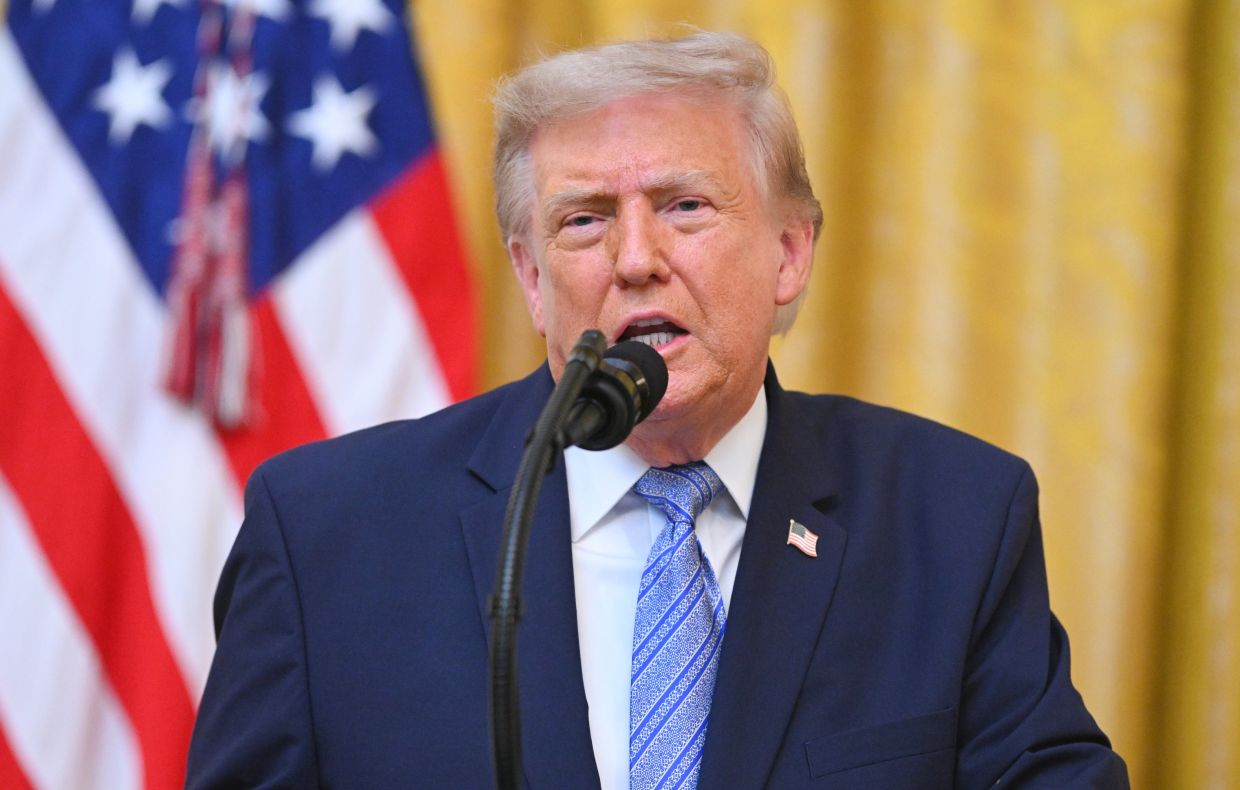
President Trump has delivered one of his most aggressive White House addresses, weaving together warnings about foreign election interference with domestic political battles ahead of midterm elections this year. The speech, notable for its combative tone and multiple fronts of confrontation, positions national security concerns alongside electoral integrity issues, painting a picture of threats both from abroad and within American institutions. For observers across Southeast Asia and Malaysia particularly, the intensifying US-China tensions underscore a broader geopolitical shift that will reverberate through regional trade, security arrangements, and political alignments in the coming months.
At the heart of Trump's address was an accusation that China orchestrated what he described as the largest compromise of election data in American history. He framed this breach not merely as a cybersecurity incident but as a fundamental challenge to national sovereignty, demanding swift governmental response. This characterisation reflects Trump's broader narrative that China represents an existential threat requiring a fundamental recalibration of US strategy. The specificity of the election data accusation appears designed to resonate with concerns about electoral manipulation during an election year, linking foreign adversaries directly to the vulnerability of American democratic processes.
Beyond the data breach allegation, Trump went further in depicting what he portrayed as systematic Chinese influence operations. He claimed that Beijing had deliberately worked to sway American business leaders and journalists against his administration, suggesting a coordinated campaign to undermine his political standing. These accusations reflect concerns about influence operations, but they also serve a domestic political function by framing opposition to his policies as potentially compromised by foreign interests. The breadth of these claims—targeting not just electoral infrastructure but media and business opinion—demonstrates how Trump is attempting to link external threats to internal political divisions.
The address also dwelled on what Trump characterised as deliberate Chinese interference specifically aimed at undermining him during his first term. By anchoring the interference narrative to his personal political survival, Trump connects national security to electoral outcomes in a way that collapses the distinction between protecting American democracy and protecting his own political fortunes. This rhetorical move is significant because it justifies extraordinary measures in the name of national defence while simultaneously benefiting his political position heading into the midterms.
Domestically, Trump used the address to renew his push for election security measures that have become touchstones of Republican electoral strategy. He emphasised the necessity for what he termed "free and fair elections," a phrase that carries particular weight given ongoing debates about voting access and election administration across American states. His repeated invocation of past fraud concerns, despite lack of evidence supporting widespread fraud claims, signals that election integrity will remain a central campaign theme. These assertions matter for Malaysian readers because they reflect how major democracies are grappling with election security, questions that resonate locally as Southeast Asian nations strengthen their own electoral institutions.
Specific policy proposals formed a concrete agenda within Trump's broader rhetoric. He advocated for voter identification requirements and proof of citizenship measures, proposals he tied to the SAVE America Act. These reforms represent a particular approach to election security that prioritises voter verification over ballot access, reflecting ideological commitments about how democratic participation should be regulated. The framing of these as national security imperatives rather than routine electoral administration changes demonstrates how thoroughly Trump has integrated voting rules into his broader security narrative.
Wider geopolitical tensions provided the backdrop and context for Trump's domestic messaging. He signalled an end to what he called "complacency" in American foreign policy, suggesting that the United States would adopt a more assertive posture globally. This repositioning extends beyond China to encompass broader strategic competition, particularly highlighted by his references to Iran. For Southeast Asia, this rhetoric indicates that US strategy will likely emphasise competition with Beijing while maintaining pressure on Tehran, potentially affecting regional security partnerships and economic relationships that depend on relative stability between these powers.
The address marked a notable escalation in Trump's characterisation of media institutions. In a striking moment, he warned that he was considering revoking broadcast licences for television networks ABC and NBC, accusations levelled ostensibly because of coverage he deemed unfair. This threat against media organisations—regardless of its practical enforceability—underscores how thoroughly concerns about institutional independence have penetrated American political discourse. For Malaysian observers, the willingness of a major democratic leader to threaten media organisations over coverage represents a cautionary tale about the fragility of press freedom even in established democracies.
The cumulative effect of Trump's address is to construct a comprehensive narrative wherein external threats and internal divisions reinforce one another. China's alleged election interference, according to this framing, exploits and amplifies existing American political divisions, while those divisions themselves may be weaponised by foreign powers. This interconnection justifies simultaneously confronting China internationally and pursuing domestic political changes at home. The rhetorical power lies in making these separate domains appear as aspects of a single strategic challenge requiring unified response.
For regional stakeholders in Southeast Asia and Malaysia, the implications extend beyond American politics. A United States that frames itself as under siege from Chinese interference and confronting threats across multiple domains will likely pursue policies that expect regional allies to choose sides more explicitly. Trade relationships, security partnerships, and diplomatic alignments may face pressure to align with this zero-sum framework. Meanwhile, the emphasis on election security and voting reforms reflects broader global conversations about democratic governance that influence how nations structure their own electoral systems and institutions.
The address reveals how thoroughly security concerns and electoral politics have become intertwined in contemporary American governance. Whether the specific accusations regarding China prove substantiated, the political reality is that Trump has successfully connected foreign policy, national security, and domestic electoral strategy into a unified narrative. This integration, while not unique to Trump, reaches particular intensity in his rhetoric, collapsing distinctions between defending democracy and winning elections in ways that will shape American politics through the midterms and beyond.

