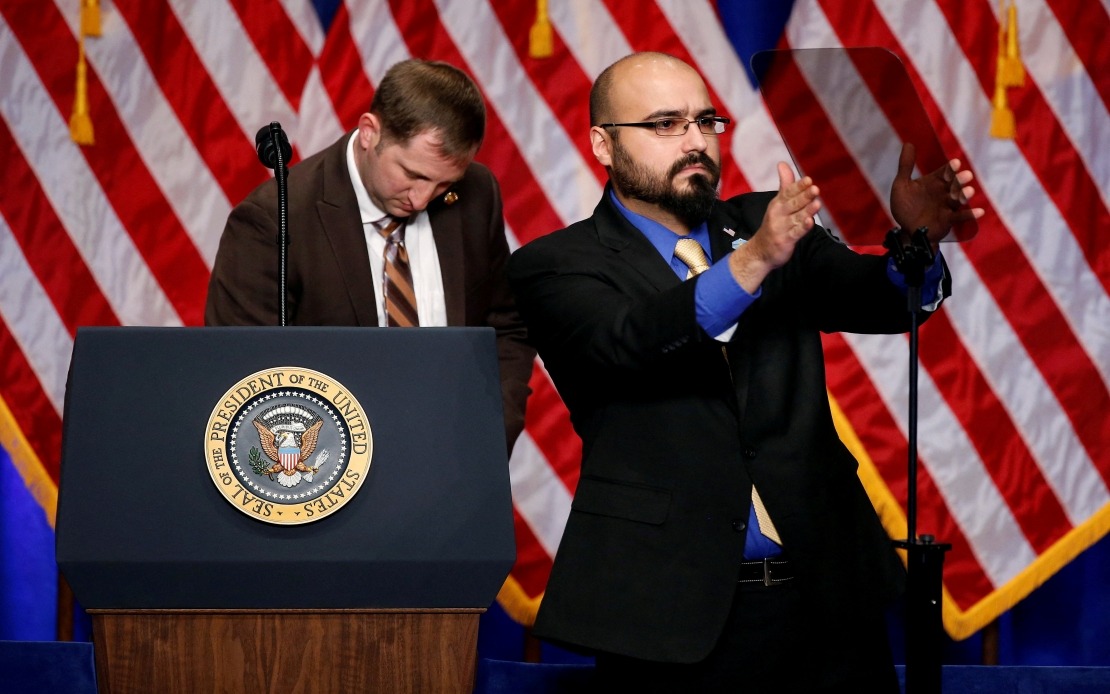
The White House has suspended a teleprompter operator without pay following serious allegations that he exploited advance knowledge of President Donald Trump's speeches to place lucrative wagers on a prediction markets platform. White House press secretary Karoline Leavitt disclosed the disciplinary action on Thursday, characterising the incident as both unfortunate and a grave breach of public trust. She confirmed that President Trump had been briefed on the matter, underscoring the seriousness with which the administration is treating the apparent insider trading violation.
The operator in question has managed Trump's teleprompter since 2016, positioning him to access sensitive information about speech content before public delivery. According to reporting from broadcaster ABC, he allegedly leveraged this privileged access to generate winnings exceeding $100,000 through strategic wagering. The bets were placed on Kalshi, an emerging prediction markets platform that enables users to stake money on the outcomes of real-world events, from political developments to policy announcements. Such platforms have proliferated in recent years, though their regulatory status remains contested in American law.
The mechanics of the alleged scheme appear straightforward in principle but profound in implication. By knowing in advance what Trump would announce or emphasise during a speech—whether policy shifts, economic forecasts, or political statements—the operator could identify prediction market opportunities with asymmetric information advantages. Markets typically price in publicly available expectations, so advance knowledge of specific remarks or announcements would theoretically provide a trader with significantly better odds of predicting outcomes correctly. The scale of alleged profits suggests the operator executed multiple successful bets rather than isolated transactions.
Kalshi's legal team, led by Robert DeNault who serves as the platform's lawyer and enforcement head, has moved swiftly to distance the company from wrongdoing. DeNault posted on the social media platform X that Kalshi had identified and investigated the suspicious trading patterns promptly, subsequently referring the matter to the Commodity Futures Trading Commission, the federal agency responsible for overseeing futures and derivatives markets. The statement emphasised the platform's cooperation with regulatory authorities and its provision of all collected evidence, establishing a record of institutional compliance even as the underlying conduct raises questions about market integrity.
The involvement of the CFTC signals the potentially serious legal consequences awaiting the operator. The commission holds authority over prediction markets and has shown willingness to pursue enforcement actions against market manipulation and insider trading. The operator could face civil penalties, disgorgement of illicit profits, and potentially criminal charges depending on the investigation's findings and the applicability of specific securities and commodities laws. The case may also prompt broader scrutiny of prediction markets as regulatory tools and their vulnerability to insider information exploitation.
This incident arrives at a moment of expanding interest in prediction markets as alternative forecasting mechanisms. Platforms like Kalshi have gained prominence among traders and investors seeking to profit from predictions about political events, economic indicators, and other outcomes. However, their rapid growth has outpaced regulatory clarity, creating ambiguity about which trading practices constitute illegal insider trading versus legitimate information asymmetries. The case involving Trump's teleprompter operator may catalyse efforts to establish clearer guardrails around such platforms.
For Southeast Asian observers, the incident illustrates vulnerabilities that extend beyond American borders. Prediction markets are becoming increasingly accessible globally, and insider trading schemes could emerge wherever individuals with privileged information gain access to such platforms. Malaysia and other regional economies increasingly scrutinise financial market integrity, and this case demonstrates how technological innovations can create novel opportunities for misconduct. Regulators across Asia-Pacific may consider whether their own frameworks adequately address betting markets and information asymmetries.
The White House response reflects both institutional concern and damage control. By suspending the operator immediately and characterising the conduct as unacceptable, the administration signals commitment to ethical governance standards. However, the incident also raises questions about security protocols and oversight mechanisms within the presidential office. If a teleprompter operator could exploit his position for personal financial gain, what other vulnerabilities might exist in systems designed to protect sensitive information and maintain institutional integrity?
The broader context matters significantly. Teleprompter operators occupy trusted positions close to power, requiring security clearances and access to confidential materials. The violation of that trust—if proven—carries implications beyond simple financial fraud. It suggests a breakdown in vetting procedures, workplace oversight, and potentially counterintelligence mechanisms. The degree to which this represents an isolated incident or symptomatic of deeper institutional weaknesses remains unclear pending fuller investigation.
As the CFTC investigation proceeds, attention will likely focus on whether the operator acted alone or in coordination with others who might have possessed additional market information or trading sophistication. The scale of profits and the apparent repeat nature of the trades suggest either sophisticated market knowledge or assistance from experienced traders. The investigation may therefore expand beyond the individual operator to encompass potential conspirators and establish whether others exploited similar information advantages.
Longer term, this case may influence how prediction markets are regulated and integrated into mainstream financial systems. Policymakers must balance the potential benefits of information aggregation through prediction markets against the risks posed by insider trading and market manipulation. The teleprompter operator case provides a concrete, high-profile example of those risks, potentially justifying stricter oversight or entry requirements for such platforms.
The incident also underscores recurring tensions between technological innovation and institutional safeguards. As new financial instruments and platforms emerge, traditional regulatory frameworks often lag, creating windows where misconduct can occur before detection. The prediction markets sector appears vulnerable to precisely this dynamic, suggesting that regulators across multiple jurisdictions may intensify scrutiny before similar violations occur in other high-profile contexts.

