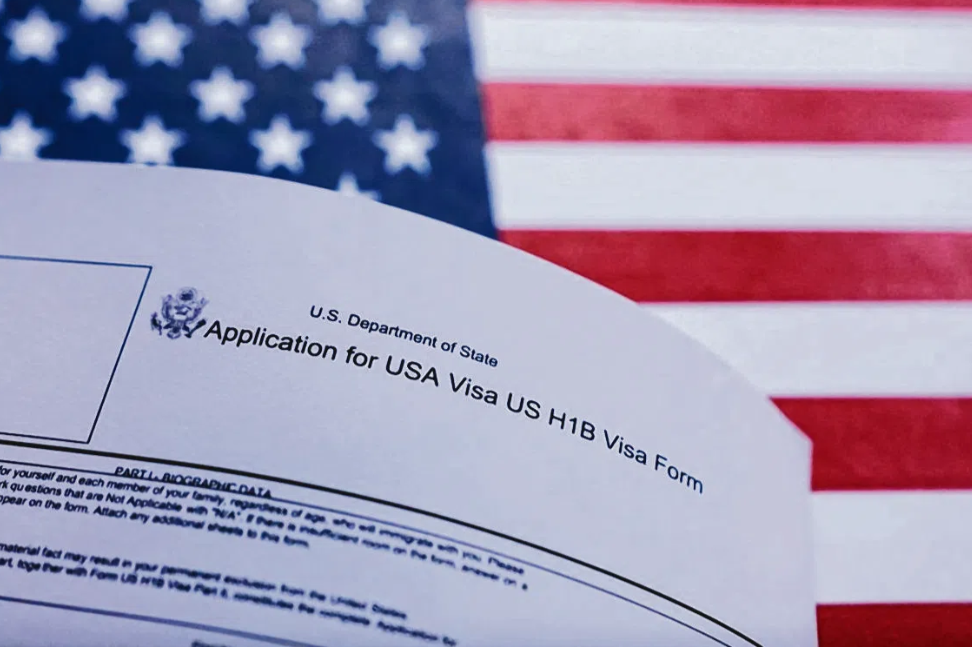
The reversal of a decades-long migration pattern is becoming evident as skilled foreign workers abandon their American careers in response to the Trump administration's aggressive immigration policies. What was once an aspirational journey to Silicon Valley is increasingly transforming into a strategic retreat, with Indian and Chinese professionals dismantling carefully constructed lives in the United States to reclaim opportunities in their home countries. This fundamental shift in global talent mobility carries profound implications for the technology sector, American competitiveness, and the economies competing for displaced expertise.
The catalyst for this exodus lies in a combination of administrative measures designed to make hiring foreign talent more costly and burdensome. The Trump administration's proposed US$100,000 application fee for new H-1B visas—a 25-fold increase over existing rates—sent shockwaves through the technology industry, creating immediate uncertainty about future employment prospects. Although a federal judge struck down this particular measure as unlawful in June, the administration has persisted with alternative restrictions, including a separate US$4,000 surcharge for H-1B visa extensions and renewals beginning in September. These escalating costs directly discourage American employers from sponsoring foreign workers, even when vacancies require specialized expertise that domestic labour markets cannot readily supply.
The human consequences are becoming tangible across Silicon Valley and beyond. Deepak, a 44-year-old technology professional who spent 15 years building a life in America, made the difficult decision to return to India in May after experiencing a layoff in October. Despite securing another position shortly after losing his job, he concluded that the mounting anxiety about maintaining visa status—particularly the 60-day window to find employment or face deportation—had become psychologically untenable. His family's departure involved selling two houses, disposing of household furnishings, and enrolling their children in new schools in Kerala. Such decisions represent more than mere career changes; they constitute the dismantling of established communities, investments, and aspirations that foreign professionals had nurtured over years or decades.
Statistical evidence confirms this is not an isolated phenomenon but rather a systematic trend affecting tens of thousands of professionals. Data compiled by Xpheno, a Bengaluru-based talent consulting firm, reveals that approximately 15,100 Indian professionals returned to India in 2025, representing a significant increase from 9,800 in 2024. The momentum has continued into 2026, with 7,300 returnees already recorded. While comparable figures for Chinese professionals remain incomplete, China's Ministry of Education reported that 536,000 students returned to China in 2025 following graduation—an increase of 8.3 per cent year-on-year—suggesting diminishing enthusiasm for the traditional American Dream among young talent.
The ripple effects extend to major technology employers that have historically depended on H-1B visa sponsorship. Analysis of US Citizenship and Immigration Services data shows that H-1B visa petition approvals for the top 100 employers—including Amazon, TCS, Infosys, Apple, and Microsoft—are tracking towards a decline exceeding 10 per cent when comparing fiscal year 2026 to 2025. This reduction reflects both reduced hiring appetite among companies facing economic pressures and decreased willingness among foreign professionals to pursue American employment under increasingly restrictive conditions. The compounding effect of recent technology sector layoffs and hiring freezes has intensified competition for the remaining visa-sponsored positions, creating a buyer's market that heavily favours employers while disadvantaging foreign workers.
The situation has become particularly acute for mid-career and senior professionals struggling to secure new sponsorships. Carrie, a Chinese national working as a data analyst in America's Midwest, found herself on redundancy notice during her third year on an H-1B visa. Her frantic job search—sending up to 30 applications daily at its peak—eventually yielded no viable sponsorships despite her efforts. With her H-1B status dependent on continuous employment, she faced a hard deadline of end-August to depart the United States. Her experience mirrors broader patterns affecting approximately 70 per cent of H-1B visa holders who are Indian nationals and 12 per cent who are Chinese, with the vast majority concentrated in technology sectors.
Beyond visa mechanics and employment markets, returning professionals report that social hostility has intensified the push to depart. Reports from the AAPI Equity Alliance document a notable uptick in racist attacks targeting Indian and Chinese immigrants—demographics that comprise America's largest, most educated, and highest-earning immigrant populations. This combination of economic uncertainty, administrative obstacles, and social hostility creates a perfect storm prompting reassessment of American viability among foreign talent. Nupur Dave, a Bengaluru-based consultant assisting thousands of overseas Indian professionals with repatriation planning, notes an unprecedented surge in departures, with individuals who initially intended to persevere through visa complexities now accelerating their exit timelines due to cascading layoffs.
The receiving economies, particularly India, are strategically positioned to absorb returning talent through rapidly expanding Global Capability Centres—multinational offices handling specialized functions. Approximately 2,000 such centres operate across India, collectively recruiting roughly 100,000 employees annually since 2023. Xpheno research indicates that India's top 125 GCCs absorbed approximately 7,000 mid and senior technology professionals with more than a decade of experience in the preceding 12 months, with 2,800 originating from the United States. These centres, typically subsidiaries of American and European corporations, provide alternative employment pathways for returning professionals while allowing multinational companies to maintain global operations amid US labour restrictions.
However, returning professionals frequently encounter a sobering economic reality: homecoming rarely restores the compensation and status they enjoyed abroad. Unless returnees possess specialized expertise in data science or artificial intelligence, employers typically offer materially reduced salary packages. The job market values American experience but does not necessarily translate that experience into premium domestic compensation. This creates psychological friction for professionals accustomed to American-scale remuneration, who must accept significant income reductions despite their global expertise and credentials. Many find themselves unable to directly transfer their international career progression into equivalent domestic opportunities.
Yet some returnees are discovering unexpected benefits in their repatriation. Ram, a 38-year-old product manager who returned to Bengaluru in early 2025 after nine years in Connecticut, articulates a perspective increasingly common among middle-aged professionals. Having sold all possessions—including children's clothing—to facilitate the move, he finds himself with the novel luxury of temporal flexibility and genuine choice. The perpetual striving characteristic of the H-1B experience, despite its material comforts, left no space for genuine career contemplation or life exploration. Returning home has paradoxically liberated him to consider fundamentally different paths: entrepreneurship, industry shifts, or even agricultural pursuits. This psychological dimension—relief from relentless career pressure—adds nuance to the departure narrative beyond simple economic displacement.
For Southeast Asian nations like Malaysia, the talent migration dynamics carry particular relevance. The drain of regional expertise towards the United States has historically represented a competitive disadvantage for regional technology hubs and corporations. If Trump's policies successfully reverse this brain drain, countries throughout the region may encounter both opportunities and challenges. The opportunity lies in accessing higher-calibre talent pools and encouraging regional technology sector development. The challenge involves competing internationally for displaced talent while managing expectations among those considering whether to pursue secondary migration routes through countries like Singapore, Australia, or Canada rather than returning to their countries of origin.
The broader economic implication concerns American technological competitiveness and innovation capacity. For decades, foreign talent has constituted a disproportionate share of scientific, technical, and engineering workforces in American universities, research institutions, and corporations. Deliberate restrictions on this talent pipeline may undermine American innovation and competitive positioning in emerging technologies, paradoxically strengthening competitors in India, China, and other nations receiving returning professionals. This dynamic resembles historical instances where restrictive immigration policies produced unintended consequences that weakened rather than strengthened the implementing nation's economic position.
The structural transformation now underway suggests that the era of unidirectional talent flows from emerging economies toward the United States may be entering a new phase. While economic differentials and technological advantages will likely continue attracting some foreign talent to America, the confluence of administrative friction, economic uncertainty, social hostility, and growing opportunities in home countries creates genuine alternatives to American employment. Rather than representing temporary cyclical disruption, this departure may reflect more durable shifts in how global talent evaluates opportunity, security, and personal wellbeing. Technology companies and policymakers in Washington must reckon with the reality that visa restrictions intended to protect American workers are simultaneously eliminating the foreign talent upon which American innovation has increasingly depended.

