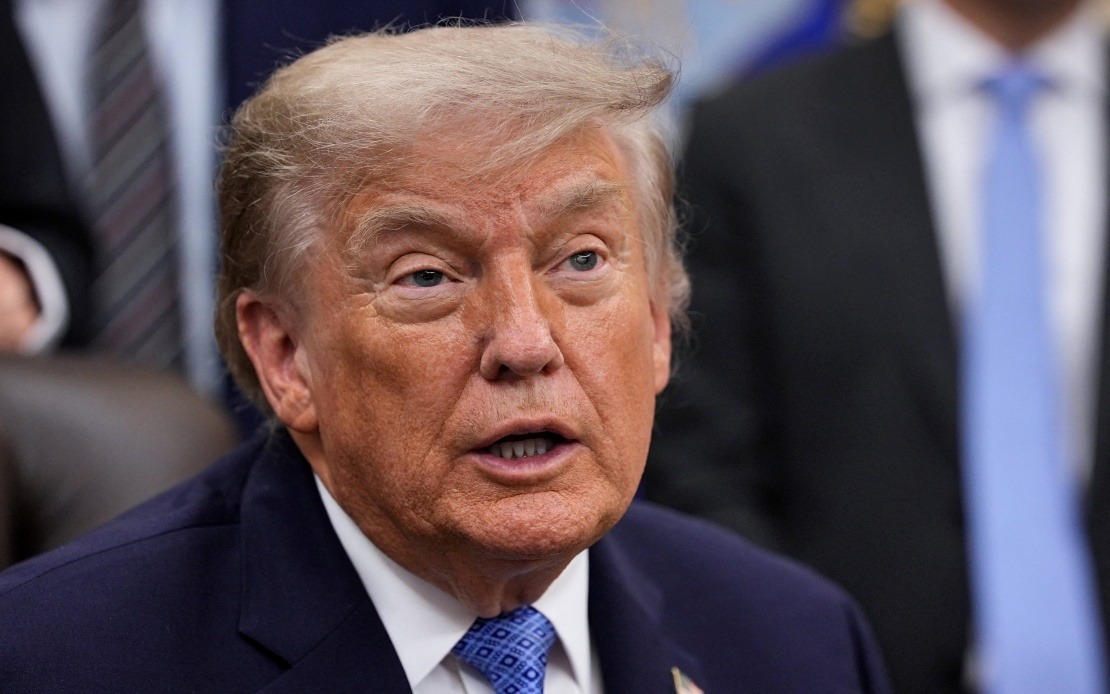
President Donald Trump is set to make a significant televised address to the American nation on Thursday evening at 9 pm Eastern Time, according to an announcement posted on his Truth Social account. The timing places the speech in one of America's most coveted broadcast slots, when millions of citizens tune in to primetime television. The decision to schedule a formal national address signals that the White House considers the forthcoming remarks important enough to command the full attention of the American public and international observers monitoring US politics.
The White House has maintained unusual silence regarding the actual subject matter of the address. This deliberate ambiguity has fuelled considerable speculation among political analysts and media observers about what prompted the decision to use prime-time television. The absence of an announced topic stands in contrast to typical presidential communications, where the substance and purpose are typically telegraphed in advance to generate appropriate media coverage and public expectation.
Observers have pointed to several possible focal points for the address. The escalating conflict with Iran, which has dominated American news cycles for several months, represents one substantial possibility. This regional conflict has triggered significant economic consequences for ordinary Americans, particularly at the petrol pump, where prices have climbed noticeably in recent weeks. The situation has become increasingly volatile in recent days, suggesting that developments in the Middle East may have prompted the decision to address the nation directly.
The economic dimension of US foreign policy represents another plausible subject. Trump has consistently emphasised his economic management as a central component of his political brand. The administration faces ongoing scrutiny regarding inflation, fuel costs, and broader economic conditions affecting household budgets across America. In December of the previous year, Trump had already felt compelled to mount a televised defence of his economic record amid mounting domestic criticism, indicating this remains a sensitive political vulnerability.
The timing of the address carries significant political weight as well. The speech arrives approximately four months before crucial midterm elections, a contest that will determine control of Congress and shape American politics for the remainder of Trump's second term. Recent polling data has presented troubling trends for the Republican Party, which Trump leads. The party's electoral prospects have weakened considerably, raising questions about whether this address represents an effort to stabilise political momentum and refocus public attention on themes favourable to Republican candidates.
Presidential addresses to the nation carry profound historical and constitutional significance in American political culture. Such speeches are reserved for moments when sitting presidents believe the gravity of circumstances demands direct communication with citizens over traditional news media and political commentary. The choice to utilise this powerful tool reflects a presidential judgment that the current moment warrants extraordinary public communication.
This represents neither Trump's first such address during his current presidency nor an unprecedented use of television to reach Americans during politically sensitive moments. Earlier in his second term, Trump had already demonstrated a willingness to deploy prime-time television when facing significant political headwinds. The December address defending his economic stewardship established a precedent for using formal national addresses as a strategy for managing public perception during periods of political vulnerability.
The geopolitical context surrounding this announcement remains fluid and consequential. The Iran situation continues to evolve, with recent developments suggesting further deterioration in relations between Washington and Tehran. Any conflict in the Middle East carries immediate repercussions for global energy markets and thereby affects consumers worldwide, including in Southeast Asia and Malaysia. Oil prices fluctuate based on perceptions of regional stability, making American foreign policy decisions relevant to households far from American borders.
For Malaysian observers and policymakers, the address merits attention both for what Trump may announce and for what his words reveal about American priorities and strategic orientation. Southeast Asia remains affected by great power competition and American strategic decisions in distant regions. The economic consequences of Middle Eastern conflict—through energy price movements and supply chain disruptions—ripple through regional economies dependent on stable international commerce.
The deliberate withholding of the speech's topic also reflects contemporary political communication strategy. By allowing speculation to build and media commentary to proliferate, the White House generates sustained public interest and ensures maximum viewership when the address finally airs. This approach maximises political impact regardless of the actual content delivered.
Political observers will scrutinise both the substance of Trump's remarks and the context in which they are delivered. The address may serve multiple purposes simultaneously: clarifying American position on Iran, defending economic management, rallying Republican voters ahead of midterm elections, or addressing some combination thereof. The prime-time slot guarantees substantial domestic and international attention to whatever message emerges Thursday evening.

