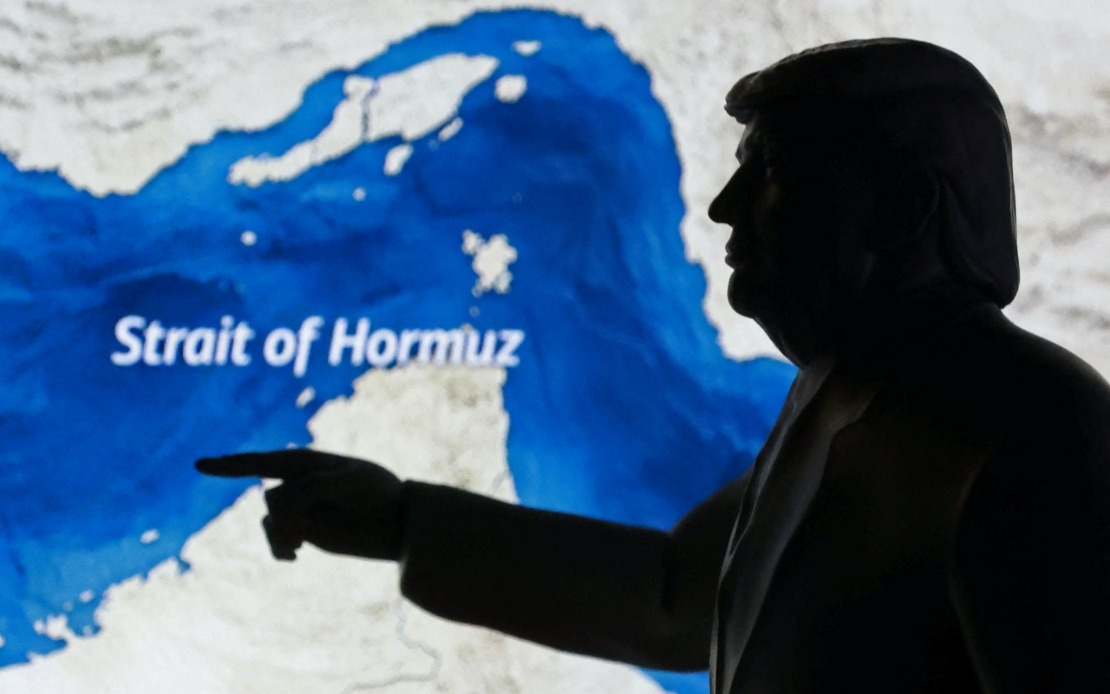
The United States is pursuing an increasingly aggressive posture toward Iran, with President Donald Trump declaring on Wednesday that Washington will respond to any attack on commercial shipping in the Strait of Hormuz with strikes targeting Iranian infrastructure. Speaking through his Truth Social platform, Trump stipulated that the US would "bomb and destroy ONE BRIDGE OR POWER PLANT" for each Iranian assault on a vessel transiting the critical waterway, with potential targets including facilities adjacent to or within Tehran itself.
This rhetorical escalation reflects mounting tensions between Washington and Tehran, which have been exchanging military fire across the Middle Eastern region for more than a week. The US has undertaken a series of bombing operations targeting Iranian territory and assets, prompting reciprocal Iranian strikes against what Tehran characterises as American military infrastructure and positions distributed throughout several countries across the region. The pattern of tit-for-tat military action underscores the fragility of regional stability and the deteriorating diplomatic environment between the two longtime adversaries.
The current confrontation stands in stark contrast to diplomatic efforts undertaken just weeks earlier. In June, Pakistan brokered a framework agreement between the US and Iran with the explicit aim of terminating a conflict that erupted in February. That accord was ostensibly designed to create pathways toward a comprehensive peace settlement and to restore stability to one of the world's most strategically vital shipping lanes. Yet the continued military exchanges suggest that neither side has fully committed to or benefited from that diplomatic arrangement, raising questions about the agreement's enforceability and the genuine willingness of both parties to pursue peaceful resolution.
The Strait of Hormuz represents one of the most economically consequential waterways globally, serving as the passage point for roughly one-third of all international maritime oil trade. Any sustained disruption to shipping through this narrow corridor between Iran and Oman carries immense implications for energy markets, supply chains, and economies worldwide. The threat of escalating Iranian attacks on commercial vessels introduces significant risk premiums into insurance and shipping costs, effectively raising energy prices across global markets. For Malaysia and other Southeast Asian nations dependent on stable energy supplies and predictable shipping routes, this regional instability poses direct economic consequences through elevated fuel costs and potential supply disruptions.
Trump's threat represents a significant departure from traditional diplomatic restraint, employing explicit language about targeting civilian infrastructure rather than military installations. The inclusion of power plants and bridges—structures directly supporting civilian populations—suggests a willingness to inflict broader economic and humanitarian damage on Iran in response to maritime incidents. This approach differs substantially from previous US strategic doctrine, which has historically attempted to distinguish between military and civilian targets, particularly in international forums and alliance contexts. The new posture may signal a shift toward what Trump administration officials characterise as deterrence through credible threat of massive retaliation.
Iran's perspective on these developments reflects deep historical grievances and security concerns about American military presence throughout the Persian Gulf and surrounding regions. Tehran views the US military infrastructure and bases as existential threats to Iranian sovereignty and territorial integrity. From Iran's standpoint, attacks on commercial shipping represent retaliatory measures against what it sees as American economic warfare through sanctions and military encirclement. This asymmetry in how each side characterises the conflict—as either unprovoked aggression or justified response—makes diplomatic resolution increasingly difficult without third-party mediation or a significant shift in either side's strategic calculations.
The Pakistan-brokered agreement signed in June appears to have foundered on implementation challenges and fundamental disagreements about what constitutes compliance. Neither party has credibly demonstrated commitment to restraint or de-escalation, suggesting that the underlying issues driving conflict remain unresolved. Questions about the agreement's enforcement mechanisms, verification procedures, and guarantees from external powers indicate that the framework may have been more aspirational than operational. For regional stability and for nations like Malaysia that depend on predictable geopolitical conditions for trade and investment, the failure of this diplomatic initiative represents a setback with potentially long-term consequences.
The escalating rhetoric and military actions also risk drawing other regional and international actors into the conflict through expanded operations or alliance commitments. Gulf Cooperation Council members, including Saudi Arabia and the United Arab Emirates, maintain strategic partnerships with the US and face their own security concerns regarding Iranian regional influence. Israel, another key American ally in the region, has its own security imperatives regarding Iranian nuclear capabilities and proxy activities. The potential for horizontal escalation—where the conflict widens to include additional parties or geographic theaters—remains a significant concern for regional analysts and international observers.
For Southeast Asian policymakers and business leaders, the deterioration of US-Iran relations carries several immediate implications. Supply chain disruptions affecting energy prices impact manufacturing competitiveness and consumer prices across the region. Insurance and shipping costs for goods transiting global routes tied to Middle Eastern stability create headwinds for regional exporters and importers. Additionally, if the conflict continues escalating, it could potentially draw countries with regional interests—including China, India, and Russia—into taking positions that further complicate broader geopolitical alignments affecting Southeast Asia directly.
The Trump administration's explicit threat strategy raises fundamental questions about whether deterrence through threatened retaliation can effectively prevent Iranian attacks or whether it instead increases the likelihood of miscalculation and unintended escalation. Behavioral economics and conflict studies suggest that public threats often create domestic political pressure on the threatened party to respond, even if leaders privately wish to avoid confrontation, to avoid appearing weak before domestic constituencies. Iranian leadership faces similar pressures, potentially forcing escalatory responses to demonstrate resolve to their own political base.
Moving forward, the international community faces the challenge of either brokering a more durable peace arrangement or managing an increasingly volatile military situation with global economic and security consequences. Malaysia's interests as a maritime trading nation and a member of a region dependent on global stability align with efforts to de-escalate and restore functional diplomacy. The August period and beyond will reveal whether Trump's threats prove deterrent or merely serve as a precursor to further military escalation.

