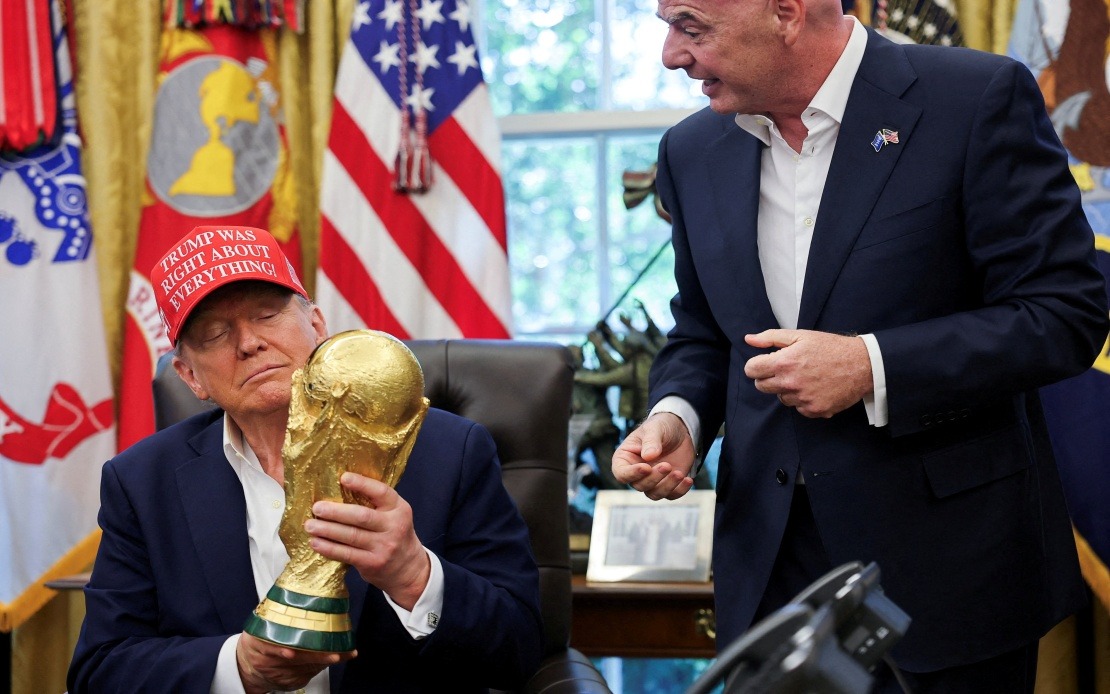
US President Donald Trump adopted a markedly softer tone towards Spain and Prime Minister Pedro Sanchez on Sunday, declaring the absence of any lingering tensions between the two nations—a striking reversal from the inflammatory language he deployed just weeks earlier when he threatened sweeping economic sanctions against Madrid. The president's comments, delivered in Istanbul following Spain's 1-0 victory over Argentina in the FIFA World Cup final, suggest either a calculated diplomatic recalibration or a willingness to compartmentalise geopolitical disputes from ceremonial sporting moments.
Trump extended congratulations to Spanish officials for fielding what he characterised as an exceptional team, while praising the championship match itself as a memorable and well-contested spectacle. He refrained from expressing disappointment over Argentina's defeat, instead offering the assessment that Spain's superior performance warranted the victory, though he acknowledged the narrow margin of competition throughout the encounter. This language stands in stark contrast to his earlier public pronouncements on Spanish governance and security commitments.
The pivot proves significant when measured against Trump's rhetorical escalation at a NATO summit news conference in Ankara, Türkiye, earlier this month. At that gathering, he had castigated Spain as a "wasted cause" and dismissed the nation as a "terrible partner in NATO," citing Madrid's refusal to grant American military forces unrestricted access to Spanish bases during tensions with Iran. His grievances extended to defence spending, where he demanded Spain commit to a five per cent expenditure threshold on military capacity—a figure significantly exceeding the two per cent NATO guideline that has itself long been contested among alliance members.
Those earlier remarks were notably undiplomatic in their construction. Trump instructed his advisors to "cut off all trade with Spain, please, including visits," according to his statements at the summit. He further instructed negotiators to avoid engagement with Spanish representatives, describing the nation's leadership as "hopeless, bad people" and suggesting complete severance of commercial relations. Such language, though characteristic of Trump's negotiating posture, represented a dramatic escalation in public US-Spain tensions and raised questions about the stability of transatlantic economic relationships.
For regional observers in Southeast Asia, the episode illuminates how Trump's approach to strategic partnerships operates on a fluid continuum where diplomatic temperature can shift rapidly based on immediate circumstances or symbolic gestures. Malaysian policymakers monitoring the US role in global affairs might recognise patterns in how Trump calibrates relationships—initially deploying maximum pressure through rhetoric and threatened sanctions, then offering tactical concessions or rhetorical softening when circumstances permit face-saving reversals. This unpredictability complicates long-term strategic planning for nations attempting to navigate bilateral relationships with Washington.
Spain's position within the NATO alliance has evolved considerably over recent years, with Madrid increasingly asserting security interests aligned with broader European strategic autonomy. The nation hosts significant American military infrastructure, including air bases utilised for operations spanning the Middle East and Africa. However, Spanish governments have repeatedly resisted pressure to expand military spending beyond sustainable levels or to grant unconditional access to facilities for operations outside NATO's defined geographic scope. Madrid's position reflects broader European debate regarding the extent to which NATO members should subordinate independent foreign policy judgments to American strategic preferences.
The defence spending controversy represents a recurring friction point between Washington and multiple European allies. While NATO formally recommends two per cent of GDP allocation to defence, only a subset of members achieves this threshold. Trump's demand for five per cent spending from Spain would place extraordinary fiscal burden on Madrid's budget and establish a precedent that others might attempt to resist. Such demands reflect broader American frustration with what successive administrations have perceived as European free-riding on security arrangements underwritten substantially by Washington.
The World Cup context provides an instructive lens through which to examine how sporting achievements can temporarily elevate national prestige and create opportunities for diplomatic reset. Trump's willingness to offer congratulations and downplay earlier grievances suggests he recognises the political utility of appearing gracious during moments of national celebration for other countries. Whether such softening extends beyond performative remarks into substantive policy shifts remains uncertain, particularly regarding the threatened trade restrictions and access demands that remain unresolved.
For Spain specifically, Trump's Sunday remarks provide modest diplomatic relief but likely offer limited reassurance regarding the stability of future relations. The underlying disputes concerning NATO burden-sharing, military base access, and defence spending commitments remain unaddressed by the conciliatory language. Spanish officials will need to determine whether Trump's softer rhetoric indicates genuine willingness to negotiate compromise on these issues or merely represents a temporary pause in pressure tactics designed to extract maximum concessions through renewed threats at a later date.
The episode also raises questions about how Trump's unpredictable approach affects confidence in America's reliability as a strategic partner. Nations attempting to develop long-term defence and economic strategies must account for potential sudden shifts in US presidential rhetoric and policy priorities. For Southeast Asian governments managing security relationships with Washington while simultaneously maintaining economic interdependence with European partners, such volatility complicates navigation of great power competition.
Moving forward, the trajectory of US-Spain relations will depend on whether Trump's Sunday comments represent a genuine recalibration or merely a temporary rhetorical adjustment. If the underlying policy demands remain unchanged, Spain faces continued pressure on defence spending and military base access. If Trump's softening indicates willingness to accept Spanish positions on these issues, it would represent a significant diplomatic victory for Madrid and suggest that even Trump's most emphatic negotiating stances contain latitude for eventual compromise when circumstances or symbolism permit face-saving retreats.

